Sometimes I just can’t get anything done. Sure, I come into the office, putter around, check my email every ten seconds, read the web, even do a few brainless tasks like paying the American E…
It's getting harder to focus every day
I’m feeling it right now. I had to set a timer for 15 minute on my computer and block all distractions to write this. If I didn’t force myself to focus I would easily get distracted by something after few minutes. Even when I’m doing things that I’ve been waiting to do it, I still feel the urge to do something else. I don’t know how and when this happened. During the last few years I was always studying, working, and doing open source. And actually got stuff done. Doing all of those at the same time requires paying attention to what I wanted to do and ignore the noise.
Double Click: You Can Just Do Things—But Should You Always? | Figma Blog
The catchphrase is catching fire as early adopters ride the new wave of AI-powered tools. Here’s how we might channel that energy and avoid the risk of being overwhelmed.
Less stress, more productivity: why working fewer hours is better for you and your employer
There’s always too much work to be done on software projects, too many features to implement, too many bugs to fix. Some days you’re just not going through the backlog fast enough, you’re not producing enough code, and it’s taking too long to fix a seemingly-impossible bug. And to make things worse you’re wasting time in pointless meetings instead of getting work done. Once it gets bad enough you can find yourself always scrambling, working overtime just to keep up. Pretty soon it’s just expected, and you need to be available to answer emails at all hours even when there are no emergencies. You’re tired and burnt out and there’s still just as much work as before. The real solution is not working even harder or even longer, but rather the complete opposite: working fewer hours.
Email: The Variable Reinforcement Machine
How often do you check your email per day? Does checking your email make you more productive or less productive? Oh, sure, we delude ourselves into thinking we’re being extra-productive by obsessively checking and responding to our email, but in reality we’re attending too frequently to our

A World Without Email: Reimagining Work in an Age of Communication Overload
A New York Times and Wall Street Journal bestsellerFrom New York Times bestselling author Cal Newport comes a bold vision for liberating workers from the tyranny of the inbox--and unleashing a new era of productivity.Modern knowledge workers communicate constantly. Their days are defined by a relentless barrage of incoming messages and back-and-forth digital conversations--a state of constant, anxious chatter in which nobody can disconnect, and so nobody has the cognitive bandwidth to perform substantive work. There was a time when tools like email felt cutting edge, but a thorough review of current evidence reveals that the "hyperactive hive mind" workflow they helped create has become a productivity disaster, reducing profitability and perhaps even slowing overall economic growth. Equally worrisome, it makes us miserable. Humans are simply not wired for constant digital communication.We have become so used to an inbox-driven workday that it's hard to imagine alternatives. But they do exist. Drawing on years of investigative reporting, author and computer science professor Cal Newport makes the case that our current approach to work is broken, then lays out a series of principles and concrete instructions for fixing it. In A World without Email, he argues for a workplace in which clear processes--not haphazard messaging--define how tasks are identified, assigned and reviewed. Each person works on fewer things (but does them better), and aggressive investment in support reduces the ever-increasing burden of administrative tasks. Above all else, important communication is streamlined, and inboxes and chat channels are no longer central to how work unfolds.The knowledge sector's evolution beyond the hyperactive hive mind is inevitable. The question is not whether a world without email is coming (it is), but whether you'll be ahead of this trend. If you're a CEO seeking a competitive edge, an entrepreneur convinced your productivity could be higher, or an employee exhausted by your inbox, A World Without Email will convince you that the time has come for bold changes, and will walk you through exactly how to make them happen.
Live asynchronously.
Last year I turned off all my notifications. I stopped booking meetings. I started living asynchronously. Now instead of being interrupted throughout the day — or rushing from one meeting to the next — I sit down and get work done. I work a lot. I co...
People prefer electric shocks to time alone with thoughts - The Boston Globe
In the rush of every day life, many people <i>say</i> they crave a moment of peace, but a startling new study finds that people don’t much enjoy spending even 10 minutes alone with their thoughts. In fact, our own minds are so intolerable that many people chose to administer painful electric shocks to themselves rather than sit in quiet contemplation, researchers from the University of Virginia and Harvard discovered.

Thoughts on thinking
I have been stuck. Every time I sit down to write a blog post, code a feature, or start a project, I come to the same realization: in the context of AI, what I’m doing is a waste of time. It’s horrifying. The fun has been sucked out of the process...

How to Stay Productive When You Hate Your Job
Strategies for making it through the day when you’re bored, miserable, and still have work to do

Cognitive Offloading
If you have ever tilted your head to perceive a rotated image, or programmed a smartphone to remind you of an upcoming appointment, you have engaged in cognitive offloading: the use of physical action to alter the information processing requirements of a task so as to reduce cognitive demand. Despite the ubiquity of this type of behavior, it has only recently become the target of systematic investigation in and of itself. We review research from several domains that focuses on two main questions: (i) what mechanisms trigger cognitive offloading, and (ii) what are the cognitive consequences of this behavior? We offer a novel metacognitive framework that integrates results from diverse domains and suggests avenues for future research.
Feeling unproductive? Maybe you should stop overthinking.
In order to get something done, maybe we need to think less.
AI Use at Work Is Causing “Brain Fry,” Researchers Find, Especially Among High Performers
The increased speed and multitasking that AI allows at work is leading to many workers experiencing "brain fry," a new study found.

Don't Get Distracted
I’m going to tell you about how I took a job building software to kill people. But don’t get distracted by that; I didn’t know at the time.

How to be more productive without forcing yourself
Imagine you could work more and be wildly productive. And you wouldn’t need to force yourself to work.
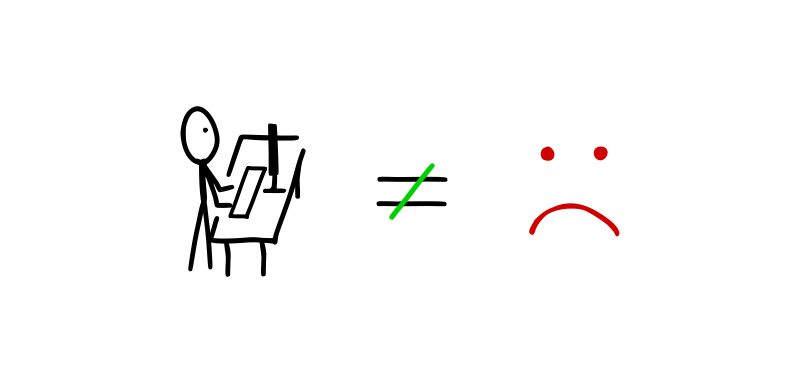
Work for only 3 hours a day, but everyday | plumshell
I am an indie iPhone developer, and I've been working for 3 hours everyday for almost 2 years now. It may not work for everybody, but I started this habit in early 2014, and I have continued to do it since have I found that this is the most productive way to work for me.