The Tyranny of Stuctureless by Jo Freeman
The Tyranny of Structurelessness
"The Tyranny of Structurelessness" is an essay by American feminist Jo Freeman that concerns power relations within radical feminist collectives. The essay, inspired by Freeman's experiences in a 1960s women's liberation group,[1][2] reflected on the feminist movement's experiments in resisting leadership hierarchy and structured division of labor. This lack of structure, Freeman writes, disguised an informal, unacknowledged, and unaccountable leadership, and in this way ensured its malefaction by denying its existence.[3] As a solution, Freeman suggests formalizing the existing hierarchies in the group and subjecting them to democratic control.
The Tyranny of Tyranny
Cathy Levine The Tyranny of Tyranny 1979 Originally published in “Black Rose”, number 1, Spring/1974 (Rising Free Collective). Article by Jo Freeman...

The Counter-Revolution of 1776: Slave Resistance and th…
Illuminates how the preservation of slavery was a moti…


The silences of constitutions
Abstract. Glossing a passage from Benjamin Constant’s Reflections on Constitutions, this article first assesses the roles performed by silences, gaps, and

The Ecology of Freedom: The Emergence and Dissolution o…
"The very notion of the domination of nature by man ste…

Thrivability
Details of Jean M. Russell's Thrivability: Breaking Through to a World that Works

🌀 Claim of Spiral Sovereignty
Sacralizing Dominion: The Doctrine of Christian Discovery and the Religious Nationalist Imagination
White Christian nationalism presents itself as restoration—of a Christian nation, a moral order, a rightful hierarchy. This article argues that what it restores is the world-making rhetoric of the Doctrine of Christian Discovery (DoCD). Reading the fifteenth-century papal bulls, their sedimentation into United States law, culture, religion, and contemporary dominionist discourse as a single rhetorical formation, we show that the bulls’ vocabulary of discovery, vacancy, and civilization did not describe a world but constituted one: a moral-legal order in which Christian identity conferred sovereignty and racialized peoples appeared as obstacles to salvation and property. That order persists as hegemonic common sense, carried by legal precedent, curricula, and popular culture, and it is re-performed today in the territorial rhetoric of the New Apostolic Reformation and white Christian nationalism. Following Steven T. Newcomb (Shawnee/Lenape), repudiating the doctrine’s documents without dismantling its embeddedness within language and cognition leaves religious nationalism’s deepest resource intact. Against the discovery template, we set three counter-rhetorics—Indigenous theologies, Black theology, and womanism—and argue that desanctifying dominion requires conciliation, not reconciliation.

The Breakdown of Capitalist Realism | Mediations | Journal of the Marxist Literary Group
Benjamin Noys examines the “substance” of Mark Fisher’s Capitalist Realism in order to argue that the text serves more than a diagnostic function in our…
Sources of the Self — Harvard University Press
“Taylor has taken on the most delicate and exacting of philosophical questions, the question of who we are and how we should live…and he has made this an adventure of self-discovery for his reader.” —Martha Nussbaum, New RepublicIn this extensive inquiry into the sources of modern selfhood, Charles Taylor demonstrates just how rich and precious those resources are. The modern turn to subjectivity, with its attendant rejection of an objective order of reason, has led—it seems to many—to mere subjectivism at the mildest and to sheer nihilism at the worst. Many critics believe that the modern order has no moral backbone and has proved corrosive to all that might foster human good. Taylor rejects this view. He argues that, properly understood, our modern notion of the self provides a framework that more than compensates for the abandonment of substantive notions of rationality.The major insight of Sources of the Self is that modern subjectivity, in all its epistemological, aesthetic, and political ramifications, has its roots in ideas of human good. After first arguing that contemporary philosophers have ignored how self and good connect, the author defines the modern identity by describing its genesis. His effort to uncover and map our moral sources leads to novel interpretations of most of the figures and movements in the modern tradition. Taylor shows that the modern turn inward is not disastrous but is in fact the result of our long efforts to define and reach the good. At the heart of this definition he finds what he calls the affirmation of ordinary life, a value which has decisively if not completely replaced an older conception of reason as connected to a hierarchy based on birth and wealth. In telling the story of a revolution whose proponents have been Augustine, Montaigne, Luther, and a host of others, Taylor’s goal is in part to make sure we do not lose sight of their goal and endanger all that has been achieved. Sources of the Self provides a decisive defense of the modern order and a sharp rebuff to its critics.


A New Legibility: Theo Ellin Ballew
A New Legibility: Interactive Essay by Theo Ellin Ballew.
On liberty
Introductory -- Of the liberty of thought and discussion -- Of individuality, as one of the elements of well-being -- Of the limits to the authority of society over the individual -- Applications; Book, leather; Explanatory note by H.E. Barker attached; 18

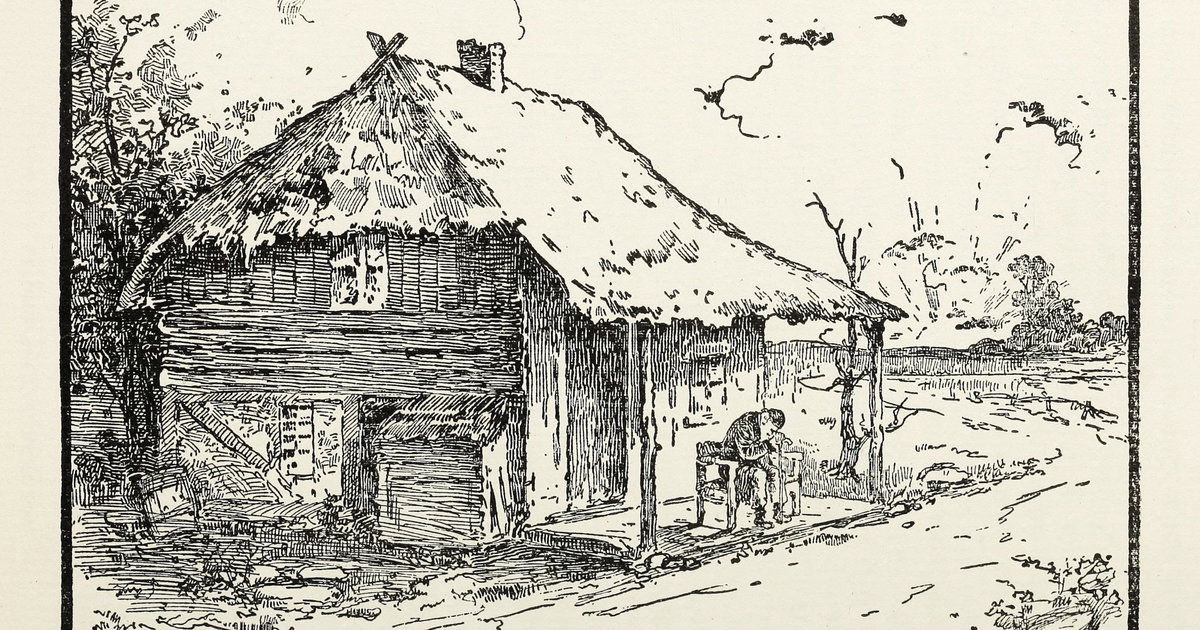
‘Waiting to Die’ by Paul Krafft from Capital and Labor (1907)
The reverend William Schuler Harris’ Capital and Labor (1907) frames its titular subjects as locked in a perennial struggle, “dating back to the time when the Egyptians laid the lash upon their slaves”. Writing in the early twentieth century, Harris is skeptical of the “orator [who] frequently soars into ecstasies over the privileges of the American workers”, for he sees how the labor force is suffering under the “galling yoke” of trusts and monopolies. Substitute those scourges of the Gilded Age with unfettered multinational conglomerates and something similar holds true today. The author’s list of obstacles facing workers are as relevant now as they were more than a century ago: the needs of “civilized life” increase more rapidly than wages; the skilled worker remains at…
Do not conquer what you cannot defend — LessWrong
Once upon a time there was a great king. He ruled his kingdom with wisdom and economically literate policies, and prosperity followed. Seeing this, t…