

Working in tech, I've observed developers who work as hard as possible when they don't need to. I’m here today to tell you that it's a bad idea and you shouldn't do it.

Doing nothing at work
Many engineers should be doing less work. I don’t necessarily mean producing less code or fewer changes, but literally working fewer hours in the day. When they do work, they should be working at a slower pace. I like to aim to be running at 80% utilization by default: unless I have a high-pressure project going on, I spend 20% of my workday away from the computer.

You should never be angry at work
I try not to give a lot of prescriptive advice about working in tech companies. There are many ways to be successful, and every company works differently. If…
Why Is Everyone In Tech So Sad?
A lot of people seem to be realizing that knowledge work is mostly pointless. AI might give us the pleasure of finding out what happens if an entire class of workers loses faith in their careers.

The developer’s dilemma
When it comes to making money, software developers are an odd bunch. Developers produce code, and code is in high demand. At a glance, it…
Work Smarter: The Cocktail of Simplicity, Manageable Adversity, and Muntzing
Sometimes deliberate roadblocks can be a good thing to get more efficient and effective products and workflow. Here's how.

How to be more productive without forcing yourself
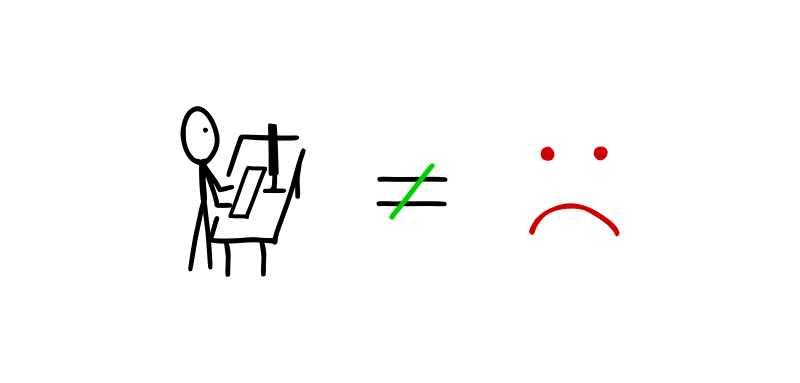
Imagine you could work more and be wildly productive. And you wouldn’t need to force yourself to work.
I'm addicted to being useful
When I get together with my friends in the industry, I feel a little guilty about how much I love my job. This is a tough time to be a software engineer. The job was less stressful in the late 2010s than it is now, and I sympathize with anyone who is upset about the change. There are a lot of objective reasons to feel bad about work. But despite all that, I’m still having a blast. I enjoy pulling together projects, figuring out difficult bugs, and writing code in general. I like spending time with computers. But what I really love is being useful.
People don't work as much as you think
There is a persistent idea that people work 40 hours a week. They don't, and if you try to do this it will break you. Here are some more reasonable guidelines.

Less stress, more productivity: why working fewer hours is better for you and your employer
There’s always too much work to be done on software projects, too many features to implement, too many bugs to fix. Some days you’re just not going through the backlog fast enough, you’re not producing enough code, and it’s taking too long to fix a seemingly-impossible bug. And to make things worse you’re wasting time in pointless meetings instead of getting work done. Once it gets bad enough you can find yourself always scrambling, working overtime just to keep up. Pretty soon it’s just expected, and you need to be available to answer emails at all hours even when there are no emergencies. You’re tired and burnt out and there’s still just as much work as before. The real solution is not working even harder or even longer, but rather the complete opposite: working fewer hours.
We should rethink how we teach people to code | deadSimpleTech
It's fair to say that the tech industry at the moment is not in a good place. Software engineers tend to be detached, demotivated and unwilling to care much about the work they're doing beyond their paycheck. Code quality is poor on the whole, made worse by the current spate of vibe coding and whatever other febrile ideas come out of Sam Altman's brain. Much of the software that we write is either useless or actively hurts people. And the talented, creative people that we most need in the industry are pushed to the margins of it.

AI Is Forcing Employees to Work Harder Than Ever
Another new study adds to the understanding that AI is actually making work more demanding for employees instead of making it easier.

Programming Still Sucks. — Writing
Sorry Peter. — I'm at a birthday party, and while most people here also work in tech, there's always a Guy with a Real Job. You know, a physical job, building some or other thing people need. And this Guy always asks some variant of the same question: aren't you worried AI is taking your job? I glance around and see a few faces turning around toward us, rolling their eyes ever so slightly before returning to their previous conversation. Yes, this question again.
Work for only 3 hours a day, but everyday | plumshell
I am an indie iPhone developer, and I've been working for 3 hours everyday for almost 2 years now. It may not work for everybody, but I started this habit in early 2014, and I have continued to do it since have I found that this is the most productive way to work for me.

The Stress of Remote Working | HackerNoon
In software engineering, remote working makes a lot of sense since, most of the time, you only need a computer and an internet connection to perform your duties. So there are fewer reasons to force people to sit in a predefined office everyday. Consequently, it has become an important feature of a lot of IT jobs, even in Belgium, while it is definitely not the most forward looking job market. That said, most of the time, the remote working offer only apply to a part of the week (1 or 2 days a week seems to be the most frequent proposition here). Nevertheless, it definitely is getting a hold in most companies.

Deep work. Essentialism in asynchronous culture
Deep work Nowadays, we are getting accustomed to working in a continuously interrupting environment. Smartphone notifications, hundreds of e-mails, open spaces, and meetings slicing our workday. We are feeling busy, and overworked, but are we more productive? If I am a salesman or project coordinator that way of working can bring good effects and even improve my skills. However, for Software Developers, Designers, and other professionals that need a quiet environment for creative effort, it can lead only to frustration and burnout. They need something that is called deep work. Deep work is a concept popularized by Cal Newport in his book under the same title published in 2016. The author divides mental activity into two categories: shallow work, that does not need intensive concentration like sending e-mails, formatting documents, chatting using communicators, etc. deep work, that demands distraction-free focus on one task like writing a document, learning a new skill, designing a software system, etc.