

Calculating Empires: A Genealogy of Technology and Power since 1500
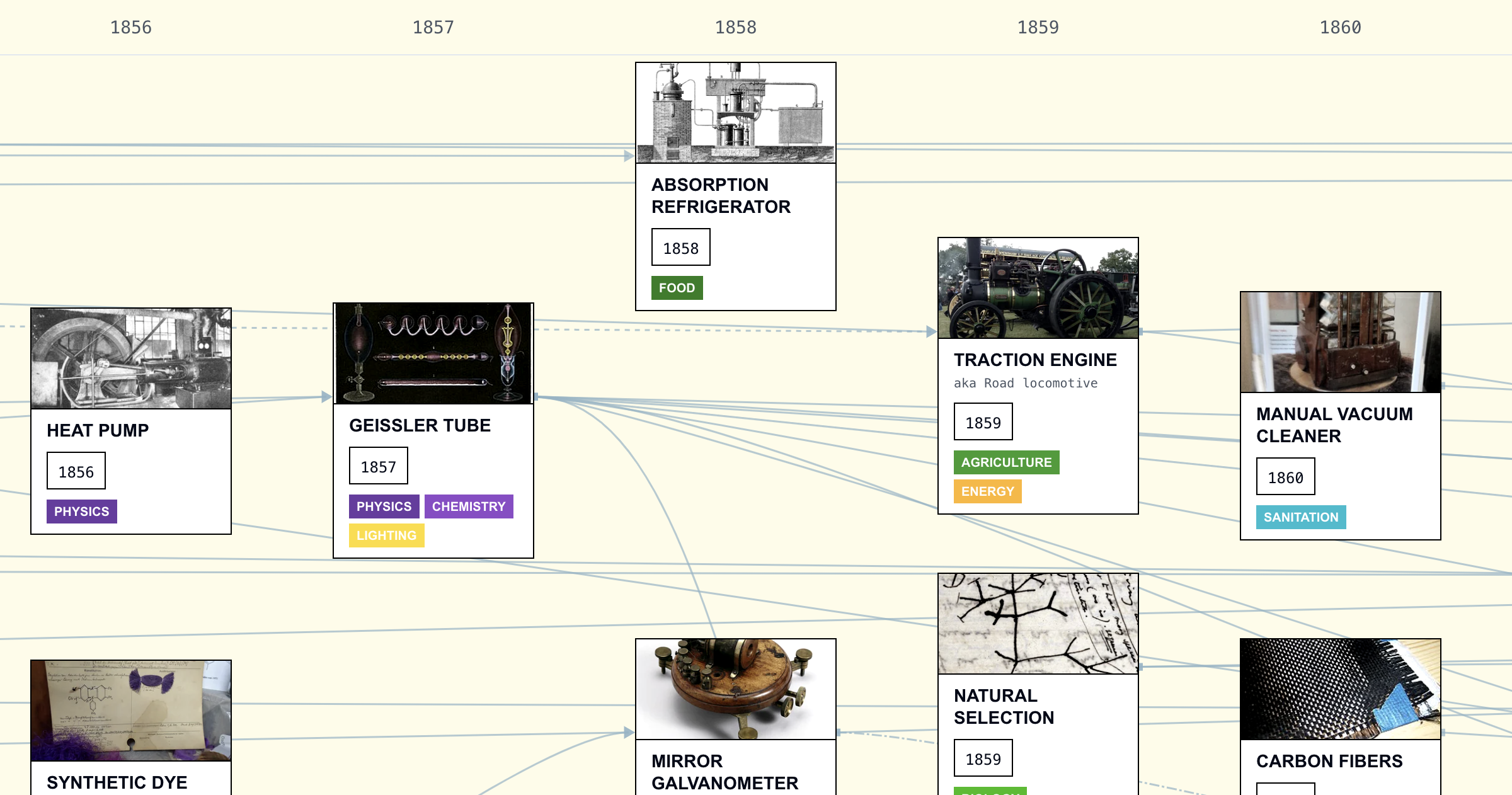
Explore how technical and social structures co-evolved over five centuries in this large-scale research visualization.
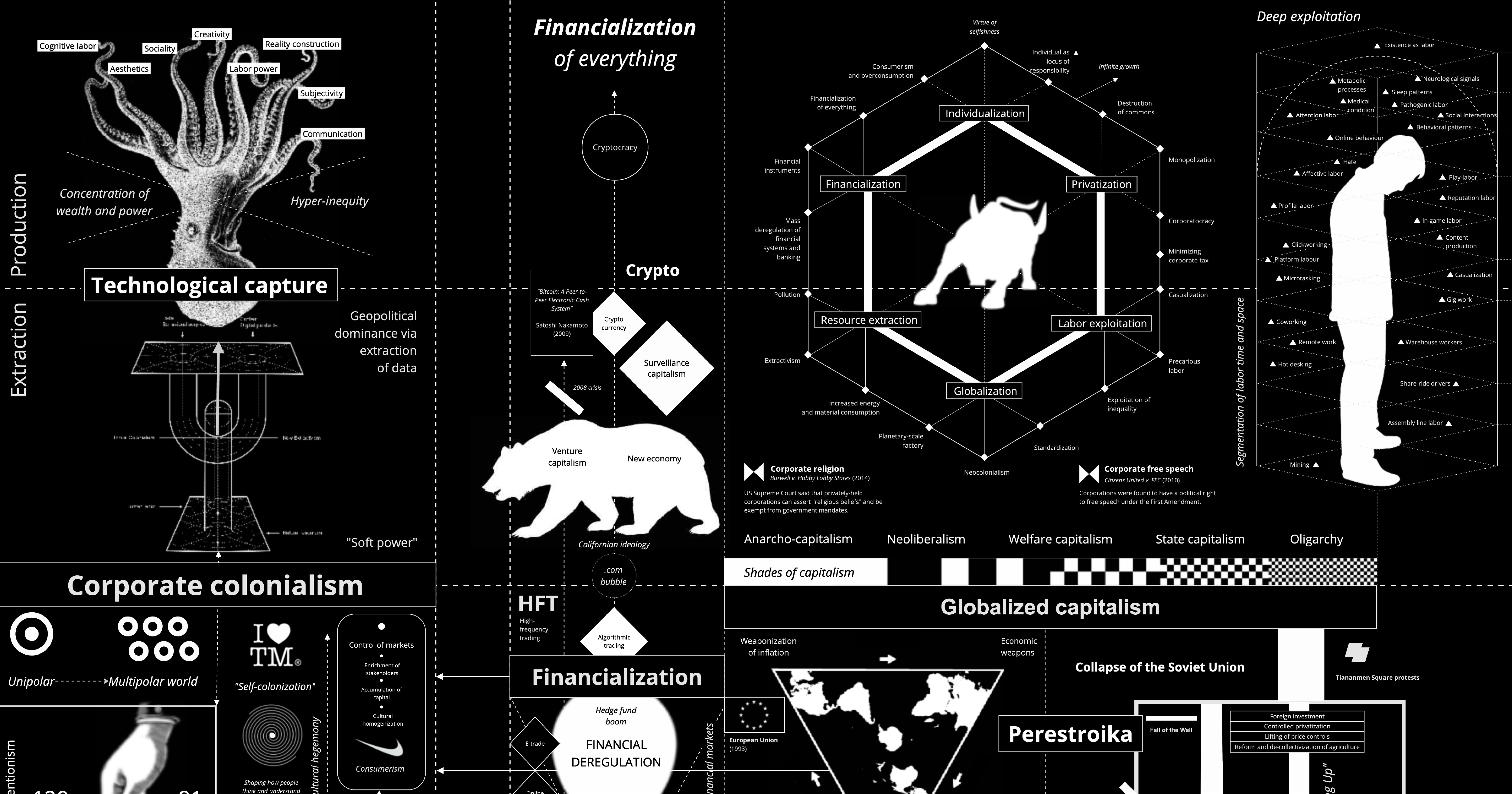
Project Interlay | Post-Appitalism
Weaving a post-appitalist future. Decomposing the data silos of capitalist business models.

CYBER-COMMUNISM by Richard Barbrook | Imaginary Futures
‘…is the impact of the …information revolution on capitalism not the ultimate exemplification of… Marx’s thesis that: “at a certain stage of their development, the material productive forces come into conflict with the existing relations of production…”? …does the prospect of the… “global village” not signal the end of market relations… at least in the sphere of digitalised information?’ (Zizek 1998: 33-4)
Agent Economies | Interactive AI Network Visualization
Explore the future of AI agent economies through an interactive network visualization representing autonomous systems that collaborate and evolve.
Apocalypse Now and Then • EQUATOR
Artificial intelligence is capitalism’s final destination


The Path to a Sovereign Tech Stack is Via a Commodified Tech Stack | TechPolicy.Press
Strategic standardization of cloud infrastructure backed by procurement power and market forces is the right way to tame the hyperscalers, writes David Eaves.
Institute of Network Cultures | Ben Grosser: Planning the Exodus from Platform Realism
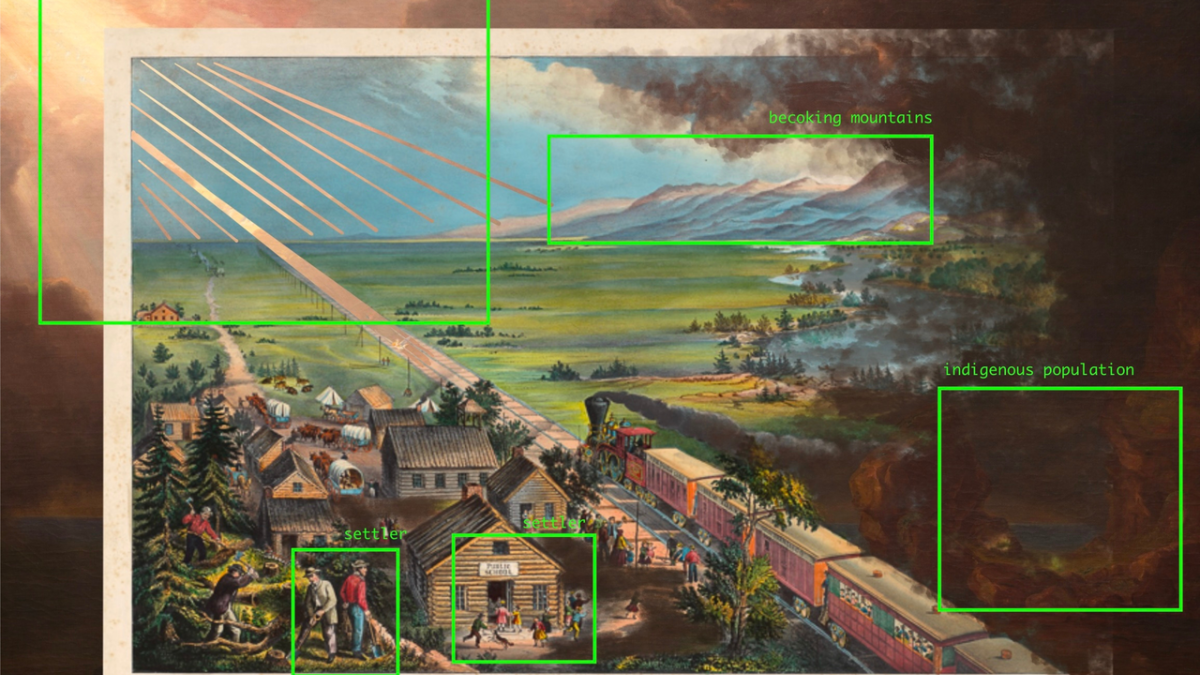
Thinking about the current state of platforms, I’m reminded of Mark Fisher’s articulation of capitalist realism, the idea that we don’t imagine or build alternatives to capitalism because we can no longer envision a world without it. Big tech, in a few short years, has managed to instill within the public a similar state of platform realism. So many are unable to imagine how global communication, media, search, etc. could ever function without the platforms. Despite a growing malaise, it’s become difficult for many to consider a world without big tech platforms as a viable conception of the future.

Cyber-Marx: Cycles and circuits of struggle in high technology capitalism - Nick Dyer-Witheford
The complete text of Nick Dyer-Witheford's 1999 book, which provides an analysis of information-age capitalism and the movements currently dissolving it. In PDF format.

Cyber-Marx: Cycles and Circuits of Struggle in High Technology Capitalism
Cycles and Circuits of Struggle in High Technology Capitalism

Builder Workshop — B.C.'s Innovation Ecosystem, Mapped
46 players, 27 venues on the asset map, curated pathways, open data.

Cyber-Marx
In this highly readable and thought-provoking work, Nick Dyer-Witheford assesses the relevance of Marxism in our time and demonstrates how the information age, far from transcending the historic conflict between capital and its laboring subjects, constitutes the latest battleground in their encounter. Dyer-Witheford maps the dynamics of modern capitalism, showing how capital depends for its operations not just on exploitation in the immediate workplace, but on the continuous integration of a whole series of social sites and activities, from public health and maternity to natural resource allocation and the geographical reorganization of labor power. He also shows how these sites and activities may become focal points of subversion and insurgency, as new means of communication vital for the smooth flow of capital also permit otherwise isolated and dispersed points of resistance to connect and combine with one another. Cutting through the smokescreen of high-tech propaganda, Dyer-Witheford predicts the advent of a reinvented, "autonomist" Marxism that will rediscover the possibility of a collective, communist transformation of society. Refuting the utopian promises of the information revolution, he discloses the real potentialities for a new social order in the form of a twenty-first-century communism based on the common sharing of wealth.
When Silicon Valley’s AI warriors came to Washington
Effective altruism is increasingly described as a cult. But as the movement’s billionaire adherents pour money into D.C., its obsession with the AI apocalypse is remaking the capital’s tech policy landscape.

Capitalism and markets are closely connected, but they aren't exactly the same thing. And once we recognize that it opens up a huge new terrain for different types of social organization. J.K. Gibson Graham wrote on this a lot. en.wikipedia.org/wiki/J._K._Gibson-Graham
J. K. Gibson-Graham - Wikipedia
en.wikipedia.org