

John Maynard Smith has defended against philosophical criticism the view that developmental biology is the study of the expression of information encoded in the genes by natural selection. However, like other naturalistic concepts of information, this “teleosemantic” concept is equally applicable to many non-genetic factors in development. Maynard Smith also fails to show that developmental biology is concerned with teleosemantic information. Some other ways to support Maynard Smith's conclusion are considered. It is argued that on any definition of information the view that development is the expression of genetic information is misleading. Some reasons for the popularity of that view are suggested.
The Law of Conservation of Information: Search Processes Only Redistribute Existing Information
Conservation of information sparked scientific interest once a recurring pattern was noticed in the evolutionary computing literature. In grappling with the creation of information through evolutionary algorithms, this literature consistently revealed that the information outputted by such algorithms always needed first to be programmed into them. Thus, the primary goal of this literature—to uncover how information could be created from scratch or de novo —was shown to be misconceived: the information was not created but instead shuffled around or smuggled in, implying that it already existed in some form or other. Information output in these situations therefore always presupposed a counterbalancing input of prior information. Once this pattern was seen, the next logical step was to quantify the amount of information inputted and outputted, demonstrating a consistent mathematical relation between the two. This led to the proof of a number of theorems about search. In these theorems, a baseline search with probability p of success gave way to an improved search with probability q of success. Typically p would be very small and close to zero, implying a practically impossible search (like searching for a needle in a haystack). By contrast, q would be much larger and close to one, implying an eminently doable search. The punchline of these theorems was that, as the improved search became itself the subject of a search (a search for a search , or S4S), the probability of finding it could not exceed p / q , rendering success of the improved search no more probable than success of the original baseline search, in effect filling one hole by digging another. Such conservation-of-information theorems, as they came to be called, were search-space specific, adapted to different kinds of search across a range of search spaces. There was a measure-theoretic theorem in which probability measures guided search. There were also function-theoretic and fitness-theoretic theorems where mappings into the search space as well as fitness functions on the search space respectively guided search. The key insight of this paper is that all these conservation-of-information theorems are special cases of a simple probabilistic relation based on elementary probability theory. This paper identifies the underlying rationale that makes all the previous conservation-of-information theorems work. In so doing, it provides a straightforward proof and general formulation of what may rightly be called the Law of Conservation of Information.
Opinion | Can Evolution Have a ‘Higher Purpose’? (Published 2016)
The biologist William D. Hamilton entertained the notion. So can we.

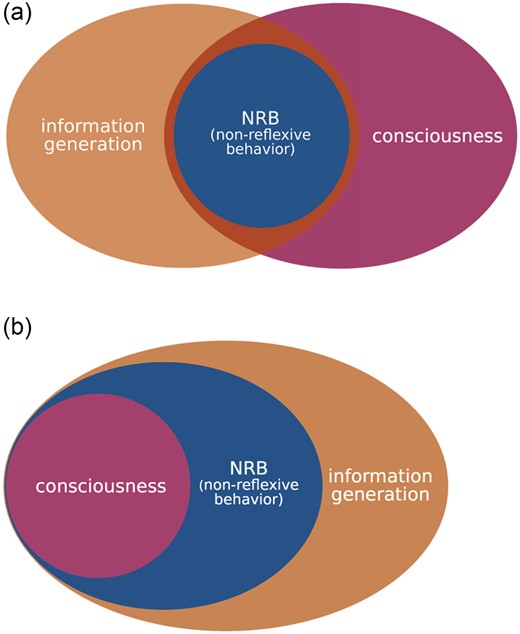
The science of consciousness does not need another theory, it needs a minimal unifying model
Abstract. This article discusses a hypothesis recently put forward by Kanai et al., according to which information generation constitutes a functional basi
The biogenic approach to cognition
After half a century of cognitive revolution we remain far from agreement about what cognition is and what cognition does. It was once thought that these questions could wait until the data were in. Today there is a mountain of data, but no way of making sense of it. The time for tackling the fundamental issues has arrived. The biogenic approach to cognition is introduced not as a solution but as a means of approaching the issues. The traditional, and still predominant, methodological stance in cognitive inquiry is what I call the anthropogenic approach: assume human cognition as the paradigm and work ‘down’ to a more general explanatory concept. The biogenic approach, on the other hand, starts with the facts of biology as the basis for theorizing and works ‘up’ to the human case by asking psychological questions as if they were biological questions. Biogenic explanations of cognition are currently clustered around two main frameworks for understanding biology: self-organizing complex systems and autopoiesis. The paper describes the frameworks and infers from them ten empirical principles—the biogenic ‘family traits’—that constitute constraints on biogenic theorizing. Because the anthropogenic approach to cognition is not constrained empirically to the same degree, I argue that the biogenic approach is superior for approaching a general theory of cognition as a natural phenomenon.
Requisite variety and its implications for the control of complex systems
Recent work on the fundamental processes of regulation in biology (Ashby, 1956) has shown the importance of a certain quantitative relation called the law of requisite variety. After this relation had been found, we appreciated that it was related to a theorem in a world far removed from the biological—that of Shannon on the quantity of noise or error that could be removed through a correction-channel (Shannon and Weaver, 1949; theorem 10). In this paper I propose to show the relationship between the two theorems, and to indicate something of their implications for regulation, in the cybernetic sense, when the system to be regulated is extremely complex. Since the law of requisite variety uses concepts more primitive than those used by entropy, I will start by giving an account of that law.
Cryptographic Nature
I consider the many ways in which evolved information-flows are restricted and metabolic resources protected and hidden -- the thesis of living phenomena as evolutionary cryptosystems. I present the information theory of secrecy systems and discuss mechanisms acquired by evolved lineages that encrypt sensitive heritable information with random keys. I explore the idea that complexity science is a cryptographic discipline as "frozen accidents", or various forms of regularized randomness, historically encrypt adaptive dynamics.

Is this the meaning of life? | John Stewart
John Stewart: Developments in evolutionary theory suggest we have a central role to play in the future of the universe
Jon Barron on Twitter / X
This idea that intelligence is solely a function of what you've observed since birth and not also a function of the 500 million years of evolution that preceded your birth is surprisingly sticky despite being demonstrably untrue. https://t.co/m2z5cN8Byb— Jon Barron (@jon_barron) January 28, 2026
Development Beyond Information: Human Becoming in the Age of AI
Abstract. Discussions of artificial intelligence in education increasingly equate development with the acquisition and deployment of information. This article argues that such accounts rest on false assumptions. Development is better understood not as an informational state but as a relational, historical process of becoming through which persons emerge and continue to change. Drawing on Vygotsky, on Ilyenkov's distinction between living and petrified ideality, and on the enactive approach to cognition, we characterise development through four features: its historicity, its dependence on reciprocal sense-making, its mediation by others who orient the learner, and its cultivation within relations of care. Large language models operate over the sedimented products of these processes without participating in them. As objectifications of human purposes, such systems may mediate human development or foreclose it. We conclude by considering what this account implies for education.

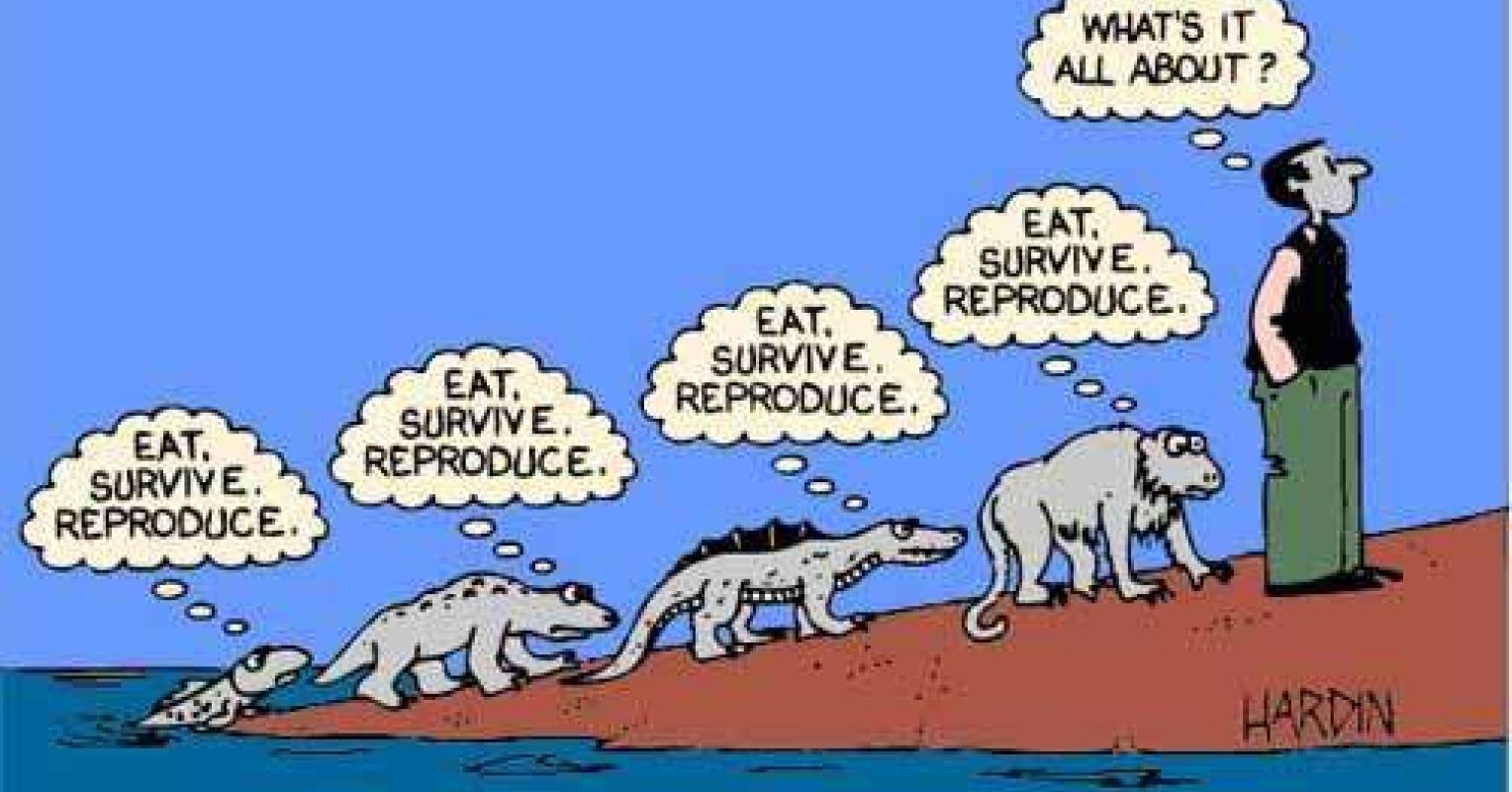
The Meaning of Life Revealed!
Evolutionary theory answers one of the most profound and fundamental questions human beings have ever asked themselves, a question that has plagued reflective minds for as long as reflective minds have existed in the universe: Why are we here? The question was answered in 1859 by Charles Darwin, and the answer can be stated in just six words...
What Is Intelligence? Lessons from AI About Evolution, Computing, and Minds | Blaise Agüera y Arcas
Prof. Lee Cronin on Twitter / X
It is easy to see that biology does things that cannot be computed in advanced because the future is not controlled by statistics, it is controlled by creative actions. This means today’s statistically-driven GenAI is fundamentally unintelligent.— Prof. Lee Cronin (@leecronin) March 28, 2026
Lossy communication constrains iterated learning
Humans' distinctive role in the world can largely be attributed to our capacity for iterated learning, a process by which knowledge is expanded and refined over generations. A range of theories seek to explain why humans are so adept at iterated learning, many positing substantial evolutionary discontinuities in communication or cognition. Is it necessary to posit large differences in abilities between humans and other species, or could small differences in communication ability produce large differences in what a species can learn over generations? We investigate this question through a formal model based on information theory. We manipulate how much information individual learners can send each other and observe the effect on iterated learning performance. Incremental changes to the channel rate can lead to dramatic, non-linear changes to the eventual performance of the population. We complement this model with a theoretical result that describes how individual lossy communications constrain the global performance of iterated learning. Our results demonstrate that incremental, quantitative changes to communication abilities could be sufficient to explain large differences in what can be learned over many generations.
Informatics of the Oppressed
An inquiry into the rich history of radical experiments to reorganize information.

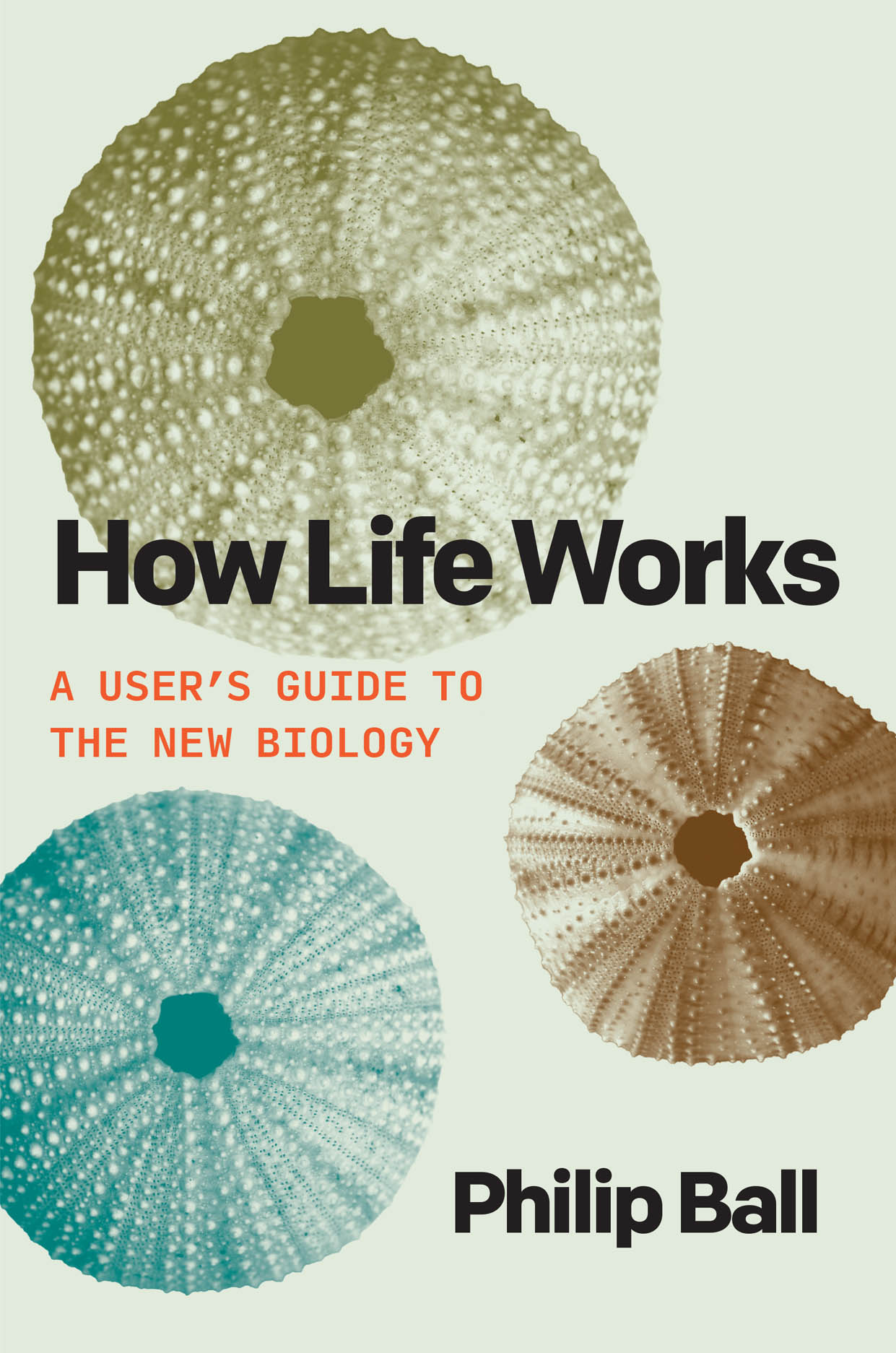
How Life Works: A User’s Guide to the New Biology
“Bold and intriguing.”—Wall Street Journal • “Penetrating. . . . Provocative and profound.”—Publishers Weekly (starred review) • “Offers plenty of food for thought.”—Kirkus Reviews (starred review) “Ball’s marvelous book is both wide-ranging and deep. . . . I could not put it down.”—Siddhartha Mukherjee, author of The Song of the Cell and the Pulitzer Prize–winning The Emperor of All Maladies A new, cutting-edge vision of biology that revises our understanding of what life itself is, how to enhance it, and what possibilities it offers. Biology is undergoing a quiet but profound transformation. Several aspects of the standard picture of how life works—the idea of the genome as a blueprint, of genes as instructions for building an organism, of proteins as precisely tailored molecular machines, of cells as entities with fixed identities, and more—have been exposed as incomplete, misleading, or wrong. In How Life Works, Philip Ball explores the new biology, revealing life to be a far richer, more ingenious affair than we had guessed. Ball explains that there is no unique place to look for an answer to this question: life is a system of many levels—genes, proteins, cells, tissues, and body modules such as the immune system and the nervous system—each with its own rules and principles. How Life Works explains how these levels operate, interface, and work together (most of the time). With this knowledge come new possibilities. Today we can redesign and reconfigure living systems, tissues, and organisms. We can reprogram cells, for instance, to carry out new tasks and grow into structures not seen in the natural world. As we discover the conditions that dictate the forms into which cells organize themselves, our ability to guide and select the outcomes becomes ever more extraordinary. Some researchers believe that ultimately we will be able to regenerate limbs and organs, and perhaps even create new life forms that evolution has never imagined. Incorporating the latest research and insights, How Life Works is a sweeping journey into this new frontier of the life sciences, a realm that will reshape our understanding of life as we know it.
“‘Information’ is a relational concept that assumes meaning only when related to the cognitive structure of the observer.” -- Heinz von Foerster
Control Information Theory: The “Missing Link” In the Science Of Cybernetics | Institute for the Study of Complex Systems
complexsystems.org