Karl E. Weick, What Theory is Not, Theorizing Is, Administrative Science Quarterly, Vol. 40, No. 3, Sep., 1995
Emily Riehl, A New Paradigm for Mathematical Proof? | Natural Philosophy Symposium 2025
What Makes a Good Theory, and How Do We Make a Theory Good?
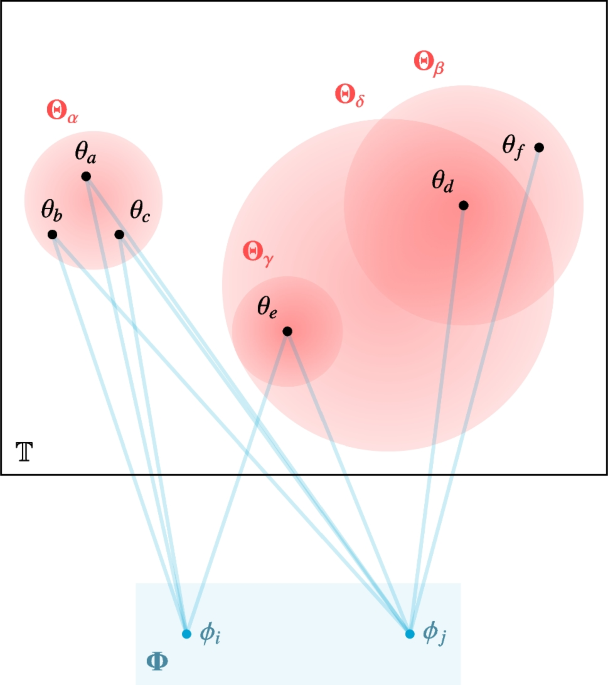
I present an ontology of criteria for evaluating theory to answer the titular question from the perspective of a scientist practitioner. Set inside a formal account of our adjudication over theories, a metatheoretical calculus, this ontology comprises the following: (a) metaphysical commitment, the need to highlight what parts of theory are not under investigation, but are assumed, asserted, or essential; (b) discursive survival, the ability to be understood by interested non-bad actors, to withstand scrutiny within the intended (sub)field(s), and to negotiate the dialectical landscape thereof; (c) empirical interface, the potential to explicate the relationship between theory and observation, i.e., how observations relate to, and affect, theory and vice versa; (d) minimising harm, the reckoning with how theory is forged in a fire of historical, if not ongoing, abuses—from past crimes against humanity, to current exploitation, turbocharged or hyped by machine learning, to historical and present internal academic marginalisation. This work hopes to serve as a possible beginning for scientists who want to examine the properties and characteristics of theories, to propose additional virtues and vices, and to engage in further dialogue. Finally, I appeal to practitioners to iterate frequently over such criteria, by building and sharing the metatheoretical calculi used to adjudicate over theories.
Against Economics
Mainstream economists nowadays might not be particularly good at predicting financial crashes, facilitating general prosperity, or coming up with models for preventing climate change, but when it comes to establishing themselves in positions of intellectual authority, unaffected by such failings, their success is unparalleled. One would have to look at the history of religions to find anything like it. To this day, economics continues to be taught not as a story of arguments—not, like any other social science, as a welter of often warring theoretical perspectives—but rather as something more like physics, the gradual realization of universal, unimpeachable mathematical truths.

Matt Darling (@besttrousers)
“Darling’s thesis is the first compelling explanation I’ve seen for the vibecession…What surprises me, though, is how comparatively little attention this theory has gotten”. I am being silenced.
Tony Feng on Twitter / X
I am a mathematician but I avoided commenting on this because the problems are (far) outside my domain. Even if I sat down to read the technical details (which I have not), it would be hard to appreciate the context of prior work, etc. But I've gotten enough sense of things… https://t.co/VZzosBYFto— Tony Feng (@tonylfeng) August 5, 2026
Theory Beyond Theorems and Proofs: A Guest Post
Scott’s foreword: I’m extremely grateful to my brilliant colleagues, Pravesh Kothari, Raghu Meka, and Prasad Raghavendra, for sharing the guest post below about how theoretical computer…

The Book Outlines Wiki / Predictably Irrational
This outline was written by Chris Yeh, made free as part of the The Book Outline Wiki.
turning theory into praxis?
q: Turning theory into praxis - What’s the best steps forward?

Notes for a Theory | Alberto Garutti
Complete Works (1977–2024) — Hirsch Argument Atlas
This atlas maps the complete argument of E.D. Hirsch Jr. across 10 books spanning 1977 to 2024. Every claim is extracted, every piece of evidence tracked, and every counter-argument surfaced. A separate layer of external scholarly research provides independent context.
The Dark Forest Theory of the Internet
In his sci-fi trilogy The Three Body Problem, author Liu Cixin presents the dark forest theory of the universe. When we look out into space, the theory goes, we’re struck by its silence. It seems like we’re the only ones here. After all, if other forms of

Being rational all the time isn’t going to do you any favors
When Daniel Kahneman and Amos Tversky published their paper on Prospect Theory in 1979, few people could have imagined the long-term implications.

“Computers enable fantasies” – On the continued relevance of Weizenbaum’s warnings
“The computer has long been a solution looking for problems—the ultimate technological fix which insulates us from having to look at problems.” – Joseph Weizenbaum (1983) Trying to kee…

Spirits and the incompleteness of physics
Complexity, renormalization, and the spirits beyond the horizon of theory

Speculations on the Future of the Scientific Method
The following essay was published 20 years ago (January, 2006) on my blog The Technium. I edited the intro here, but the speculations are basically unchanged.