Elinor Ostrom, The Comparative Study of Public Economies, The American Economist, Vol. 42, No. 1, Spring, 1998
annotations: Les économistes orthodoxes sont incapables d’expliquer les inégalités domestiques et la compétition entre les nations
Blog de sciences économiques et sociales de Martin Anota. Traductions, revues de presse.
annotations: Les économistes sont-ils égoïstes ?
Blog de sciences économiques et sociales de Martin Anota. Traductions, revues de presse.
Politique économique : le Nouveau Front populaire dessine un changement de cap
L’économiste Michaël Zemmour réfute le procès en manque de sérieux du programme du Nouveau Front populaire. Il détaille les mesures qui pourraient être appliqu…

Milton Friedman
Blog de sciences économiques et sociales de Martin Anota. Traductions, revues de presse.

Transformer l’enseignement de l’économie
Wendy Carlin : repenser l’enseignement de l’économie aiderait à résoudre des problèmes sociétaux urgents

Three views on economic power
We investigate the concept of economic power in the three main paradigms of economic thinking in the 20th century: neoclassical, marxist and institutionalist. We propose a reconstruction, based on a new taxonomy, of the various forms of power conceptualized by each of them. In particular, we claim that the neoclassical paradigm contains a consistent although often implicit theory of power. We then show that many controversies between these paradigms were debates on power and that some shifts in mainstream economics in the 1970s and 1980s are a reaction to the criticisms leveled against the neoclassical conceptualization of power.
Power: A Primer for Perplexed Economists
Let's Assume an Unfettered Marketplace of Ideas! Or Actually, Let's Not.
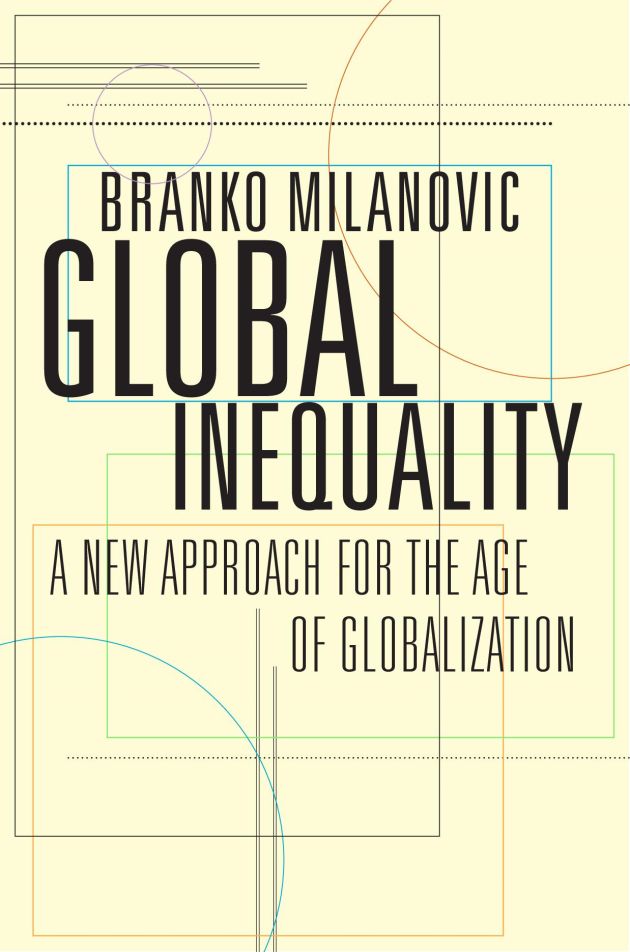
Global Inequality — Harvard University Press
Winner of the Bruno Kreisky Prize, Karl Renner InstitutA Financial Times Best Economics Book of the Year An Economist Best Book of the Year A Livemint Best Book of the YearOne of the world’s leading economists of inequality, Branko Milanovic presents a bold new account of the dynamics that drive inequality on a global scale. Drawing on vast data sets and cutting-edge research, he explains the benign and malign forces that make inequality rise and fall within and among nations. He also reveals who has been helped the most by globalization, who has been held back, and what policies might tilt the balance toward economic justice.“The data [Milanovic] provides offer a clearer picture of great economic puzzles, and his bold theorizing chips away at tired economic orthodoxies.”—The Economist“Milanovic has written an outstanding book…Informative, wide-ranging, scholarly, imaginative and commendably brief. As you would expect from one of the world’s leading experts on this topic, Milanovic has added significantly to important recent works by Thomas Piketty, Anthony Atkinson and François Bourguignon…Ever-rising inequality looks a highly unlikely combination with any genuine democracy. It is to the credit of Milanovic’s book that it brings out these dangers so clearly, along with the important global successes of the past few decades.—Martin Wolf, Financial Times
annotations: Un bref essai sur les différences entre Marx et Keynes
Traduction française de "A short essay on the differences between Marx and Keynes" de Branko Milanovic
Bataille chez Les économistes atterrés
Le collectif des Economistes atterrés, qui rassemble de nombreux économistes de gauche, traverse une crise interne. Alternatives Economiques donne la parole au…

Anthropic Economic Index: Insights from Claude 3.7 Sonnet
The second update from the Anthropic Economic Index
Le nouveau capitalisme (1/3)
Traduction de "New capitalism in America. Richest capitalists and richest workers are increasingly the same people" de Branko Milanovic

Pourquoi les économistes laissent tomber le monde face au changement climatique ?
Blog de sciences économiques et sociales de Martin Anota. Traductions, revues de presse.

Quand l’excès d’épargne mondial rencontre la Grande Récession
Blog de sciences économiques et sociales de Martin Anota. Traductions, revues de presse.

This skateboarding economist suggests we need more skateparks and less capitalism
A skateboarder presented an unusual paper at this year's big meeting of American economists.
“The Common Good Economy”: Mariana Mazzucato on Fixing Capitalism
We speak with the economist Mariana Mazzucato, author of the new book The Common Good Economy: A New Compass.