

This essay presents a processual model of the personal computing movement that depicts the PC's birth within the context of complex and often contradictory social strategies, each of which used the meaning of computer technology in a distinctive way. It suggests that innovators are constrained by such processes to depict new artifacts in culturally meaningful ways, so that it is difficult for them to conceive of their technologies in radical terms. The rhetoric of "revolution" aside, innovators found it expedient to draw from the stock of meanings at hand as they created new meaning-frameworks for their artifacts. The result is that the new artifacts did not express a coherent or effective political vision and failed to have the intended social effects. This study implies that new technologies frequently reproduce existing social and meaning systems; if they do bring about social change, the changes may differ from those intended by the innovators.
The Social Meaning of the Personal Computer: Or, Why the Personal Computer Revolution Was No Revolution
This essay presents a processual model of the personal computing movement that depicts the PC's birth within the context of complex and often contradictory social strategies, each of which used the meaning of computer technology in a distinctive way. It suggests that innovators are constrained by such processes to depict new artifacts in culturally meaningful ways, so that it is difficult for them to conceive of their technologies in radical terms. The rhetoric of "revolution" aside, innovators found it expedient to draw from the stock of meanings at hand as they created new meaning-frameworks for their artifacts. The result is that the new artifacts did not express a coherent or effective political vision and failed to have the intended social effects. This study implies that new technologies frequently reproduce existing social and meaning systems; if they do bring about social change, the changes may differ from those intended by the innovators.
Historical pragmatism and the internet
This article argues that the literature describing the internet revolution in the 1990s was characterized by the rhetoric of the technological sublime. This rhetoric suffered from three fatal flaws: (1) it was not sufficiently grounded in the historical development of technology; (2) it viewed the internet in isolation, failing to consider the wider technological context; and (3) it failed to examine the internet in view of the social, economic, religious and political circumstances of its users. Several examples from history are cited, demonstrating that changes in various systems for the production, dissemination and preservation of cultural information both border and deborder the world. The article suggests that if internet researchers take a pragmatic, historically grounded approach, they will discover that the introduction of internet technology can be seen to have similar consequences. While the technology overcomes many boundaries (of space and time, politics and economics), other social borders may be created at the same time. It is easier to see old boundaries coming down than to see new ones being erected. Rather than being swept by utopian or dystopian enthusiasms, the article insists that the really interesting discoveries are to be made in locating the subtle social shifts taking place, relatively unnoticed, as a consequence of technological change.

The Software Revolution
In human history, there have been three great technological revolutions and many smaller ones. The three great ones are the agricultural revolution, the industrial revolution, and the one we are...
Cyber-Marx: Cycles and circuits of struggle in high technology capitalism - Nick Dyer-Witheford
The complete text of Nick Dyer-Witheford's 1999 book, which provides an analysis of information-age capitalism and the movements currently dissolving it. In PDF format.

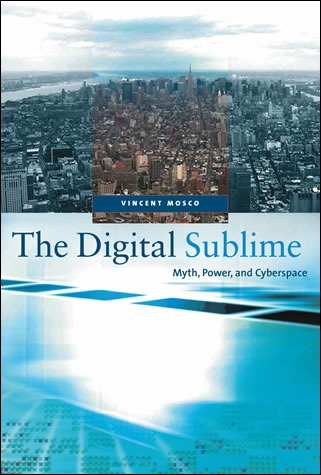
The Digital Sublime: Myth, Power, and Cyberspace
Interpreting the myths of the digital age: why we believed in the power of cyberspace to open up a new world.The digital era promises, as did many other te
The rise of Whatever
This was originally titled “I miss when computers were fun”. But in the course of writing it, I discovered that there is a reason computers became less fun, a dark thread woven through a number of events in recent history. Let me back up a bit.

Cyber-Marx: Cycles and Circuits of Struggle in High Technology Capitalism
Cycles and Circuits of Struggle in High Technology Capitalism
The Technological Construction of Social Power
This essay presents a theory of the role of technology in the distribution and exercise of social power. The paper studies how technical artefacts and systems are used to construct, maintain or st...

Computer: A History of the Information Machine
Computer: A History of the Information Machine is a history of computing written by Martin Campbell-Kelly and William Aspray first published in 1996. It follows the history of "information machines" from Charles Babbage's difference engine through Herman Hollerith's tabulating machines to the invention of the modern electronic digital computer. A revised 2nd edition published in 2004 included new material on the Internet and World Wide Web, while the updated 3rd edition published in 2013 includes contributions from historians Nathan Ensmenger and Jeffrey Yost. The 3rd edition extends the story to include recent phenomena such as social networking and revises the discussion of early history to reflect new insights from the literature.

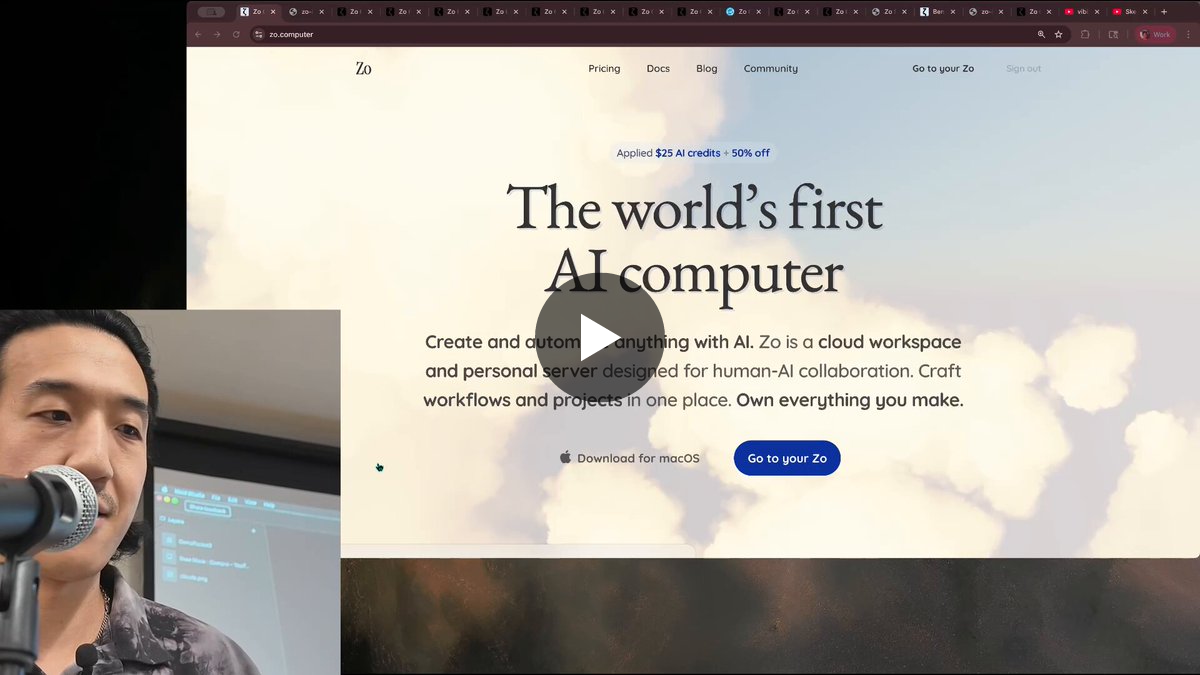
ben guo 🏇 on Twitter / X
i gave this talk last night at @southpkcommons about why the personal computing revolution never happened, and what we can do about it. pumped about the feedback afterwards: "it's giving early tumblr", "you guys are like punk apple", "i want more early internet mixtape vibes" pic.twitter.com/0Lwz3CaWBX— ben guo 🏇 (@0thernet) November 6, 2025
AI, I tried to love you – Writings and rehearsals by Nathan Schneider
Among my peers who study the cultures and economies surrounding technology, I often find myself more tech-positive than most. On the whole I like computers, like the internet, and like in general the emergent human creativity that these things have enabled and revealed. A source of my appreciation is that I expend a lot of effort on the practice of “slow computing,” which is to say, choosing tools and technical communities that I can feel in right relationship with. I tend to approach new socio-technologies (like gig economies, blockchains, and social media) not from a perspective of why is this so bad? so much as asking how could we do this right?

Fast Capitalism | Mavs Open Press Open Access Journals | University of Texas at Arlington
Fast Capitalism is an academic journal aimed at describing the current moment of capitalism. We publish peer reviewed scholarship and essays about the impact of rapid information and communication technologies on self, society and culture in the 21st century. Our authors examine how heretofore distinct social institutions, such as work and family, education and entertainment, have blurred to the point of near identity in an accelerated, post-Fordist stage of capitalism. This makes it difficult for people to shield themselves from subordination and surveillance. The working day has expanded; there is little down time anymore. People can 'office' anywhere, using laptops and cells to stay in touch. But these invasive technologies that tether us to capital and control can also help us resist these tendencies. People use the Internet as a public sphere in which they express and enlighten themselves and organize others; information technologies afford connection, mitigate isolation, and even make way for social movements. We are convinced that the best way to study an accelerated media culture and its various political economies and existential meanings is dialectically, with nuance, avoiding sheer condemnation and ebullient celebration. We seek to shape these new technologies and social structures in democratic ways. We look at technology, Artificial Intelligence (AI), global flows, political economy, culture and cultural studies, social theory, political theory, intersectionality, and the envionrment.
A Declaration of the Independence of Cyberspace
by John Perry Barlow Governments of the Industrial World, you weary giants of flesh and steel, I come from Cyberspace, the new home of Mind. On behalf of the future, I ask you of the past to leave us

Technopoly: The Surrender of Culture to Technology
A witty, often terrifying that chronicles our transform…


