

Annelieke Dirks, Between Threat and Reality: The National Association for the Advancement of Colored People and the Emergence of Armed Self-Defense in Clarksdale and Natchez, Mississippi, 1960-1965, Journal for the Study of Radicalism, Vol. 1, No. 1, Spring 2007
We Will Shoot Back: Armed Resistance in the Mississippi…
"Ranging from Reconstruction to the Black Power period,…

"We Will Shoot Back": The Natchez Model and Paramilitary Organization in the Mississippi Freedom Movement
Between 1965 and 1979, economic boycotts were a principal form of insurgency for Black activists in Mississippi. After 1964, in several communities, the boycott of White-owned commerce became the primary tactic utilized by human rights forces to disrupt the system of segregation. These boycotts relied upon paramilitary organization to protect the activities and leadership of the Mississippi freedom movement and the Black community in general and to sanction anyone in the Black community who wished to violate the boycott. This paradigm of economic boycotts supported by paramilitary organization was first utilized in 1965 in Natchez. Natchez is a commercial center in southwest Mississippi. The combination of economic boycott with armed resistance posed an effective coercive campaign to pressure the local White power structure for concessions demanded by the movement. The insurgent model of Natchez was replicated throughout the state, particularly in Black communities of southwest Mississippi.
Waging a good war: a military history of the civil rights movement, 1954-1968
"A new history of the Civil Rights Movement with an emphasis on its nonviolent use of military tactics and strategy"--

Anatomy of a counter-insurgency - MR Online
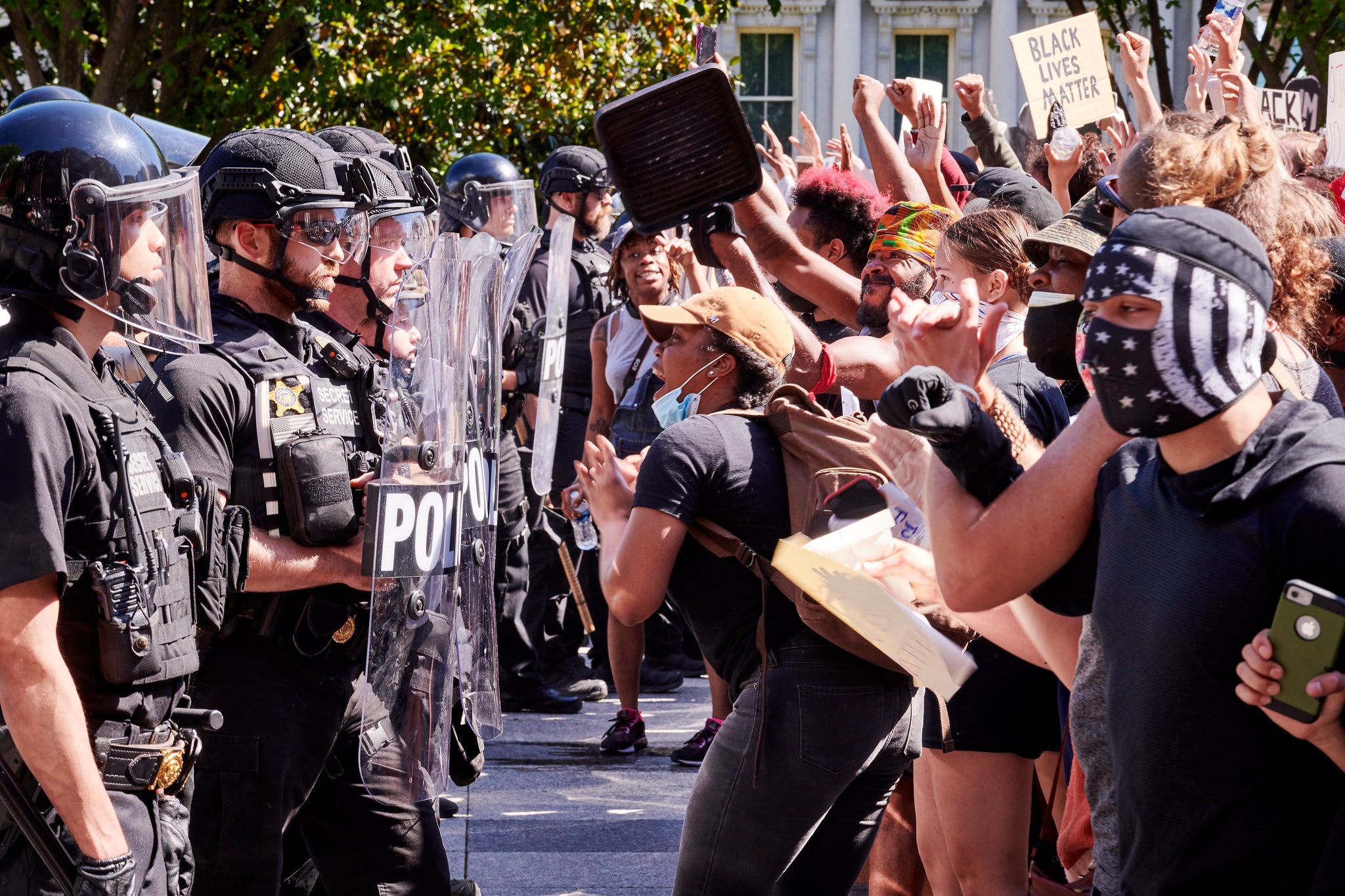
The defanging of the George Floyd Uprising was not accidental but was rather a deliberate attempt on the part of the American ruling class to regain social control in the wake of the largest and most militant protests in recent memory. This article examines the dimensions of how this defanging took place: how, within the space of two weeks, we went from burning down a police station to making small budgetary demands.
The Pre-emption of Resistance: Occupy Oakland and the Evolution of State Power
Author(s): Behbehanian, Laleh | Advisor(s): Burawoy, Michael B | Abstract: This dissertation aims to contribute to our understanding of contemporary state strategies targeting social movements by examining the case of Occupy Oakland. Emphasizing how state strategies, both tactical and discursive, dynamically evolve through their iterative relation to movement strategies, it presents a detailed empirical account that is disaggregated into three “moments”, each of which are characterized by the predominance of a distinct state strategic repertoire. The objective is to highlight an underlying transformation through which the state’s strategies evolve from being highly reactive, indiscriminate and vulnerable to spectacularization to becoming increasingly pre-emptive, targeted and discursively buttressed.The first “moment” commences with the movement’s occupation of Oscar Grant Plaza. Faced with Occupy Oakland’s highly disruptive tactics and its firm rejection of any forms of negotiation or cooperation with City officials, the state resorts to a strategy of Naked Coercion (reactive, indiscriminate violence that is highly vulnerable to spectacularization) which backfires and results in an internationally televised disaster on the evening of October 25th. This creates an extraordinary window of opportunity for the movement, dramatically increasing public support and enabling it to undertake the first general strike in the U.S. since 1946. This fuels a process of adaptation as the struggle proceeds into the second “moment”, and the state shifts to a strategy of Targeted Repression that is increasingly pro-active, targeted and discursively buttressed so as to diminish the danger of its spectacularization. The new strategy succeeds in permanently dislodging the occupation of Oscar Grant Plaza, as well as criminalizing the tactic of occupation and excising it from movement’s repertoire. Still unsatisfied with the repression it had achieved, in the third and final “moment” the state introduces a strategy of Pre-emptive Neutralization that is pre-emptively oriented, targeted at high “risk” populations and discursively buttressed by powerful spectacles of “risk”. This enables a thorough incapacitation of the movement – fully neutralizing its potential for collective action by rendering Occupiers a target population that could no longer even publicly assemble without inciting highly militarized police responses that were now pre-emptively justified by the risk of “violence” they collectively posed.

Q&A: The Myth of "Radicalization" | American Civil Liberties Union
>What’s wrong with radicalization? >What's at Stake? > What's The Proper Role For Law Enforcement? > What's The Bottom Line? WHAT'S WRONG WITH “RADICALIZATION”? The word “radicalization” is commonly used in public and policy discourse, but what people mean by it varies and there’s no single agreed-upon definition. The problem is that government policies and programs are based on a theory of “radicalization” that assumes a process through which people turn to violence because of radical or extreme beliefs. This theory is unscientific and discredited — and government programs based on it result in monitoring or suppression of First Amendment-protected beliefs and ideas. For example, this dangerous radicalization theory is being applied to American Muslim communities, most recently in the form of “countering violent extremism ” programs. According to this theory, the adoption or expression of “extreme” or “radical” religious ideas or practices places individuals on a path toward terrorism or violence, and there are observable “indicators” that can identify those who are “vulnerable” to “radicalization.” This is false. The ACLU has repeatedly provided statements to Congress — in 2009, 2010, 2011, and 2012 — to explain the factual and methodological flaws in reports that promote this radicalization theory. Our allies have also written reports debunking the theory. As we and others have explained, despite years of study and experience in the United States and elsewhere, researchers have not identified criteria or behavioral indicators that can be used to reliably predict who will commit an act of terrorism or political violence. Simply put, religious beliefs and practices do not correlate with a propensity toward violence. Instead, the freedom to engage in these activities goes to the core of what it means to be an American. Cloaking American Muslims — or any other belief communities — with suspicion puts at risk the freedom of religion, gives the appearance of official endorsement of one set of religious beliefs over another, and threatens to chill free association and free speech. WHAT'S AT STAKE? The radicalization myth threatens the fundamental freedoms of American Muslims and all Americans. Government efforts to inquire whether American Muslims — or anyone else — holds “radical” or “extreme” beliefs, however those are defined, stigmatize entire communities and promote a climate of fear and self-censorship. Our values are undermined when people forsake religious exercise, political discussions, and intellectual debate to avoid being branded as extreme or at risk of “radicalization.” Probing people’s thoughts and beliefs also engenders distrust of the government and undermines the relationship between communities and law enforcement. For example, it can cripple government efforts to demonstrate to Muslims at home and abroad that the United States seeks to live up to its ideals in its equal treatment of all Americans, including Muslims, and is not engaged in a “war against Islam.” More broadly, our nation’s founders recognized that radical beliefs that challenge social and political orthodoxies are valuable and necessary for a vibrant society and democracy. That is why First Amendment, which protects the freedoms of belief, religion, speech, and association, occupies a special place in our history and in the Constitution. Unfortunately, though, government suspicion of beliefs and unsupported theories of “radicalization” are nothing new, and our nation’s history shows they are often used to target minorities or those who dissent. For example, during World War I, Congress banned anti-war speech and the FBI conducted investigations of Americans’ political beliefs to identify purported radicals and opponents. Erroneous theories of eugenics supported racist immigration policies and Jim Crow anti-miscegenation laws for decades. Misguided “red” scares and racism drove abominable policies like blacklists, McCarthyism, and Japanese internment. And the FBI infamously spied on civil rights movement leaders in the name of national security during the J. Edgar Hoover era. WHAT'S THE PROPER ROLE FOR LAW ENFORCEMENT? The protections built into the Constitution help ensure that law enforcement officers focus their investigative resources where there is evidence of wrongdoing or criminal activity. The police can conduct an investigation when they have reasonable suspicion to believe that a crime has been, or is being, committed. But the standard for initiating or widening an investigation must be rigorous enough to focus security resources on criminal activity and prevent abuse. One form of such abuse occurs when officers investigate or monitor people based on their religious beliefs or practices. Former Attorney General Eric Holder rightly stated that “law enforcement has an obligation to ensure that members of every religious community enjoy the ability to worship and to practice their faith in peace, free from intimidation, violence or suspicion. That is the right of all Americans. And it must be a reality for every citizen. In this nation, our many faiths, origins, and appearances must bind us together, not break us apart.” Too often, though, law enforcement and intelligence have targeted religious, racial, ethnic, or national origin communities for monitoring and suspicion. In the case of American Muslims, “countering violent extremism” initiatives may task communities with reporting to law enforcement about individuals’ radical or extreme beliefs. Although warning law enforcement of threats is indeed a shared civic and social responsibility, it would be illegal, unfair, and impractical for law enforcement officials to require any religious or belief community to prove its loyalty to this country by monitoring or “informing” on its members. To the contrary, American Muslims, like the rest of this country's citizens, have the right to protest illegal, overzealous or abusive government security measures and to vigorously exercise, and encourage others to exercise, rights guaranteed in the Constitution. Some in American Muslim communities have also expressed legitimate concerns about whether those who volunteer information to law enforcement will find themselves threatened with legal jeopardy. Individuals should speak to lawyers before talking to law enforcement — and know that refusing to talk to law enforcement without a lawyer is a constitutional right. WHAT'S THE BOTTOM LINE? The government’s “radicalization” theory has become a euphemism for religious and ideological profiling. It leads to discrimination and stigmatization, and is fundamentally un-American. Casting suspicion on American faith or belief communities is wrong and does nothing to make us safer.
American Babylon
A gripping portrait of black power politics and the struggle for civil rights in postwar Oakland

#Charlestonsyllabus - AAIHS
Here is a list of readings that educators can use to broach conversations in the classroom about the horrendous events that unfolded in Charleston, South Carolina on the evening of June 17, 2015. These readings provide valuable information about the history of racial violence in this country and contextualize the history of race relations in South

When Riot Cops Are Not Enough
In When Riot Cops Are Not Enough, sociologist Mike King examines the policing, and broader political repression, of the Occupy Oakland movement. King’s active and daily participation in that movement provides a unique insider perspective to illustrate how the Oakland police and city administrators lost the ability to effectively control the movement.

Fighting Back: A Citizen’s Guide to Resistance
Ordinary people have more power than they know.
The Color of Power — Oakland Public Library
The Color of Power — Douzet, Frédérick — <p></p><p> <i>The Color of Power </i>is a fascinating examination of the changing politics of race in Oakland, California. Oakland has been at the forefront of California’s multicultural changes for decades. Since the 1960s, the city has been a shining example of a fruitful liberal black-and-white political partnership and the successful incorporation of black politicians into the political landscape. But over the past forty years, the balance of power has changed as a consequence of dramatic demographic trends and economic circumstances. The city’s formerly dominant biracial political machine has been challenged by the demands of new multiracial interests.</p><p></p><p>The city, once governed by a succession of black mayors and majority black city councils, must now accommodate rapidly growing Asian and Latino communities. While the black-led coalition still relies on white progressive support, this alliance has weakened due to a shift in the progressives’ agenda and the voting habits of the black community, the rise of a Hispanic-Asian coalition, and a strong demographic decline of the African American population. With similar demographic changes taking place across the nation, Oakland’s experience provides insight in to the multiracial future of other American cities.</p><p></p><p> <i>The Color of Power</i> investigates Oakland’s contemporary racial politics with a detailed study of conflicts over issues like education, elections and political representation, and crime. Trained as a journalist, a political scientist, and a geographer, the author provides a unique perspective supported by numerous maps and extensive interviews.</p><p>Winner of awards from the French Society of Geography and the French National Academy of Sciences</p><br/>Trained as a journalist, a political scientist, and a geographer, the author provides a unique perspective supported by numerous maps and extensive interviews.<p>Winner of awards from the French Society of Geography and the French National Academy of Sciences</p>
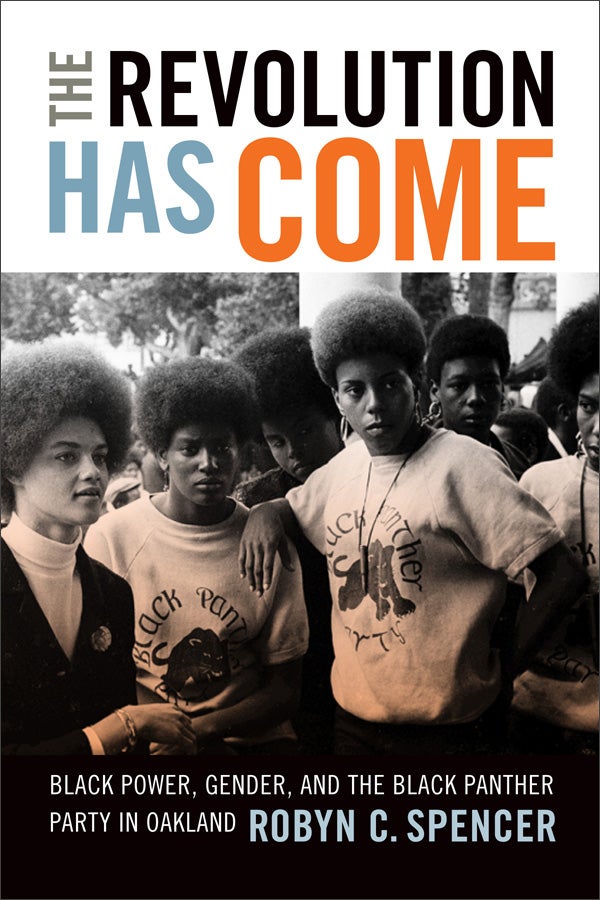
The Revolution Has Come: Black Power, Gender, and the Black Panther Party in Oakland
"Tearing down myths and distortions on virtually every page, The Revolution Has Come is the first substantive account of the Black Panther Party’s Oakland chapter—the iconic gathering that birthed the party and held on to its very last breath. Robyn C. Spencer’s incisive attention to gender, state repression, black radical alliances, philosophical and ideological debates, and the organization’s long decline makes this one of the most original studies of the Panthers to appear in years." - Robin D. G. Kelley, author of Freedom Dreams: The Black Radical Imagination
Early violence is a bad teacher. But the mind can learn anew | Aeon Essays
A world of violence sustains itself through guns, poverty and other social ills, but also through the minds it creates
Remotely Coerced Violence: 764, The Com Network, and the Hybridization of Threats - Combating Terrorism Center at West Point
Abstract: This article examines 764 and the wider Com Network as a case study in remotely coerced violence and the hybridization of contemporary terrorist and violent extremist threats. It argues that nihilistic violent extremism is best understood as a victim-driven, youth-centered online ecosystem in which status, belonging, and identity are earned through the production, circulation, … Continued
Expert: The NAACP is Fighting to Keep Black Communities From Becoming AI’s Collateral Damage – The Root
From Redlining to Greenlining: The Political Ecology of Race, Class, and Access to Green Space in Oakland, California from 1937-2020
Author(s): Corbin, Chryl Natasha Elaine | Advisor(s): Morelli-Frosch, Rachel | Abstract: Since the 1960s, Oakland, California, has been represented as a predominantly African American, low-income, and high crime urbanity. In the 2000s, the municipality started to become recognized as a top green city, and by the 2010s the city began to emerge as a gentrification hot spot. This dissertation elucidates how the relationships between race, class, housing, and access to green spaces have changed from redlining—prior to the Civil Rights Acts of 1964, 1965, and 1968—to 2020, after Oakland adopted an environmental agenda and began to establish itself as a green city starting in the 1990s. I question how Oakland’s urban environmental “sustainable development” agenda has impacted residents’ access to green spaces, and to what extent and how are these policies and practices creating, exacerbating, and/or mitigating urban environmental (in)justice issues. I examine both sides of environmental (in)justice, uneven distribution of environmental harms and the uneven development of environmental goods in which low-income residents and communities of color are disproportionally exposed to environmental hazards while also being prevented from benefiting from environmental amenities. I interrogate Oakland as a 21st century sustainable green city while also examining the historical urban policies and practices embedded in legal residential segregation and the current green gentrification processes which influence and contribute to the environmental (in)justices being (re)produced today.