

Posts and writings by Julian Schrittwieser
Exponential Economist Meets Finite Physicist | Do the Math
[An updated treatment of some of this material appears in Chapter 2 of the Energy and Human Ambitions on a Finite Planet (free) textbook, also mirrors a 2022 article in Nature Physics..]
Tony Feng on Twitter / X
I am a mathematician but I avoided commenting on this because the problems are (far) outside my domain. Even if I sat down to read the technical details (which I have not), it would be hard to appreciate the context of prior work, etc. But I've gotten enough sense of things… https://t.co/VZzosBYFto— Tony Feng (@tonylfeng) August 5, 2026
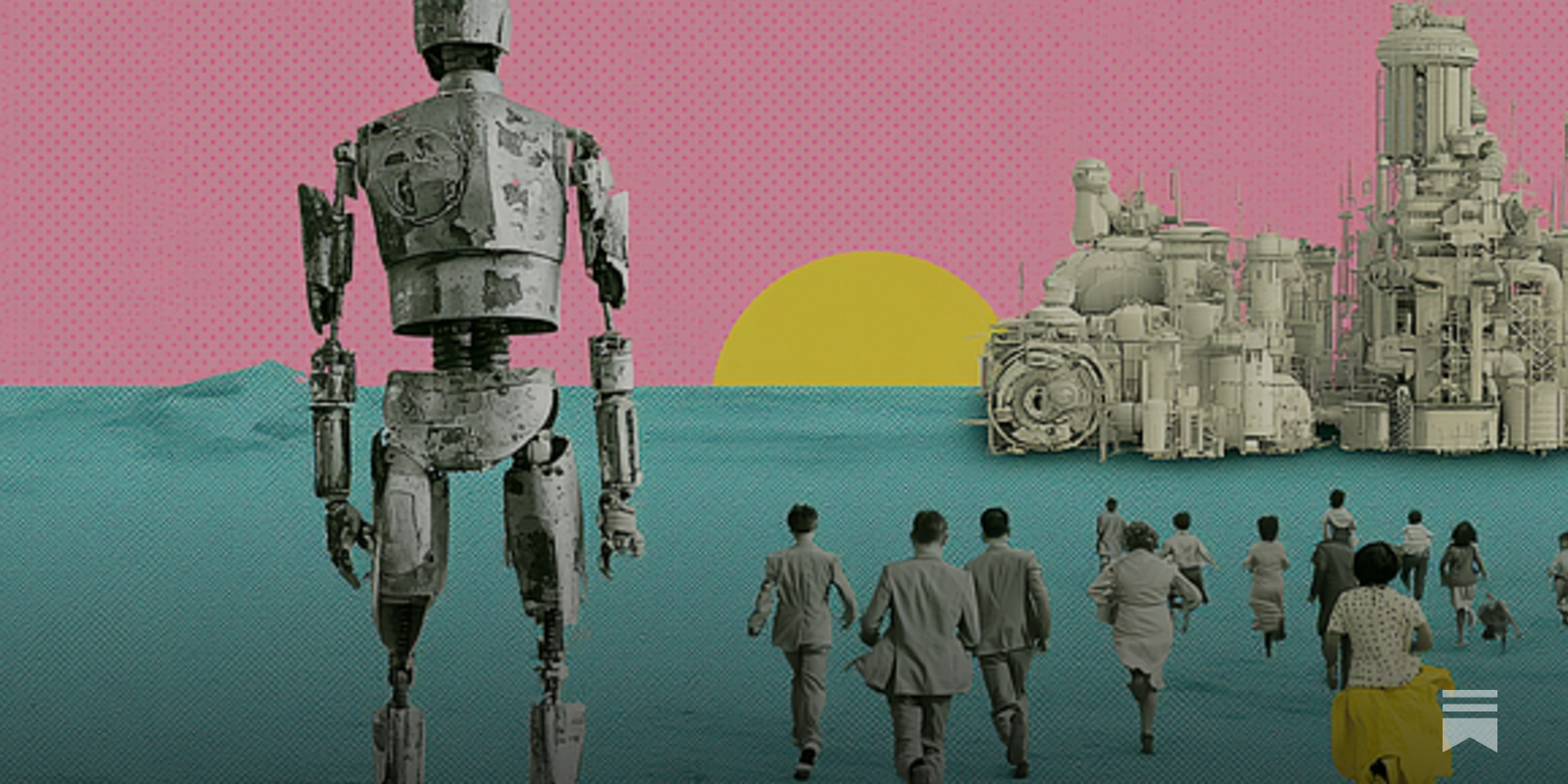
The shape of a knowledge worker
In a recent post, I threw around the term 'cognitive exponent' a bunch. Today I'd like to talk about a thing that might help us frame our investigation of what puts someone on the right side of that exponential graph.
Notes for a Theory | Alberto Garutti
Thomas Wolf on Twitter / X
Very thoughtful piece from Kevin Buzzard (perfect IMO score, number theorist, pioneer of formal maths in Lean)if math is not just about “human understanding,” then what is it about?and if ai capabilities keep growing exponentially what happens since “mathematics is infinite”? https://t.co/h7yYmZS01T pic.twitter.com/wFp2fec52Q— Thomas Wolf (@Thom_Wolf) October 2, 2026

OpenAI accused of stealing math proof from expert Andreas Thom | Valerio Capraro posted on the topic | LinkedIn
BREAKING: OpenAI might have stolen another major proof. In a detailed Mathstodon post, which I report in full in the comments, Andreas Thom presents several pieces of evidence suggesting that OpenAI may have trained Astra on conversations in which he and Gábor Kun were working on Gromov’s soficity conjecture, one of the ten problems OpenAI later announced Astra had solved. I know Andreas. We met several times early in our careers. He is an exceptional mathematician, a leading expert on sofic and hyperlinear groups, and one of the most respected scholars in the field. He has spent two decades working on this problem. If his account is correct, this is not a minor dispute over attribution. It would mean that unpublished human work was absorbed into a model and then presented to the world as a breakthrough by the model itself. And if the allegations raised by Levent Alpöge, Tristan Buckmaster, and now Andreas Thom are all substantiated, we are no longer looking at isolated incidents. We may be looking at one of the greatest intellectual scandals in the history of science. AI is not discovering new mathematics. AI is stealing human discovery. | 201 comments on LinkedIn

The Cyclical Theory of Open Source
In an attempt to explain the periodic fluctuations in American history, the historian Arthur Schlesinger – the Schlesinger the Harvard library is named after, not his son Arthur Schlesinger Jr that worked in Kennedy’s administration – posited that history runs in cycles. Specifically, his cyclical theory argued that American history swung back and forth between

The X-Files and the Demon-Haunted World
Ari N. Schulman on why we want to believe
AI #190: Scion of the Times
The amount of code being written at Anthropic continues to rise exponentially.

Thomas Wolf on Twitter / X
wtf is this way to handle mathematicians work and scientific communicationTLDR: Leven and Tristan worked over several months on one of the Millenium Prize Problems with various AIs to reach final interesting results. OpenAI apparently heard about it in the last days and… https://t.co/zNozwkFcFO pic.twitter.com/XcefJ17AQe— Thomas Wolf (@Thom_Wolf) September 8, 2026


Quantum dialectics - MR Online
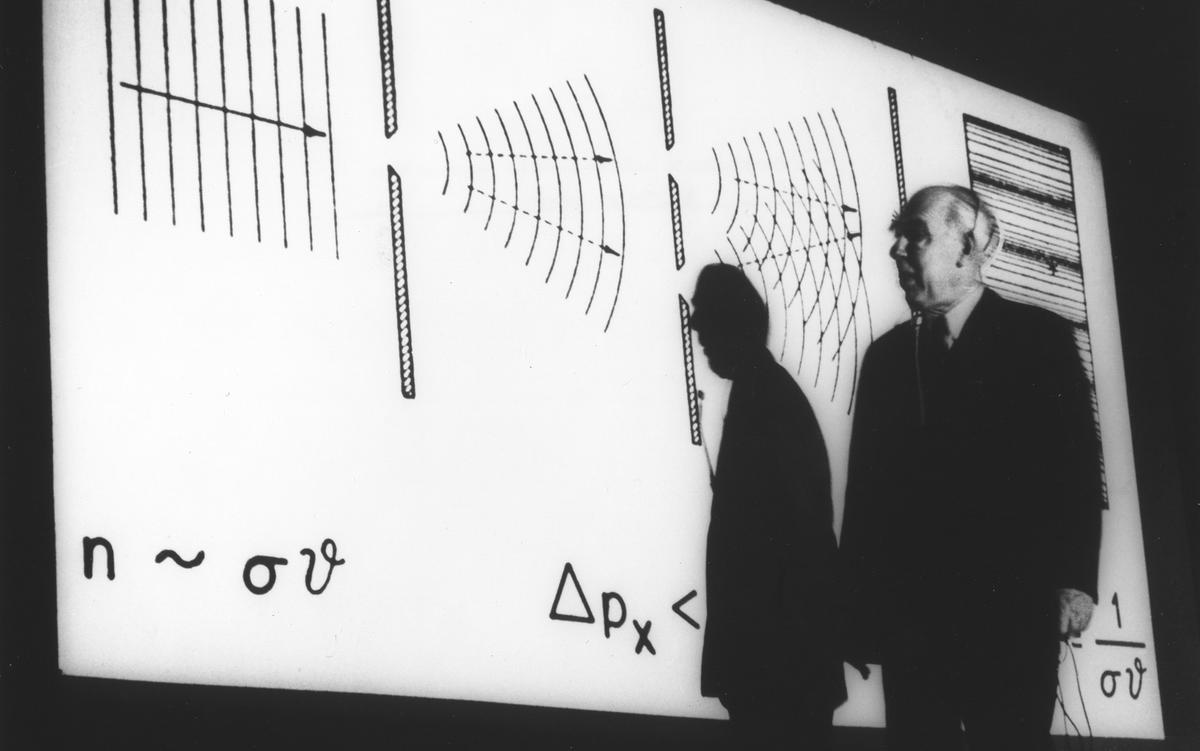
The quantum revolution in physics played out over a period of 22 years, from 1905 to 1927. When it was done, the new theory of quantum mechanics had completely undermined the basis for our understanding of the material world. The familiar and intuitively appealing description of an atom as a tiny solar system, with electrons orbiting the […]
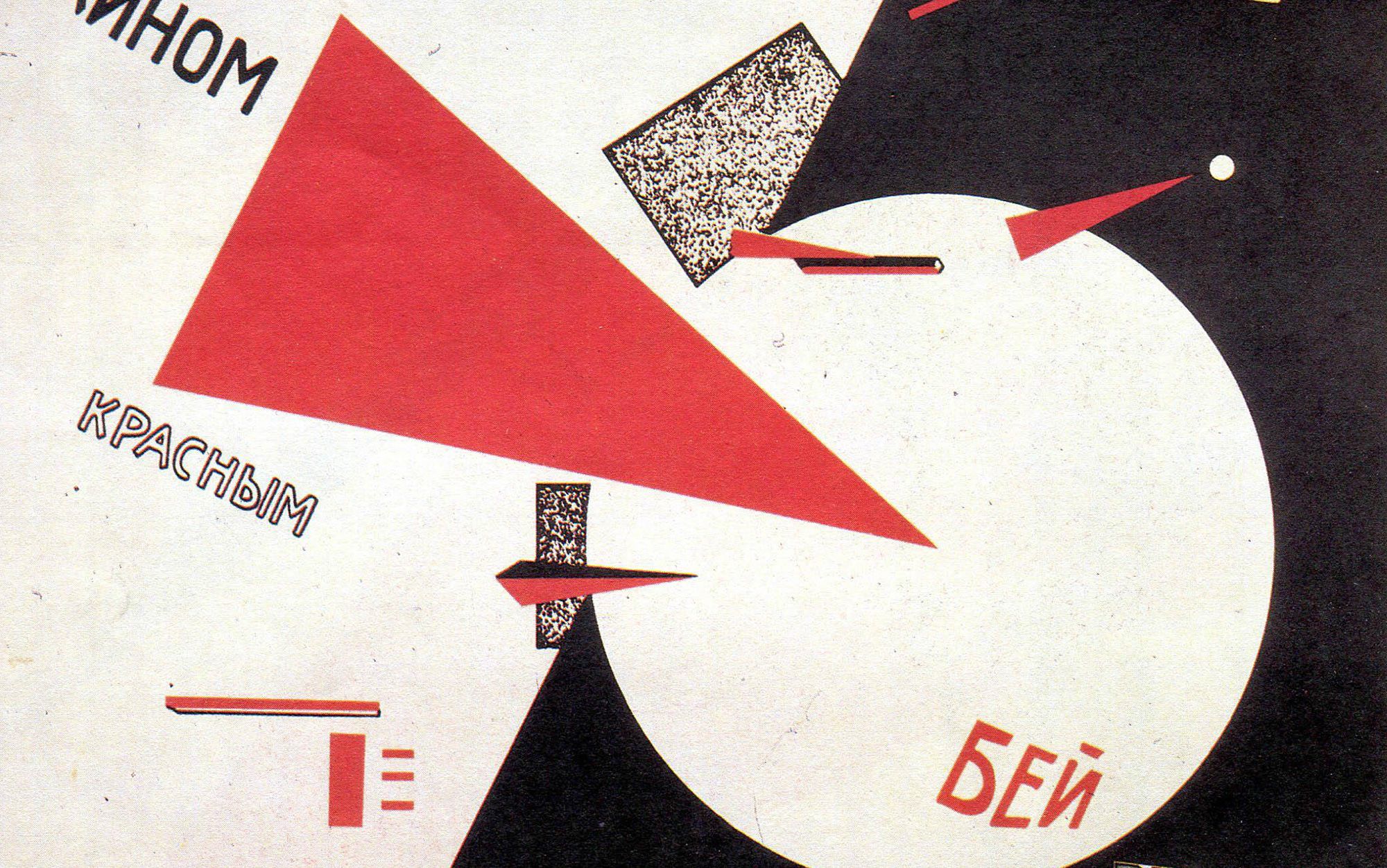
‘Shut up and calculate’ does a disservice to quantum mechanics | Aeon Essays
The cliché has it that the Copenhagen interpretation demands adherence without deep enquiry. That does physics a disservice
zach lieberman on Twitter / X
Today I was able to weave a line from Myron Krueger in a talk I gave : Computation is the medium of our lifetimes - it’s not just a technical medium but a cultural medium as well. We should explore the culture of computation.— zach lieberman (@zachlieberman) April 10, 2024
Epistemic Crisis


The Verification Ladder: A Framework for Evaluating Video When You Can’t Tell What’s Real