


ewancroft.uk/atproto-snake
[READ-ONLY] Mirror of https://github.com/ewanc26/atproto-snake. a snake game integrated with ATproto

NOVA Talking Turtle 1983
Timothee Mickus
Welcome to my website. Mostly stuff related to my research, but you've unlocked the secret rabbit pic by sharing this.
Edouard Joseph d’Alton’s Illustrations of Animal Skeletons (1821–1838)
Meticulous illustrations from an atlas of animal bones, including those of the tiny squirrel and the tall giraffe, the domesticated camel and the extinct giant ground sloth.

phylo — Mammalia — minomobi
phylo — Mammalia — minomobi
Gooey
Pixies - Gigantic
The Beaver’s Food Foraging / Tree-Cutting Behavior - AnimAnswers.com
Beavers are one of the largest rodents in the world. These fantastic creatures have thick fur, webbed feet, and flattened tails that are useful when they forage. They are also known for their notable dam-building abilities and unique skills in making their homes. Their sharp teeth help them to cut different sizes of trees. Let’s ... Read more

Heterospecific social behavior in primates: insights into the evolutionary roots of pet-keeping
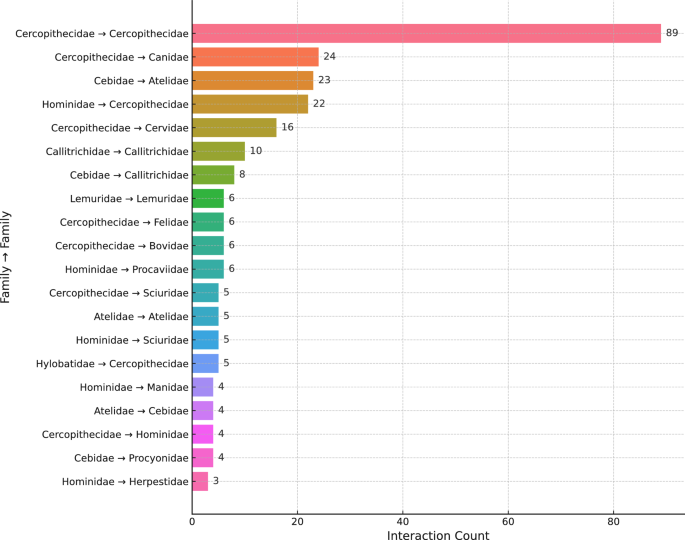
Primate interspecific interactions with both other primates and non-primate species range from predator–prey dynamics to affiliative behaviors such as grooming, play, and carrying. While many primates participate in interspecific associations or commensal relationships, to our knowledge interspecific social interactions have never been systematically synthesized. Here, we present the first comprehensive review of such interactions, compiling 427 cases from the literature, media sources, and a global survey of primatologists. These involved 88 primate species and 127 non-primate species (including mammals, birds, reptiles, amphibians, malacostracans, and insects) across wild (n = 311) and captive (n = 111) contexts. The most frequent interactions occurred within or between primate families (e.g., Cercopithecidae–Cercopithecidae, Cebidae–Atelidae), though affiliative behaviors were also directed toward distantly related taxa such as dogs and birds. Play (n = 139) and grooming (n = 136) were most common. Juveniles and infants predominantly engaged in play, while adult females were more likely to groom. Adult males were less affiliative overall. Contrary to expectations, affiliative behaviors were not more often directed toward immature than adult heterospecifics. Primates were the initiators in most interactions. These findings offer new insights into the diversity and contexts of heterospecific sociality in primates and suggest that some behavioral tendencies relevant to later forms of human–animal companionship – such as caregiving, tolerance, and exploratory play – may be more widespread among primates than previously recognized.
World's Strangest Snapping Turtle... and He's Utterly Adorable!
Siphonophore
Siphonophores are cnidarian animals of the hydrozoan order Siphonophorae. According to the World Register of Marine Species, the order contains 194 species described thus far.

Alt text: Black-and-white illustrations of a bat, a peacock, an elephant, and some kind of a monkey with their skeletons on top of faint silhouettes of their bodies. The bat and peacock also have studies of their skulls on the page

The Public Domain Review
From Comparative Osteology (1821–38) with illustrations by the Italian-born German naturalist Edouard Joseph d’Alton, an artist and art history professor whose students included a young Karl Marx. More of his wonderful images here: publicdomainreview.org/collection/comparative-osteol…
