


Why would a neurotech VC bet on Anthropic? This article examines how frontier AI, neuroscience, model behavior, and intelligent systems intersect within Kaleida Capital’s NeuroAI thesis and the infrastructure shaping next-generation intelligence.
Just back from a truly impactful few days at Asilomar for the Brain and Mind, hosted by the brilliant team at BrainMind. The spirit of the 1975 Recombinant DNA Conference felt palpable as we gathered… | Sean White
Just back from a truly impactful few days at Asilomar for the Brain and Mind, hosted by the brilliant team at BrainMind. The spirit of the 1975 Recombinant DNA Conference felt palpable as we gathered to chart ethical standards for the accelerating field of Neurotech. While our focus was on neuroethics, from investor diligence questions and board-level risk matrices to user/stakeholder engagement and toolkits for neuroentrepreneurs, the key themes shared a powerful parallel with AI Ethics: maintain and enhance human agency, combat misuse and mistrust, and acknowledge that innovation is moving faster than its guardrails. Both fields present novel challenges that demand we adapt our existing frameworks and principles to meet new challenges. At the heart of it all is human agency. Whether we're discussing neurodevices or large language models, our core responsibility as builders, executives, investors, and policymakers is to ensure people are informed, in control, and never burdened to fight for their own empowerment or autonomy. We have the fundamental responsibility to care about the people we serve. This commitment to responsible, human-centric development is fundamental to our work at Inflection AI. We're building with emotional intelligence at the core. Every product decision we make starts with a simple question: does this expand what people can do, or does it quietly shift the burden onto them? AI should work for the humans using it, amplifying judgment, not replacing it. Earning trust through transparency rather than demanding it through dependency. A special thank you to Diana Saville for once again outdoing herself at every event and to Michael McCullough, MD for his endless support of the ecosystem. And to all the Braingels who showed up and rolled up their sleeves! Let's translate the urgency from Asilomar into action and continue to drive positive change.

NeuroNYC
As the global leader in finance, policy, art, research, and medicine, the region is well-positioned to lead neurotech. We help foster and promote the local neurotech ecosystem: clinics, companies, funders, labs, and users.

The Fork in the Road: AI Horseless Carriages or Collective Intelligence for Science - Cosmik Labs
Debates On Frontier Artificial Intelligence Governance: The AI Triad
Analytical Paper Optional: All enrolled students have the option of completing a research paper of at least 20-25 pages, with faculty and peer review of a substantially complete draft. This paper can be used to satisfy the analytical paper requirement for J.D. students. Prerequisite: This course is intended for students intending to work in the […]
How building software is changing at Anthropic
A deepdive on what’s changed in how the leading AI lab makes software. Ever more code review and testing is done by AI, two-pizza teams very much alive, and more. Details from inside of Anthropic

Micron and Anthropic Announce Strategic Agreement to Scale Next-Generation AI Infrastructure
Micron and Anthropic Announce Strategic Agreement to Scale Next-Generation AI Infrastructure...
What Is Intelligence? Lessons from AI About Evolution, Computing, and Minds | Blaise Agüera y Arcas
NeuroAI
Neuroscience, cognitive science, and AI are all questing for principles that help generalization. Learn more through a live, synchronous program designed for focused, hands-on learning.
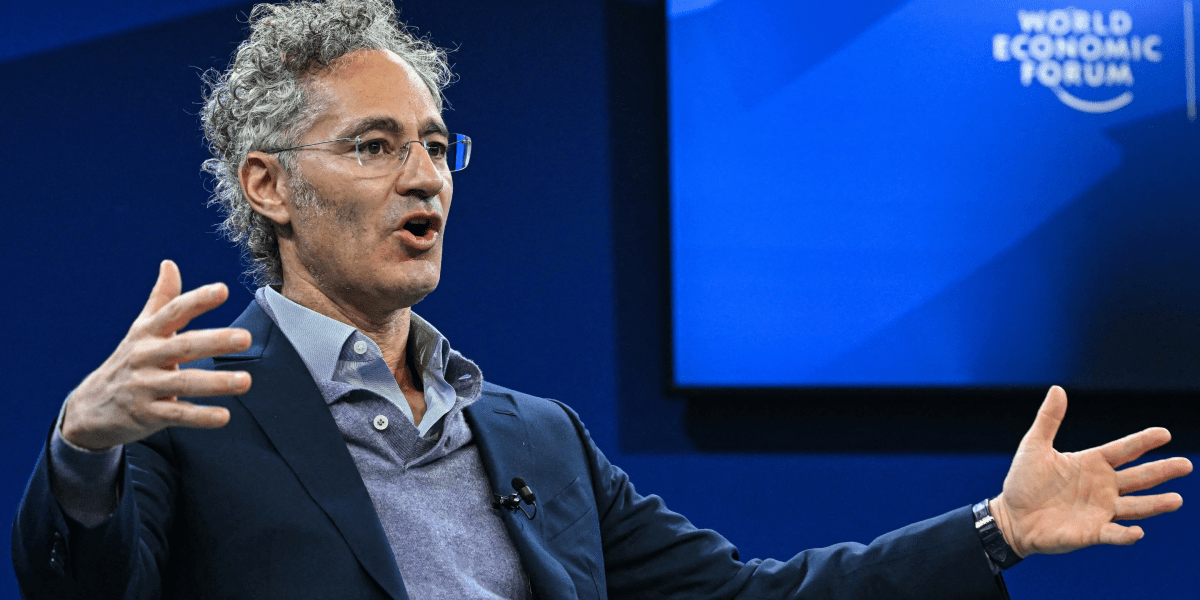
Palantir’s billionaire CEO says only two kinds of people will succeed in the AI era: trade workers — ‘or you’re neurodivergent’ | Fortune
Billionaire Alex Karp tells Gen Z to skip elite college degrees, as one-fifth of Fortune 500 companies recruit more neurodivergent talent by 2027.
No. 010: AutoScientists governance, AI-agent monoculture, nonsense-term retractions - The Hallway Track
The Hallway Track No. 010 - How AI is affecting the practice of science
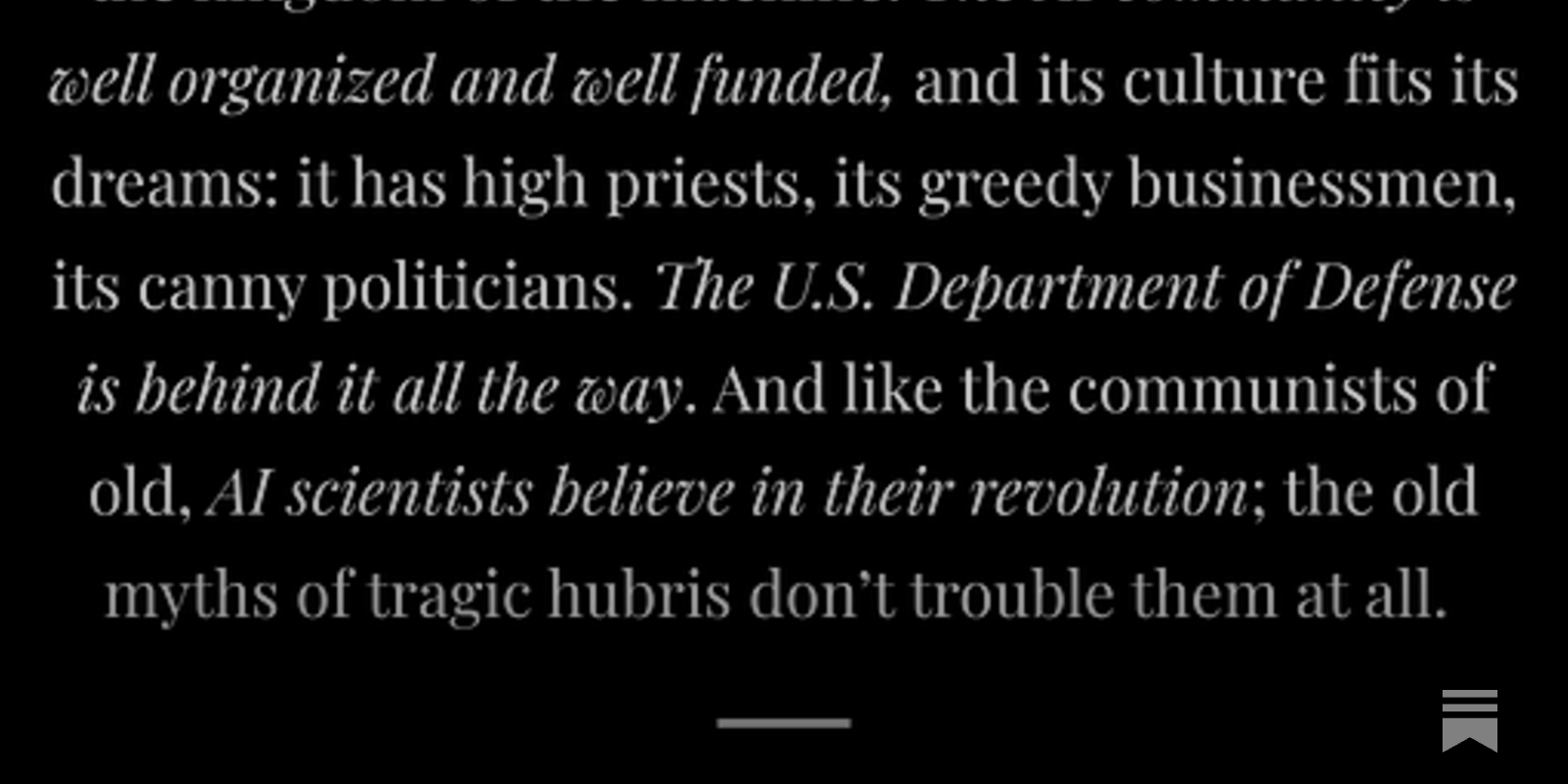
The brain is a computer is a brain: neuroscience's internal debate and the social significance of the Computational Metaphor
The Computational Metaphor, comparing the brain to the computer and vice versa, is the most prominent metaphor in neuroscience and artificial intelligence (AI). Its appropriateness is highly debated in both fields, particularly with regards to whether it is useful for the advancement of science and technology. Considerably less attention, however, has been devoted to how the Computational Metaphor is used outside of the lab, and particularly how it may shape society's interactions with AI. As such, recently publicized concerns over AI's role in perpetuating racism, genderism, and ableism suggest that the term "artificial intelligence" is misplaced, and that a new lexicon is needed to describe these computational systems. Thus, there is an essential question about the Computational Metaphor that is rarely asked by neuroscientists: whom does it help and whom does it harm? This essay invites the neuroscience community to consider the social implications of the field's most controversial metaphor.

Import AI 456: RSI and economic growth; radical optionality for AI regulation; and a neural computer
What laws does superintelligence demand?

70 years of AI hype
Quoting from Olivia Guest et al. (2025) "Against the Uncritical Adoption of AI Technologies in Academia."
Import AI 475: Swarm scaling; Google DeepMind watermarks biology; and the AI science economy
Who chooses what AI gets to do?

About Patrick Mineault
I’m an AI researcher and neurotechnologist. I’m a NeuroAI researcher at the Amaranth Foundation. I’m always happy to take on new, manifestly important projects that are nearly imp…

> the central promise of “ai” is that nothing is worth doing and that community doesn’t exist. It’s individual entitlement as software. It’s Thatcherism. post.lurk.org/@emenel/117441848350524047
emenel (@emenel@post.lurk.org)
post.lurk.org