


I read a post online recently about how some software engineer was asked to complete a technically complex, jargon-filled coding challenge over the...
The Next Two Years of Software Engineering
Exploring five critical questions shaping software engineering through 2026, with contrasting scenarios for each. These lenses help prepare for the evolving ...
Test-Driven Approaches to Software Engineering with Large Language...
Tests increasingly participate in the decisions made by large language models and software engineering agents. They specify intended behavior, guide program construction and repair, select...

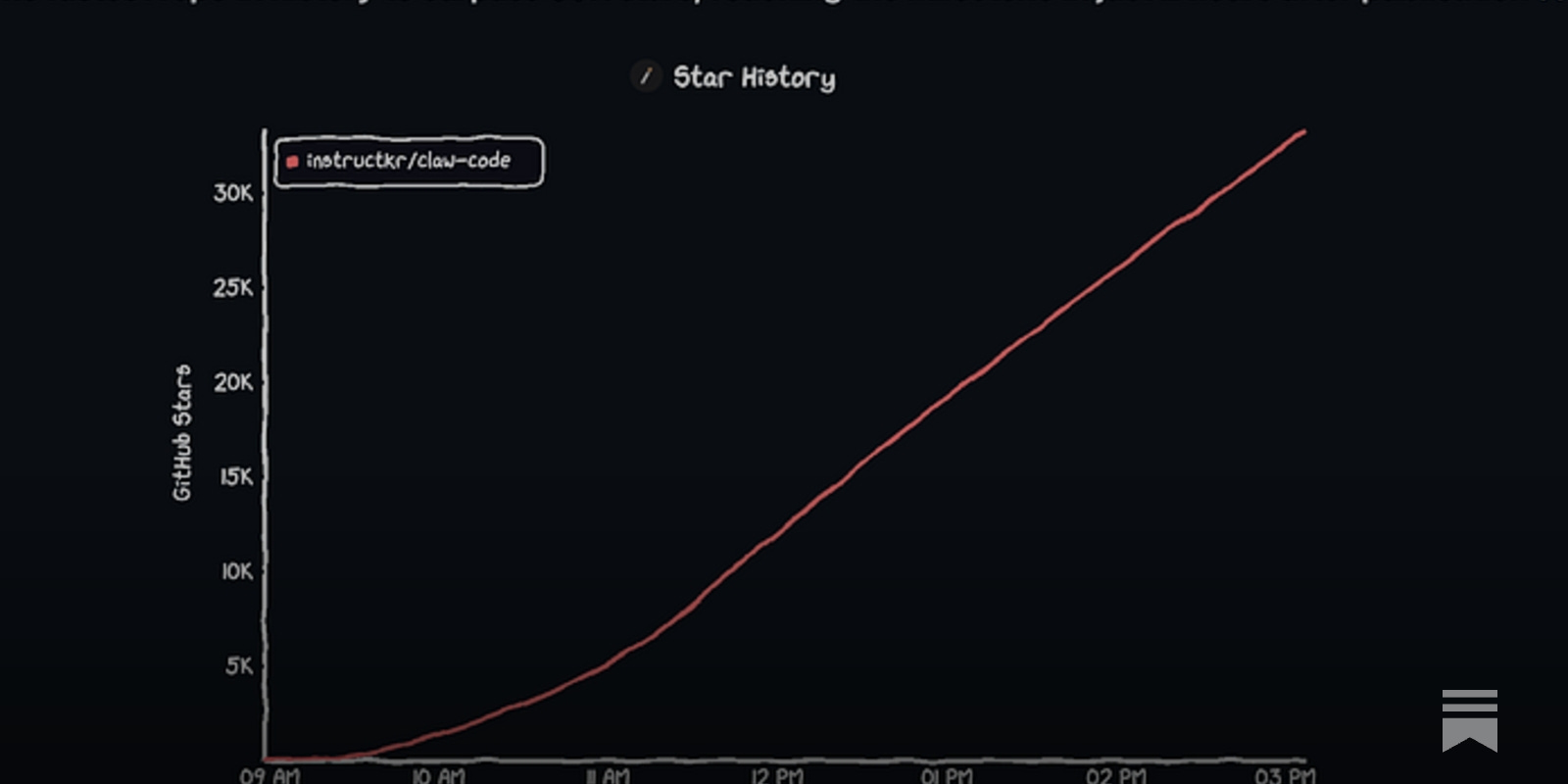
Diving into Claude Code's Source Code Leak
Engineer’s Codex is a publication about real-world software engineering.
Small Programming Tricks
A lot of effective engineering comes from the accumulation of small nuggets of knowledge.
We are all Product Engineers now | Seldo.com
Agents are eating the software development lifecycle from the bottom up — code generation already gone, review and ops following fast. What remains is figuring out what people actually want, which can't be automated or scaled. That job is called product engineering, it pays $240k, and nobody's training for it.
Coding Agents Are Easy, Actually - Kara's Nonsense
Software engineering is here to stay
What We Know We Don't Know: Empirical Software Engineering
Empirical Software Engineering is the study of what actually works in programming. Instead of trusting our instincts we collect data, run studies, and peer-review our results. This talk is all about how we empirically find the facts in software and some of the challenges we face, with a particular focus on software defects and productivity. Talk doesn’t seem to be online yet; in the meantime, you can see a recording of an older version of the talk here.
Why Software Engineering Is Indispensable in the Age of Coding Agents
Can AI make Software Engineering (SE) -- the discipline -- obsolete? And can it make software engineers -- the professionals -- redundant? This paper argues that the rise of capable AI coding...
R. S. Doiel, Software Engineer/Analyst — Robert's ramblings
By R. S. Doiel, 2026-02-21 (revised: 2026-03-03, epilogue added 2026-03-27)
Challenges and Paths Towards AI for Software Engineering
View recent discussion. Abstract: AI for software engineering has made remarkable progress recently, becoming a notable success within generative AI. Despite this, there are still many challenges that need to be addressed before automated software engineering reaches its full potential. It should be possible to reach high levels of automation where humans can focus on the critical decisions of what to build and how to balance difficult tradeoffs while most routine development effort is automated away. Reaching this level of automation will require substantial research and engineering efforts across academia and industry. In this paper, we aim to discuss progress towards this in a threefold manner. First, we provide a structured taxonomy of concrete tasks in AI for software engineering, emphasizing the many other tasks in software engineering beyond code generation and completion. Second, we outline several key bottlenecks that limit current approaches. Finally, we provide an opinionated list of promising research directions toward making progress on these bottlenecks, hoping to inspire future research in this rapidly maturing field.
Note on 24th September 2026
The more time I spend working with coding agents, the more convinced I am that they make software engineering even harder. We can do amazing things with them, but unlocking …
Running an AI-native engineering org | Claude
How the Claude Code engineering team’s processes and structure changed once agentic coding became the default way of working.

Usage, Effects and Requirements for AI Coding Assistants in the Enterprise: An Empirical Study
The rise of large language models (LLMs) has accelerated the development of automated techniques and tools for supporting various software engineering tasks, e.g., program understanding, code generation, software testing, and program repair. As CodeLLMs are being employed toward automating these tasks, one question that arises, especially in enterprise settings, is whether these coding assistants and the code LLMs that power them are ready for real-world projects and enterprise use cases, and how do they impact the existing software engineering process and user experience. In this paper we survey 57 developers from different domains and with varying software engineering skill about their experience with AI coding assistants and CodeLLMs. We also reviewed 35 user surveys on the usage, experience and expectations of professionals and students using AI coding assistants and CodeLLMs. Based on our study findings and analysis of existing surveys, we discuss the requirements for AI-powered coding assistants.
How I stopped worrying and learned to love the easy fix
On the balance between perfect solutions and pragmatic fixes in software engineering
How to fully automate software engineering
Current AI coding tools assist but don't fully automate software engineering. Better RL environments are what's missing.

We should rethink how we teach people to code | deadSimpleTech
It's fair to say that the tech industry at the moment is not in a good place. Software engineers tend to be detached, demotivated and unwilling to care much about the work they're doing beyond their paycheck. Code quality is poor on the whole, made worse by the current spate of vibe coding and whatever other febrile ideas come out of Sam Altman's brain. Much of the software that we write is either useless or actively hurts people. And the talented, creative people that we most need in the industry are pushed to the margins of it.
