
Leadership fails because leaders fail to connect with each team member in a meaningful way. Leadership failures can have a profound effect on the company.
(PDF) Leadership Failure in the Eyes of Subordinates: Perception, Antecedents, and Consequences *
PDF | Effective leaders and leadership behaviors and practices are well-researched areas in the domain of leadership and management. However,... | Find, read and cite all the research you need on ResearchGate

Why Good Leaders Fail
The risk of sudden leadership failure can be headed off by early detection of challenges and better supports.

The Feedback Fallacy
For years managers have been encouraged to candidly praise and criticize just about everything workers do. But it turns out that feedback does not help employees thrive. First, research shows that people can’t reliably rate the performance of others: More than 50% of your rating of someone reflects your characteristics, not hers. Second, neuroscience reveals that criticism provokes the brain’s “fight or flight” response and inhibits learning. Last, excellence looks different for each individual, so it can’t be defined in advance and transferred from one person to another. It’s also not the opposite of failure. Managers will never produce great performance by identifying what they think is failure and telling people how to correct it. Instead, when managers see a great outcome, they should turn to the person who created it, say, “Yes! That!,” and share their impression of why it was a success. Neuroscience shows that we grow most when people focus on our strengths. Learning rests on our grasp of what we’re doing well, not what we’re doing poorly, and certainly not on someone else’s sense of what we’re doing poorly.

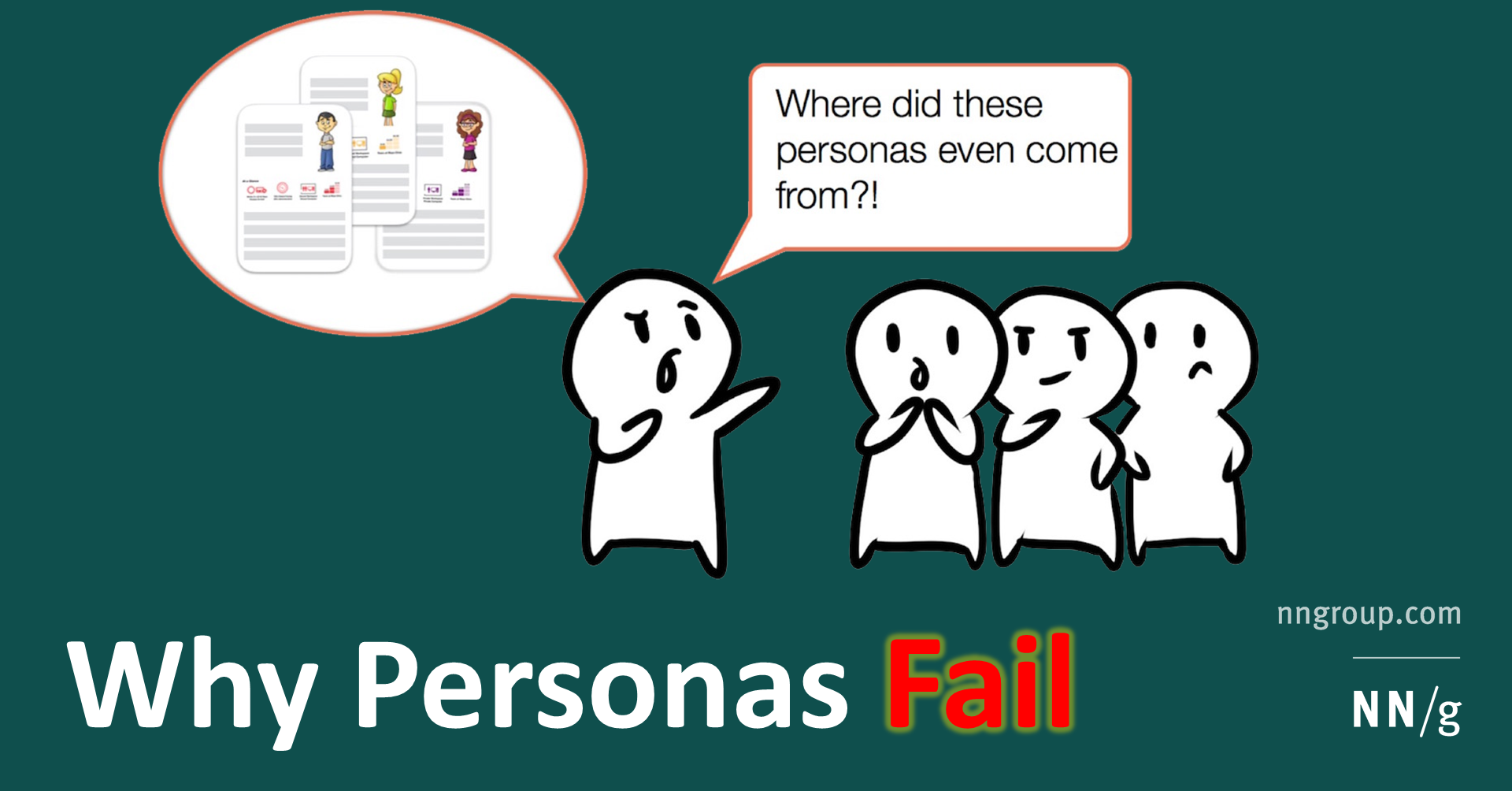
Why Personas Fail
Personas are useful tools for UX work, so why do they often fail? Find out what pitfalls cause personas to fail, and how to avoid and overcome them.
Flaky Tests Are a Leadership Failure: Stop Apologizing
Stop blaming your scripts for flakiness. Learn why it is a sign of leadership failure and learn the 1st pillars of testability: Operability & Observability.

The surprising traits of good remote leaders
Strong in-person leadership skills don’t necessarily translate to being a good virtual leader. Instead, organisation and competency reign supreme.

Leadership: Values
A question I get quite frequently is “What makes a good leader?” One of the most important aspects of a good leader is that they have values. This may at first sound noncontroversial, but we are surrounded today by leaders who do not have values or whose only values are to get rich personally or to be powerful (or both). Tech investors have been especially guilty of enabling charismatic leaders, and sometimes even non-charismatic but wildly successful ones, who are fundamentally hollow and wi...
Many Strategies Fail Because They’re Not Actually Strategies
Many strategy execution processes fail because “new strategies” are often not strategies at all. A real strategy involves a clear set of choices that define what the firm is going to do and what it’s not going to do. Many strategies fail to get implemented because they do not represent such a set of clear choices. And many so-called strategies are in fact goals. “We want to be the number one or number two in all the markets in which we operate” is one of those. It does not tell you what you are going to do; all it does is tell you what you hope the outcome will be. But you’ll still need a strategy to achieve it. Another reason why many implementation efforts fail is that executives see it as a pure top-down, two-step process: “The strategy is made; now we implement it.” That’s unlikely to work. A successful strategy execution process is seldom a one-way trickle-down cascade of decisions.

Habits of High-Functioning Teams
I often struggle to explain what it means to be part of a high-functioning software team. Sure, there are mountains of literature, and an entire genre of LinkedIn thought leadership that professes all kinds of guidelines and heuristics about what makes teams work, but in my experience, it’s hard to internalize these ideas and follow someone else’s model if you’ve never seen what good looks like.
AI Is Failing at an Overwhelming Majority of Companies Using It, MIT Study Finds
Recent figures by MIT found that 95 percent of generative AI pilots are failing, with some drastic implications for the spending bubble.

Emergent leadership: The trait that smart, innovative companies seek out in employees
Emergent leaders step up and lead when qualified but are comfortable in the background, too.

Startup Mistakes: First-Hand Lessons from 80+ Failed Startups
We've analyzed why +80 startups have failed and identified some of their common mistakes. Here're our findings!
When to Fold: The Cost of Failing Slow in a Startup
Failing Slow: Why One Founder Regretted Keeping His Startup Alive
Redundancy Protects Human Collaborations from Failure
In the name of efficiency, organizations and governments around the world are increasingly trimming redundancy---personnel or overlapping capabilities beyond what routine operations require. Drawing on distributed computing and cognitive science, we challenge this view. Using queueing simulations and a preregistered multiplayer experiment (N = 832 in 187 teams of 3–6), we show that redundancy improves performance through two distinct routes. Adding collaborators to a team improves resilience, with larger teams completing more tasks when members became temporarily unable to contribute. Giving team members overlapping capabilities also improved efficiency, with teams in which collaborators could perform multiple roles completing substantially more work. These findings suggest that efforts to improve short-term efficiency by reducing redundancy may come at a cost, quietly eroding a team’s capacity to withstand unexpected failures.
How to Create a Great Team Culture (and Why It Matters): Build safety, share vulnerability, establish purpose.: Queue: Vol 17, No 1
As leader of the team, you have significant influence over your team's culture. You can institute policies and procedures that help make your team happy and productive, monitor team successes, and continually improve the team. Another important part of ...

8 things leaders of remote companies do differently
If you’re thinking of going remote, here’s what successful leaders of remote companies do… Earlier this month, I spoke with a CEO who’s looking to transition her company to become remote in the upcoming year.