

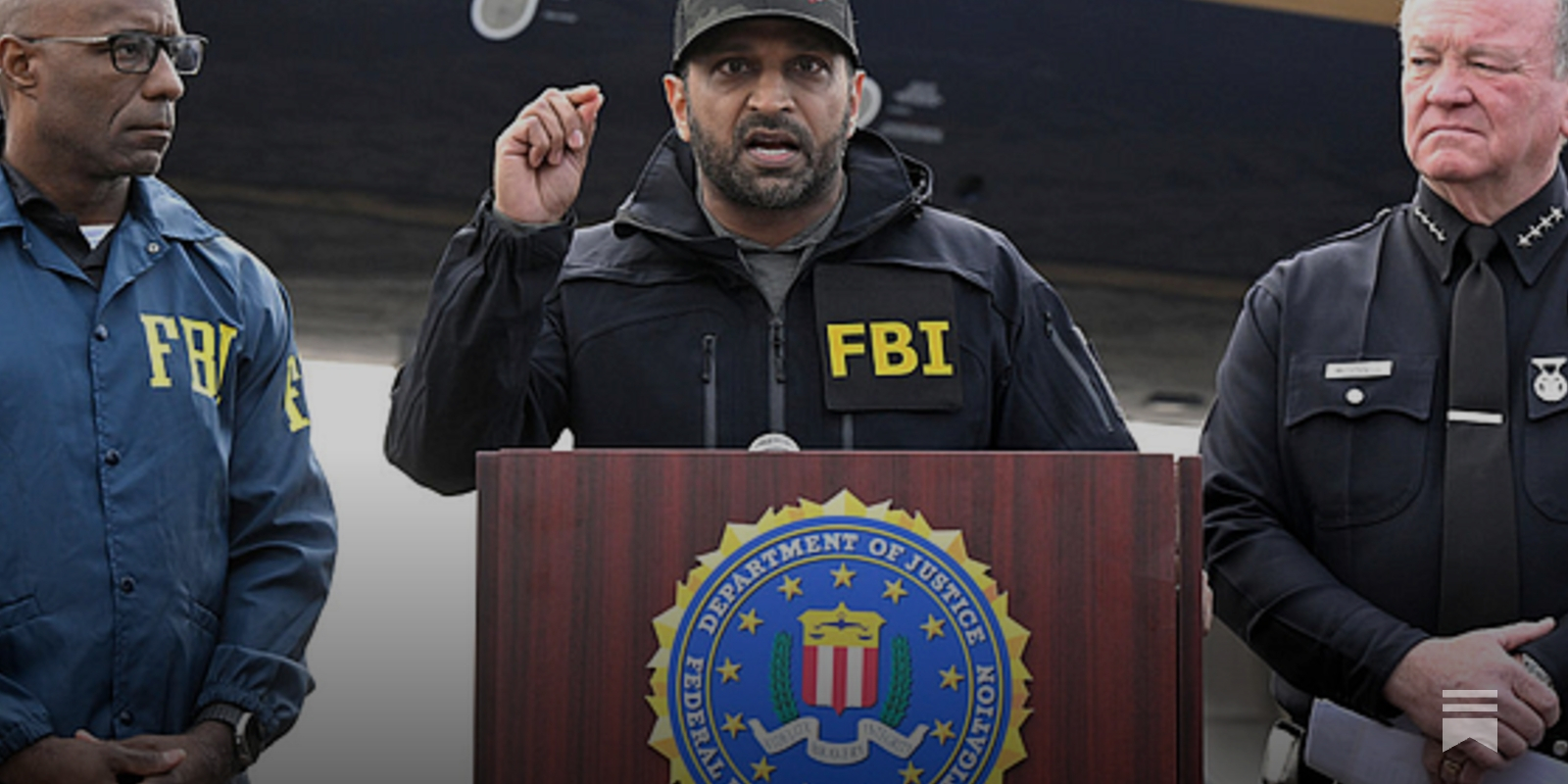
Are your views on the list of 'domestic terrorism' indicators?
Minority report: FBI seeks AI for political watch list
Documents show the FBI seeking AI tools to flag Americans before they act, as the terror watchlist's focus moves toward domestic dissent.
Updated List of Criminal DHS Agents_08172026

Artificial Intelligence, Predictive Policing, and Risk Assessment for Law Enforcement
There are widespread concerns about the use of artificial intelligence in law enforcement. Predictive policing and risk assessment are salient examples. Worries include the accuracy of forecasts that guide both activities, the prospect of bias, and an apparent lack of operational transparency. Nearly breathless media coverage of artificial intelligence helps shape the narrative. In this review, we address these issues by first unpacking depictions of artificial intelligence. Its use in predictive policing to forecast crimes in time and space is largely an exercise in spatial statistics that in principle can make policing more effective and more surgical. Its use in criminal justice risk assessment to forecast who will commit crimes is largely an exercise in adaptive, nonparametric regression. It can in principle allow law enforcement agencies to better provide for public safety with the least restrictive means necessary, which can mean far less use of incarceration. None of this is mysterious. Nevertheless, concerns about accuracy, fairness, and transparency are real, and there are tradeoffs between them for which there can be no technical fix. You can't have it all. Solutions will be found through political and legislative processes achieving an acceptable balance between competing priorities.

Artificial Intelligence, Predictive Policing, and Risk Assessment for Law Enforcement
There are widespread concerns about the use of artificial intelligence in law enforcement. Predictive policing and risk assessment are salient examples. Worries include the accuracy of forecasts that guide both activities, the prospect of bias, and an apparent lack of operational transparency. Nearly breathless media coverage of artificial intelligence helps shape the narrative. In this review, we address these issues by first unpacking depictions of artificial intelligence. Its use in predictive policing to forecast crimes in time and space is largely an exercise in spatial statistics that in principle can make policing more effective and more surgical. Its use in criminal justice risk assessment to forecast who will commit crimes is largely an exercise in adaptive, nonparametric regression. It can in principle allow law enforcement agencies to better provide for public safety with the least restrictive means necessary, which can mean far less use of incarceration. None of this is mysterious. Nevertheless, concerns about accuracy, fairness, and transparency are real, and there are tradeoffs between them for which there can be no technical fix. You can't have it all. Solutions will be found through political and legislative processes achieving an acceptable balance between competing priorities.
The Dangers of Florida’s New “Terrorist” Designations
Anyone who cares about the First Amendment should be concerned about HB 1471 and the spread of state-level terrorism designation laws.
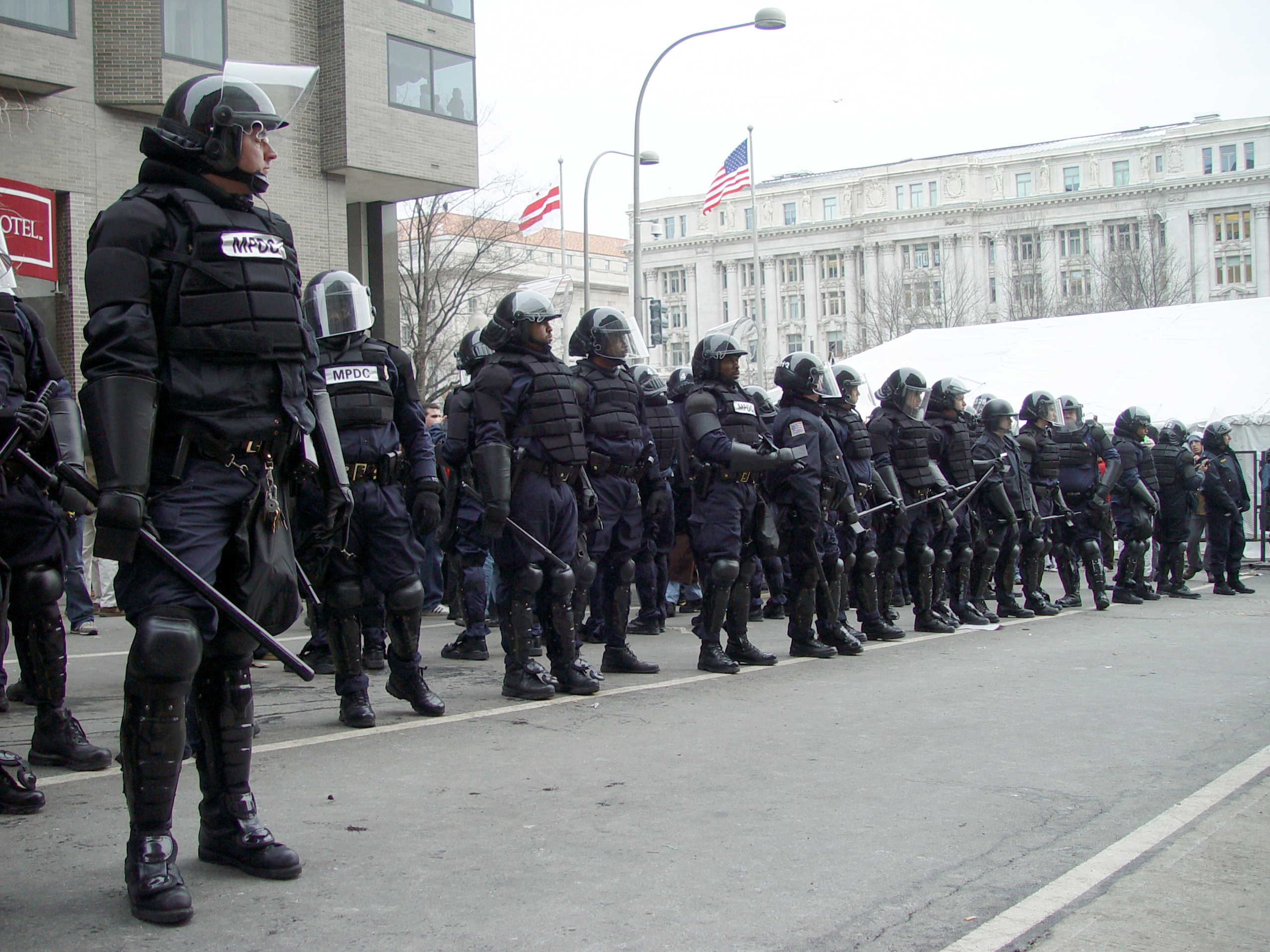
Bad Idea: Domestic Terrorist Organization Designations | Defense360
Creating a new authority to designate domestic terrorist groups would be a mistake. There are, however, mechanisms under existing law that could be better utilized to combat domestic terror.
US Law Enforcement Warns of ‘Anti-Tech Extremism’ as AI Hatred Grows
As Americans stew over the looming risk of job-stealing AI and data centers in their back yards, the feds are raising the alarm about a new category of threat, documents obtained by WIRED show.

25 years after 9/11, our definition of terrorism continues to expand : Code Switch
In the 25 years since 9/11, we've seen the definition of terrorism expand. The Trump administration has called more and more groups “terrorists,” from “narco-terrorists” in Ecuador to people who protest ICE to the entire Democratic party. This week, our conversation with Saher Selod, an expert on the surveillance of Muslims, about the effects of the war on terror after 9/11, and historian Alex Lubin about how the word “terrorist” has been used to enact violence and surveillance.Support public media with NPR+ and enjoy perks for over 25 podcasts like this one. This show’s perks include sponsor-free listening. Learn more at plus.npr.org.
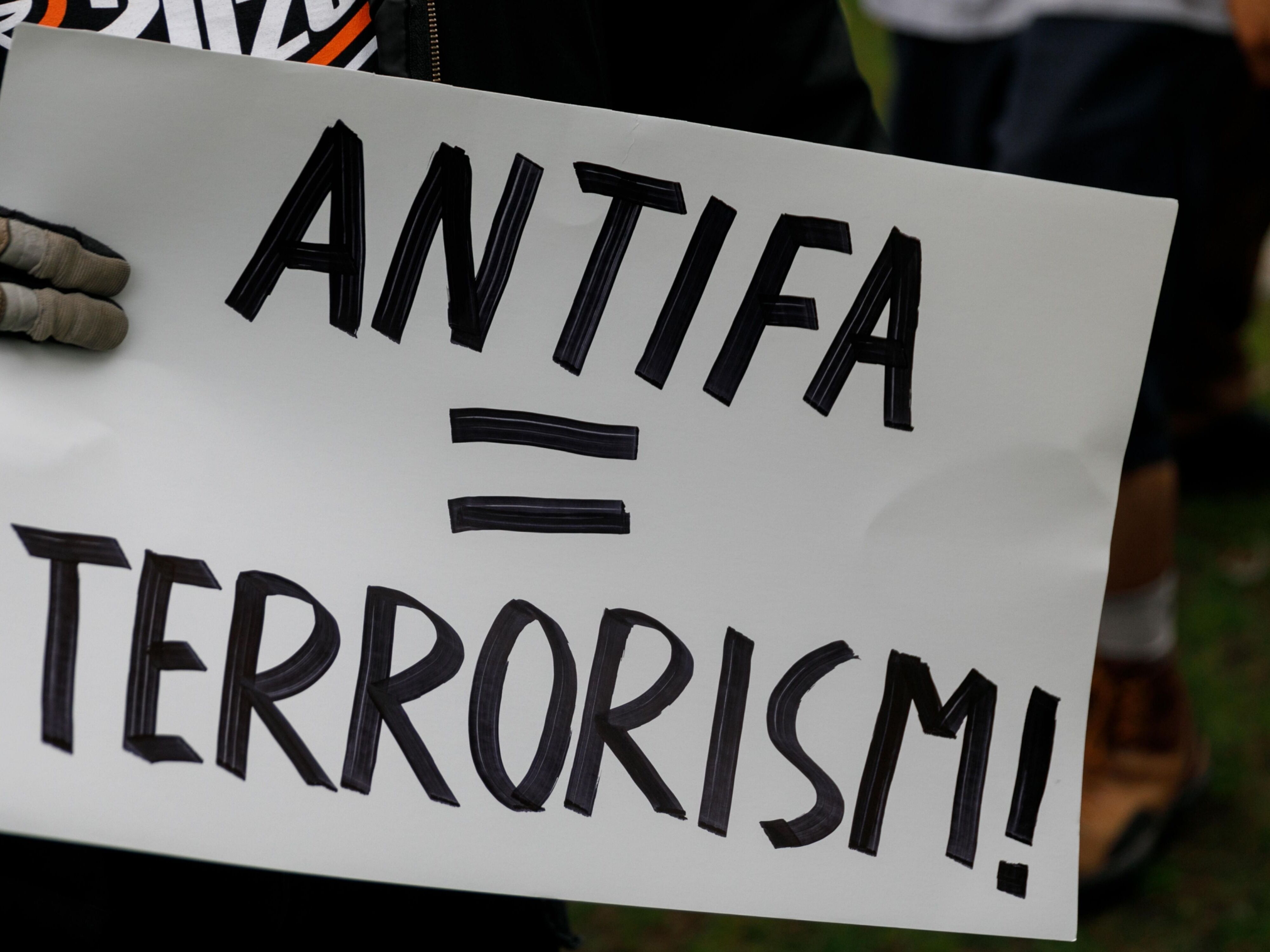
How NSPM-7 Seeks to Use "Domestic Terrorism" to Target Nonprofits and Activists | ACLU
What President Donald Trump’s latest memorandum targeting civil society does, does not, and cannot do.

764: The Intersection of Terrorism, Violent Extremism, and Child Sexual Exploitation
Sign up for our monthly newsletter to stay updated about our work

Peters Report Finds Trump Administration Has Dismantled Critical Counterterrorism Infrastructure and Weaponized What Remains Against Political Opponents, Leaving Americans Vulnerable to Terror Threats - Committee on Homeland Security & Governmental Affairs
Senator Gary Peters released a new report detailing how the Trump Administration has systematically dismantled key elements of the nation’s post-9/11 counterterrorism infrastructure, diverting personnel and resources away from preventing terrorist attacks, and increasingly weaponizing other counterterrorism authorities for political purposes.
Communications Infrastructure Is Not Terrorism
A living campaign hub for reporting, public letters, graphics, press coverage, social circulation, infrastructure status, and ways to act before September 25.

The Trump administration’s global campaign against ‘radical left terrorism’ is built on a national security memo without congressional approval
Almost a year after President Trump authorized preemptive law enforcement measures based on political or ideological beliefs, a wave of terrorism prosecutions against left-wing protesters has begun.
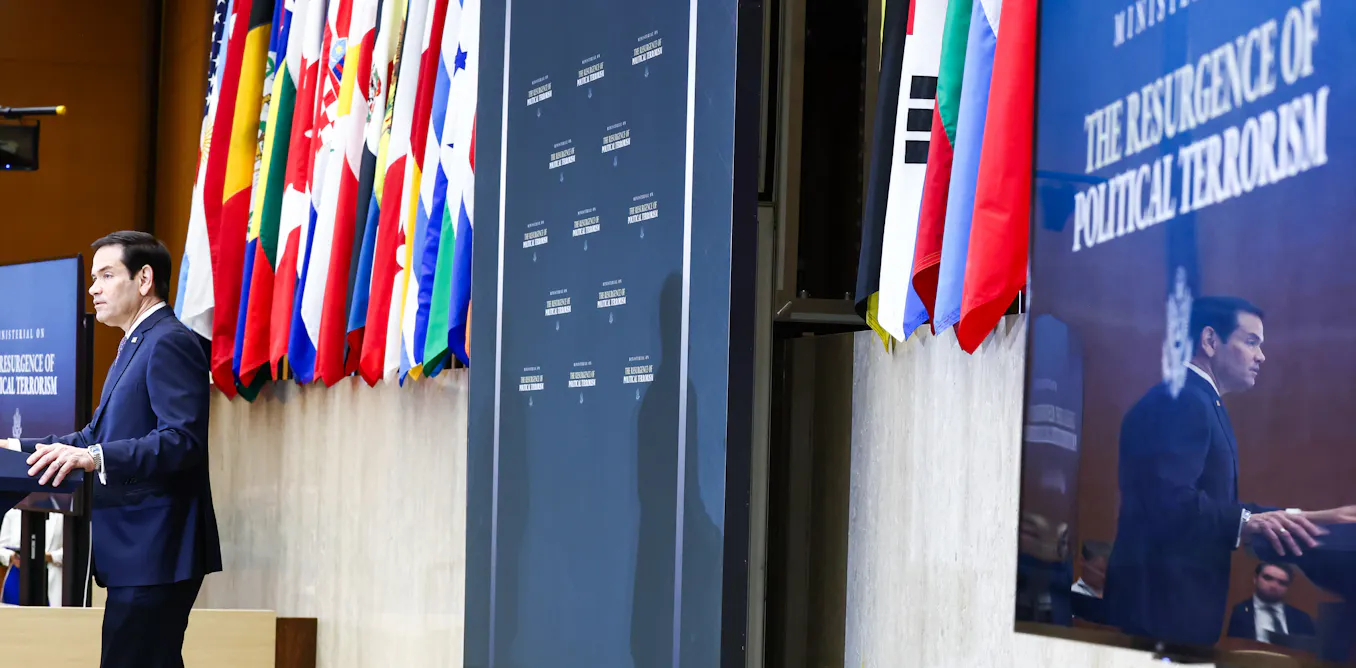
The Trump administration’s global campaign against ‘radical left terrorism’ is built on a national security memo without congressional approval
Almost a year after President Trump authorized preemptive law enforcement measures based on political or ideological beliefs, a wave of terrorism prosecutions against left-wing protesters has begun.
NSPM-7
National Security Presidential Memorandum-7 (NSPM-7), titled "Countering Domestic Terrorism and Organized Political Violence", is a United States National Security Presidential Memorandum (NSPM) issued by President Donald Trump on September 25, 2025. NSPM-7 directs a "comprehensive" law enforcement strategy to "disrupt" entities and individuals purported to be "engaged in acts of political violence and intimidation". NSPM-7 describes such alleged political violence as "sophisticated, organized campaigns" united by anti-fascism, with "common threads animating this violent conduct include anti-Americanism, anti-capitalism, and anti-Christianity; (...) extremism on migration, race, and gender; and hostility towards those who hold traditional American views on family, religion, and morality."

“Terrorism”

NSPM-7 and other expansions of “terrorist” designations, criminalizing protests and other nonviolent forms of political dissent, etc.
NLG Condemns OFAC Designation of Palestine Action and Autistici/Inventati, Calls for Challenges - National Lawyers Guild
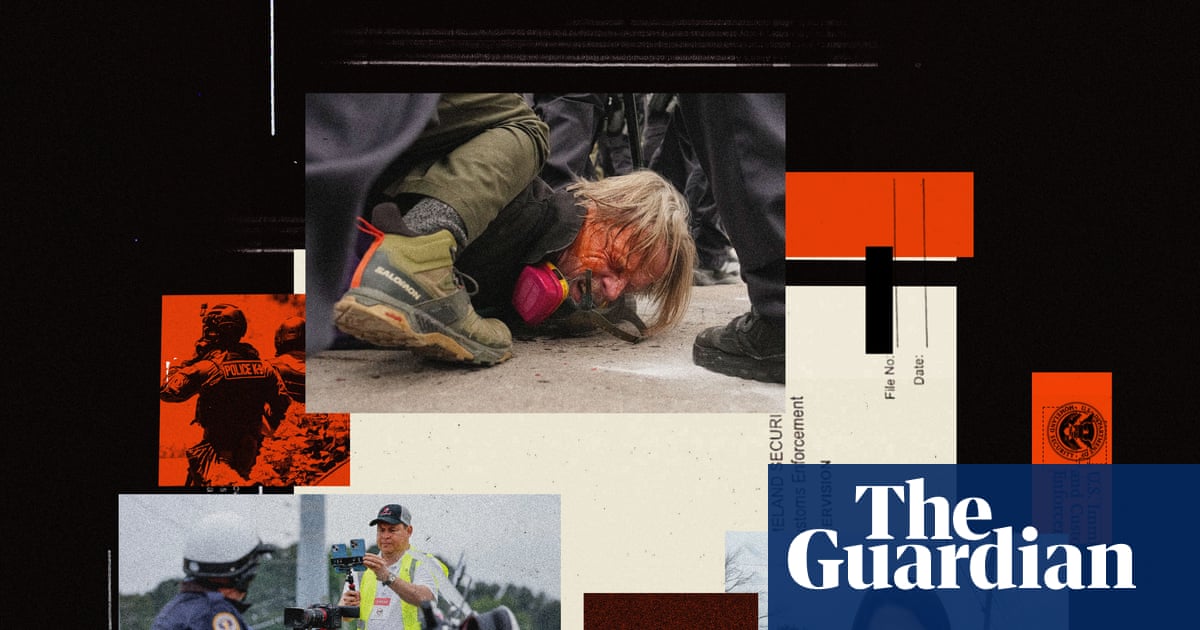
Freedom oppressed: the journalists caught up in Trump’s ICE crackdown

Mass Arrests by Trump's ICE, CBP Repeatedly Fail Under Scrutiny — ProPublica

Rubio and Miller warn of the ‘mortal threat’ of ‘far-left terror’ in speech to 67 countries | CNN Politics
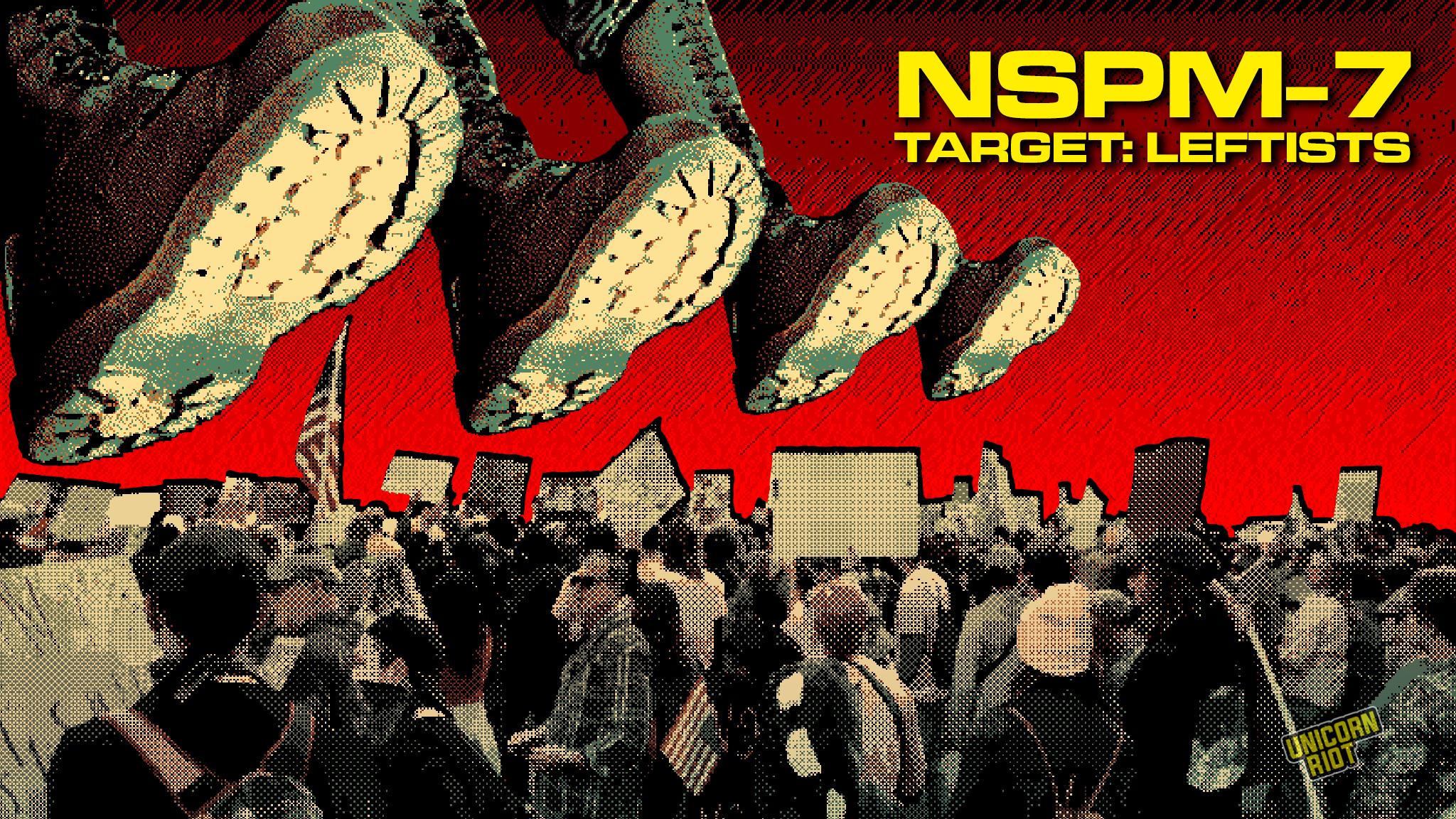
The War on Terror Turns Left - UNICORN RIOT

How the Administration Picks Its Targets, Then Picks the Crime