

In this three part series AMD and Quantic Dream break down the process of porting the hit title Detroit Become Human to PC.
Introduction - Vulkan Tutorial
A tutorial that teaches you everything it takes to render 3D graphics with the Vulkan API. It covers everything from Windows/Linux setup to rendering and debugging.
Diagram of vertex input and multiple bindings
31K subscribers in the vulkan community. News, information and discussion about Khronos Vulkan, the high performance cross-platform graphics API.
Vulkan Ray Tracing Tutorial KHR
A comprehensive tutorial for learning Vulkan ray tracing with practical examples.
How I learned Vulkan and wrote a small game engine with it
The personal website of Elias Daler about programming, technology and videogames
Writing an efficient Vulkan renderer
In 2018, I wrote an article “Writing an efficient Vulkan renderer” for GPU Zen 2 book, which was published in 2019. In this article I tried to aggregate as much information about Vulkan performance as I could - instead of trying to focus on one particular aspect or application, this is trying to cover a wide range of topics, give readers an understanding of the behavior of different APIs on real hardware and provide a range of options for each problem that needs to be solved. At the time of publishing this article, the Kindle edition of the book is available for $2.99 on Amazon - that’s cheaper than a cup of coffee and it’s definitely worth your time and money. It contains many great articles about rendering effects and design. This, however, is the full, free of charge copy of the article - hopefully it will help graphics programmers to understand and use Vulkan to the full of its ability. The article has been lightly edited to mention Vulkan 1.1/1.2 promotions where applicable - fortunately, not much has changed in the last two years for Vulkan performance, so the content should still be mostly accurate. Enjoy!

Vulkan Shader Resource Binding
In this blog post we will go into further details of one of the most common state changes in scene rendering: binding shader resources such as uniform- or storage-buffers, images or samplers.

Razer Gaming Desktops and Components | Best Gaming Desktops | Razer Canada
Build your dream battlestation with our best gaming desktop solutions - meticulously crafted and assembled for high-performance play.

Nvidia invests $5 billion into Intel to jointly develop PC and data center chips
Intel will help build x86 chips with Nvidia RTX GPU chiplets

Visualizing GL_NV_shader_sm_builtins
Using GL_NV_shader_sm_builtins to visualize Streaming Multiprocessors and Warps
Rendering Particles with Compute Shaders
Overview I developed a technique to render single-pixel particles (using additive blending) with compute shaders rather than the usual fixed-function rasterization with vertex and fragment shaders. My approach runs 31–350% faster than rasterization on the cases I tested and is particularly faster for some “pathological” cases (which for my application are not actually that uncommon). I observed these speedups on both NVIDIA and AMD GPUs. Using this technique allowed me to ship an app that runs on minimum-spec hardware without sacrificing visual fidelity.
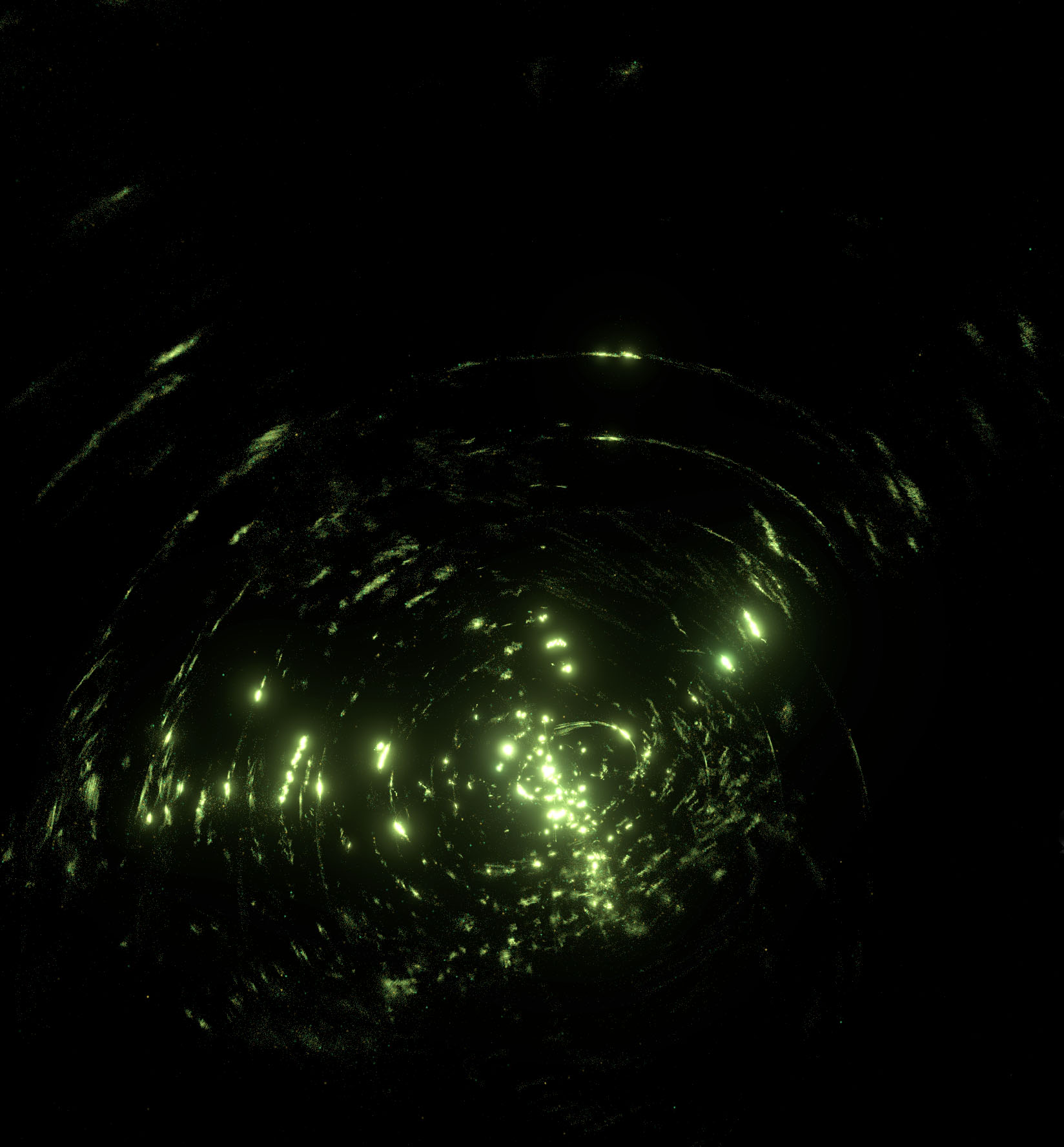
EEVEE Realistic Lighting and Rendering
Master realistic lighting in EEVEE - rendered in fractions of a second. Introducing: a complete course unlocking the true power of EEVEE in Blender 5.0 with Vulkan.

Vulkan Memory Management
Vulkan offers another key difference to OpenGL with respect to memory allocation. When it comes to managing memory allocations as well as assigning it to individual resources, the OpenGL driver does most of the work for the developer.
