


The 8-Step Process for Leading Change is an award-winning strategy by Dr. John Kotter from Leading Change & has transformed countless organizations.
Leading Change: Why Transformation Efforts Fail
Businesses hoping to survive over the long term will have to remake themselves into better competitors at least once along the way. These efforts have gone under many banners: total quality management, reengineering, rightsizing, restructuring, cultural change, and turnarounds, to name a few. In almost every case, the goal has been to cope with a new, more challenging market by changing the way business is conducted. A few of these endeavors have been very successful. A few have been utter failures. Most fall somewhere in between, with a distinct tilt toward the lower end of the scale. John P. Kotter is renowned for his work on leading organizational change. In 1995, when this article was first published, he had just completed a ten-year study of more than 100 companies that attempted such a transformation. Here he shares the results of his observations, outlining the eight largest errors that can doom these efforts and explaining the general lessons that encourage success. Unsuccessful transitions almost always founder during at least one of the following phases: generating a sense of urgency, establishing a powerful guiding coalition, developing a vision, communicating the vision clearly and often, removing obstacles, planning for and creating short-term wins, avoiding premature declarations of victory, and embedding changes in the corporate culture. Realizing that change usually takes a long time, says Kotter, can improve the chances of success.

Kotter Change Management Modell
Learn more about the Kotter Change Management Model and see what every step and phase means in this Change Model from John P. Kotter.

"Ten Areas of Technological Change", John Smart, 2012
Leadership of Technological Change: Ten Areas of Strategic Disruption, Opportunity, and Threat
Why Good Leaders Fail
The risk of sudden leadership failure can be headed off by early detection of challenges and better supports.

Demystifying Revenue Leadership: The Role of a CRO in Differing Stages of a Startup - Eric Janssen
Exploring the changing role of a CRO in different stages of a startup's growth. - Sales by Eric Janssen
Rebuilding product strategy for the next era
For tech leaders navigating change, this is how we’re doing it differently. By Suba Vasudevan, COO, Mozilla.

Experiment with Organizational Change Before Going All In
Your intuition is never enough.

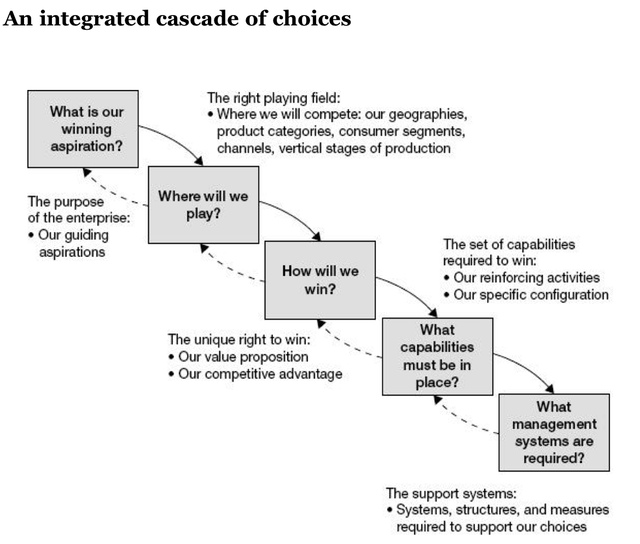
Playing to Win: How Strategy Really Works
How Strategy Really Works. This approach grew out of the strategy practice at Monitor Company and subsequently became the standard process at P&G.
Emergent leadership: The trait that smart, innovative companies seek out in employees
Emergent leaders step up and lead when qualified but are comfortable in the background, too.

Team Objectives – Overview | Silicon Valley Product Group
After many years of being a very vocal advocate for the OKR (Objectives and Key Results) technique, in the majority of companies I meet, I have stopped recommending the practice. That’s because, in so many companies, even though conceptually the technique is simple and sound, it ends up proving a waste of time and effort,...


How to Grow Distributed Leadership
Watch the video below, check out the infographic, or read on for the text version.

8 things leaders of remote companies do differently
If you’re thinking of going remote, here’s what successful leaders of remote companies do… Earlier this month, I spoke with a CEO who’s looking to transition her company to become remote in the upcoming year.

PSFK | Strategic Foresight, Advisory and Company Brain
PSFK helps leadership teams decide what to do about change, and builds the AI brain that puts your own knowledge to work.
PSFK | Strategic Foresight, Advisory and Company Brain
PSFK helps leadership teams decide what to do about change, and builds the AI brain that puts your own knowledge to work.
Against optimization
One of the most inescapable edicts when leading a team is the order to optimize the system towards the organization’s goals.
