Discover how traces for documentation replace code as the source of truth for AI agents. Learn to debug, test, and optimize agent behavior effectively.

Cognition | Agent Trace: Capturing the Context Graph of Code
We’re excited to join in Cursor, Cloudflare, Vercel, git-ai, OpenCode and others in support of [Agent Trace](https://agent-trace.dev/). As described in the spec, Agent Trace is an open, vendor-neutral spec for recording AI contributions alongside human authorship in version-controlled codebases.
Git AI - Track AI Code all the way to production
Cross-agent observability from prompt to production. Track AI-generated code from Cursor, Claude Code, GitHub Copilot, Gemini, and more through the entire SDLC.
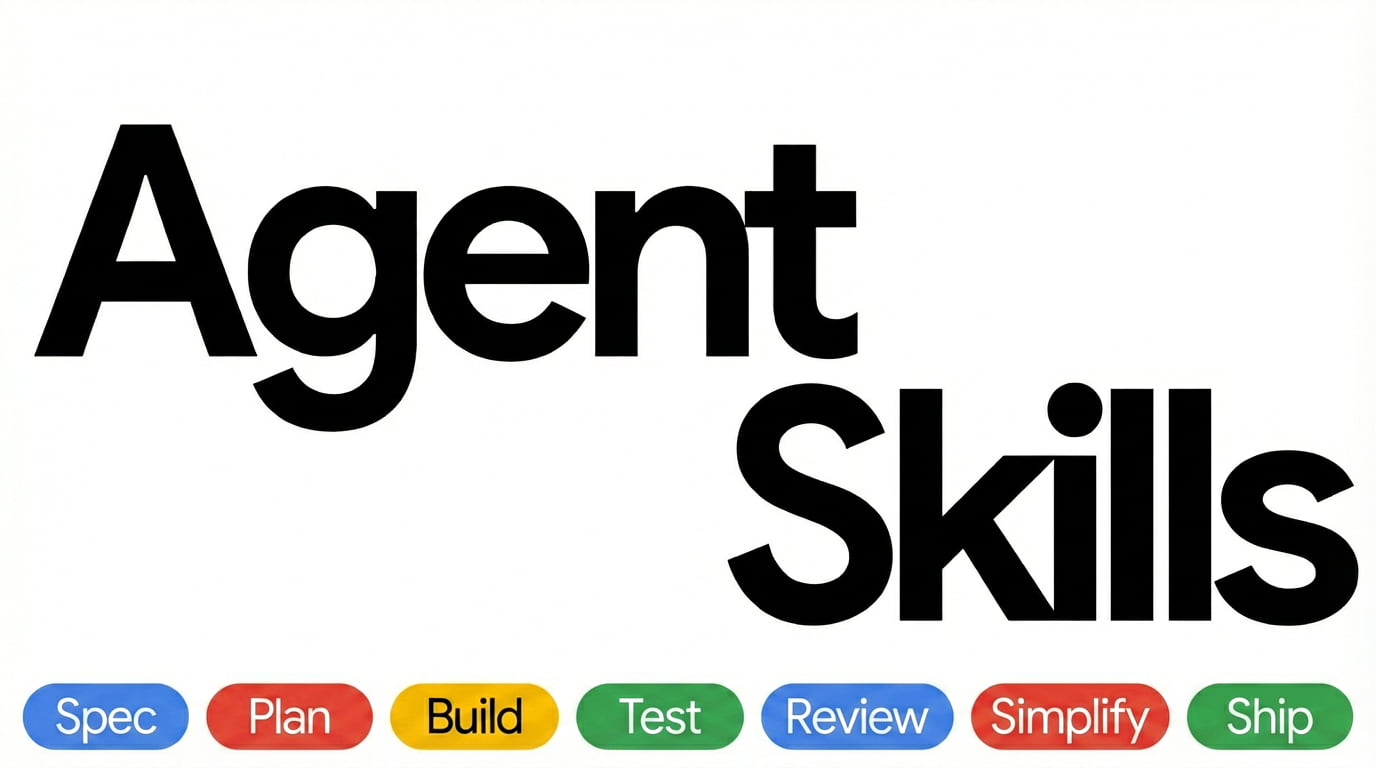
Agent Skills
AI coding agents take the shortest path to done, which usually means skipping the specs, tests, and reviews that make software reliable at scale. Agent Skill...
The New Software Lifecycle
I co-wrote a Google whitepaper about how AI is changing the software lifecycle. I'm not going to summarize the whole thing. Instead, here are the handful of ...

AI should help us produce better code - Agentic Engineering Patterns
AI should help us produce better code - Agentic Engineering Patterns
When Science Goes Agentic
In a couple of years, we will inspect AI-generated source code about as often as we inspect the assembly output of a compiler. Which is to say, far less often—outside of high-stakes and adversarial settings. The trajectory is clear: vibe coding is not a fad but a transition, a stepping stone. Debugging AI-generated code will shrink dramatically for a lot of everyday software—not because the code will be flawless, but because the feedback loops between generation, testing, and correction will tighten until human inspection becomes the bottleneck rather than the safeguard. In this respect, requiring the co-generation, with code, of mechanically verifiable formal attestations can also improve the process.

How Do AI Coding Agents Contribute to Software Development? an Empirical Study of Agentic Pull Requests
Recent advances in large language models and their rapid adoption across software engineering tasks have made Artificial Intelligence (AI) coding agents an integral component of modern software development workflows. While developers increasingly benefit from these coding agents, their impact on software quality remains insufficiently understood. In particular, how agentic contributions evolve across the software development lifecycle has not been thoroughly investigated. This study aims to characterize agentic pull requests (PR) in comparison to human generated PRs and to examine how their properties change across different stages of the development lifecycle. Using the AIDev dataset, we first analyze how differences in merge rates between agentic and human generated PRs vary over time. We then identify the types of development tasks where AI coding agents are predominantly applied and investigate how these task distributions evolve across development quarters. Finally, we compare a set of key characteristics of agentic and human generated PRs, focusing on their implications for software quality and their temporal dynamics. Overall, our findings provide an empirical and longitudinal perspective on the role of AI coding agents in software development, offering a more nuanced understanding of their benefits and limitations in real-world practices.

How Do AI Coding Agents Contribute to Software Development? an Empirical Study of Agentic Pull Requests
Recent advances in large language models and their rapid adoption across software engineering tasks have made Artificial Intelligence (AI) coding agents an integral component of modern software development workflows. While developers increasingly benefit from these coding agents, their impact on software quality remains insufficiently understood. In particular, how agentic contributions evolve across the software development lifecycle has not been thoroughly investigated. This study aims to characterize agentic pull requests (PR) in comparison to human generated PRs and to examine how their properties change across different stages of the development lifecycle. Using the AIDev dataset, we first analyze how differences in merge rates between agentic and human generated PRs vary over time. We then identify the types of development tasks where AI coding agents are predominantly applied and investigate how these task distributions evolve across development quarters. Finally, we compare a set of key characteristics of agentic and human generated PRs, focusing on their implications for software quality and their temporal dynamics. Overall, our findings provide an empirical and longitudinal perspective on the role of AI coding agents in software development, offering a more nuanced understanding of their benefits and limitations in real-world practices.
Introduction to Agents
Discover what actually works in AI. Join millions of builders, researchers, and labs evaluating agents, models, and frontier technology through crowdsourced benchmarks, competitions, and hackathons.
How to harness AI
"Coding agents" are complicated but intelligible

AI Code
As AI Coding Agents write more code, it's more important than ever that we're intentional about the code it writes.
Running an AI-native engineering org | Claude
How the Claude Code engineering team’s processes and structure changed once agentic coding became the default way of working.
Sourcegraph — Code Understanding, Oversight and Evolution
Give humans and agents complete context to understand, oversee, and evolve the world's largest, most complex codebases.
AI Coding Agents: Adoption Trends - The JetBrains Blog
How many developers use AI coding agents (Claude Code, Codex, Cursor, JetBrains Junie, and others)? Evidence from the Developer Ecosystem Survey 2026.