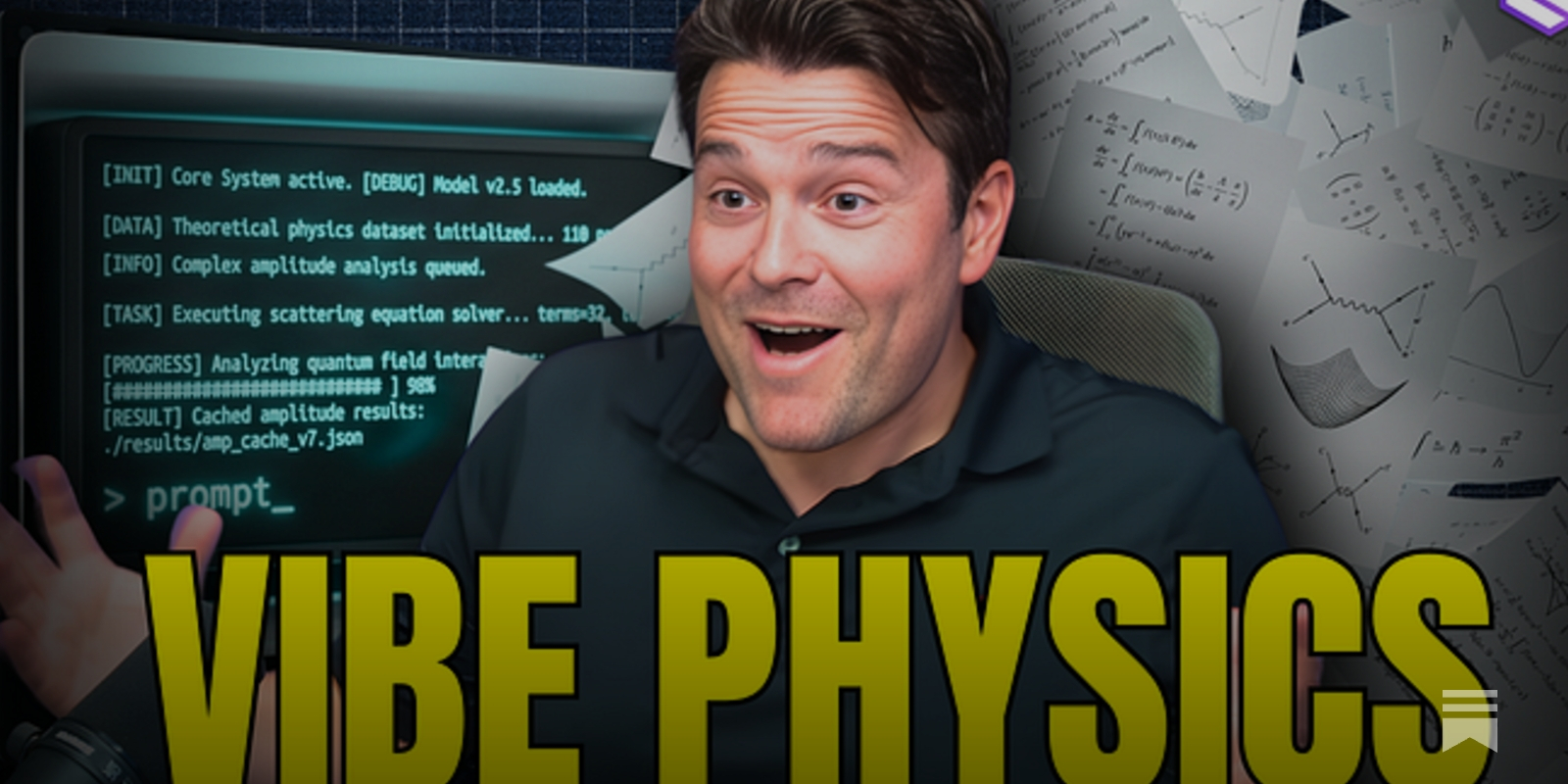
The full story of how GPT‑5.x derived new results in theoretical physics and quantum gravity.
Mo on Twitter / X
Deciphering OpenAI's misleading claim that GPT-5.2 made a new discovery in theoretical physics. https://t.co/Lysx647aKr pic.twitter.com/xNj08evmXx— Mo (@atmoio) February 14, 2026

Out of Nowhere: The Emergence of Spacetime in Quantum Theories of Gravity
Out of Nowhere is the monograph co-authored by Nick Huggett and Christian Wüthrich, which appeared in 2025 from Oxford University Press. Selected chapters are posted here. (Our publication agreemen…

How physics at the roots of reality point to a grand unified theory | Aeon Essays
Physics displays an uncanny alignment at its very deepest levels. Is a grand theory of everything finally within reach?
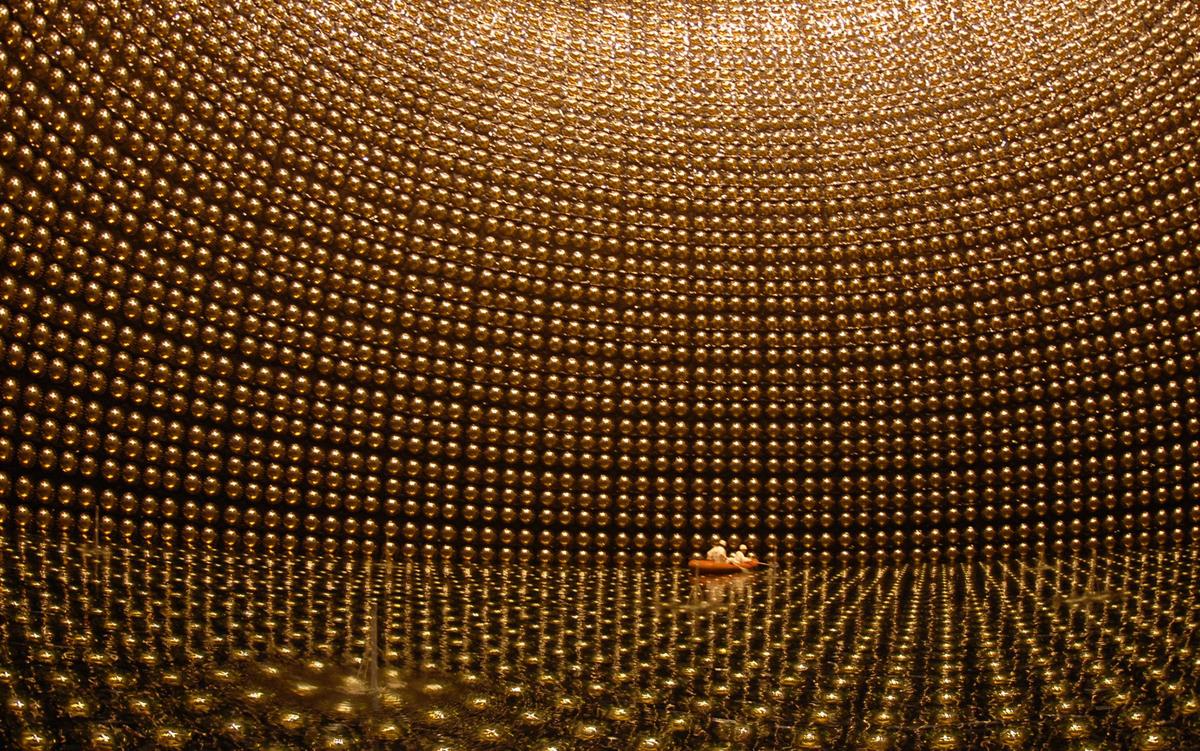
steve hsu on Twitter / X
I think I’ve published the first research article in theoretical physics in which the main idea came from an AI - GPT5 in this case. The physics research paper itself (on QFT and state-dependent quantum mechanics) has been published in Physics Letters B.I've written an… pic.twitter.com/6IYDTS2JAt— steve hsu (@hsu_steve) December 3, 2025
clem 🤗 on Twitter / X
The main breakthrough of GPT-5 was to route your messages between a couple of different models to give you the best, cheapest & fastest answer possible.This is cool but imagine if you could do this not only for a couple of models but hundreds of them, big and small, fast and… pic.twitter.com/ww2ApYTN3D— clem 🤗 (@ClementDelangue) October 17, 2025

Bernhard Mueller on Twitter / X
Our Theory-of-Everything, OPH, completely unifies the Standard Model with gravity: A SINGLE constant determines both Newton's constant G and the particle spectrum. Mass-less photons, gravitons and gluons emerge for free. https://t.co/dUh6TLAlop— Bernhard Mueller (@muellerberndt) April 4, 2026
Entanglement Builds Space-Time. Now “Magic” Gives It Gravity. | Quanta Magazine
In holographic theories, physicists may have traced the pliability of space-time to its quantum roots: a measure of quantumness known as “magic.”
GPT-5.5: Capabilities and Reactions
The system card for GPT-5.5 mostly told us what we expected.

Games Demystified: Super Mario Galaxy
Want to see how Mario Galaxy created its unique gravity-based physics effects for the in-game planets? Developer Alessi analyzes and reproduces the same concepts with a playable game prototype and source code.
Brandon Yates on Twitter / X
I wrote a cosmology paper that's under peer review.I can't post it to arXiv because I don't have a university affiliation.If any of you happen to have published in astro-ph. CO, gr-qc, or hep-ph and can endorse me, I'd owe you one.#AcademicTwitter #PhysicsTwitter #Cosmology…— Brandon Yates (@bmichaelyates) March 13, 2026
Early science acceleration experiments with GPT-5
AI models like GPT-5 are an increasingly valuable tool for scientists, but many remain unaware of the capabilities of frontier AI. We present a collection of short case studies in which GPT-5 produced new, concrete steps in ongoing research across mathematics, physics, astronomy, computer science, biology, and materials science. In these examples, the authors highlight how AI accelerated their work, and where it fell short; where expert time was saved, and where human input was still key. We document the interactions of the human authors with GPT-5, as guiding examples of fruitful collaboration with AI. Of note, this paper includes four new results in mathematics (carefully verified by the human authors), underscoring how GPT-5 can help human mathematicians settle previously unsolved problems. These contributions are modest in scope but profound in implication, given the rate at which frontier AI is progressing.

GPT-5.6 Sol Model | OpenAI API
GPT-5.6 Sol is the frontier model in the GPT-5.6 family. It roughly corresponds to the unsuffixed model tier used in earlier GPT-5 families. The gpt-5.6 alias routes requests to GPT-5.6 Sol.

GPT 5.5: The System Card
Last week, OpenAI announced GPT-5.5, including GPT-5.5-Pro.

Verifying gpt-oss implementations
The OpenAI gpt-oss models are introducing a lot of new concepts to the open-model ecosystem and getting them to perform as expected might ta