

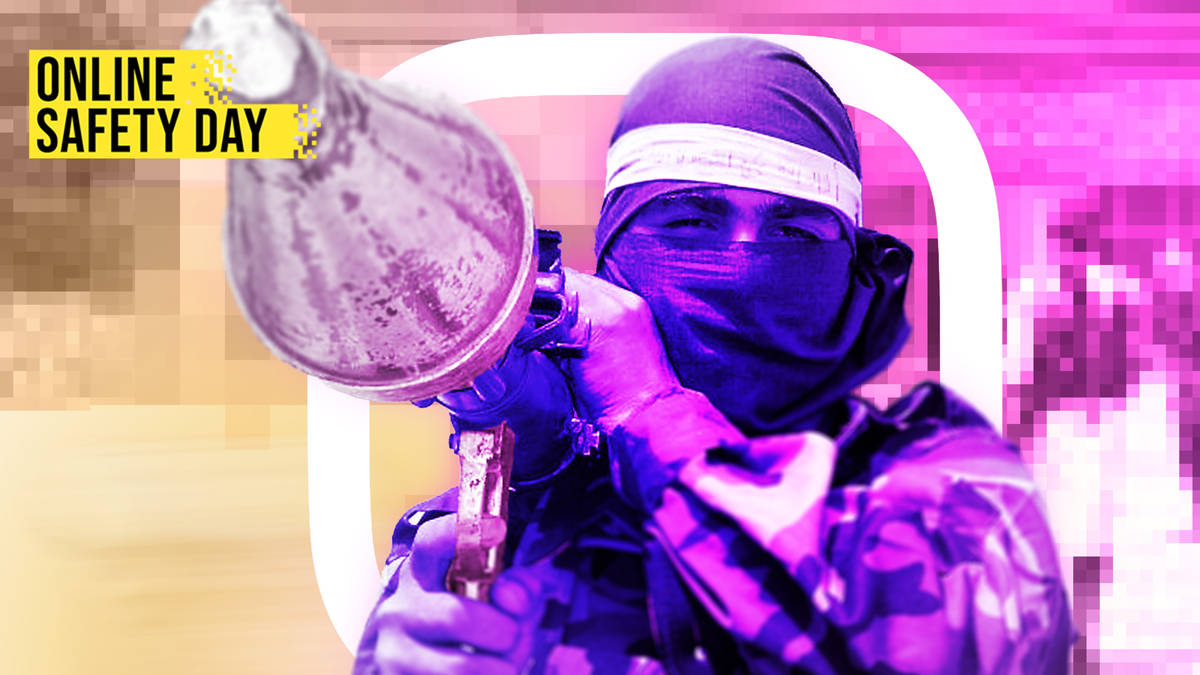
An LBC investigation looking into the networks of Islamist terror accounts on Instagram has discovered at least 125 accounts with a combined follower count of more than 136,000 posting content sympathetic to proscribed groups
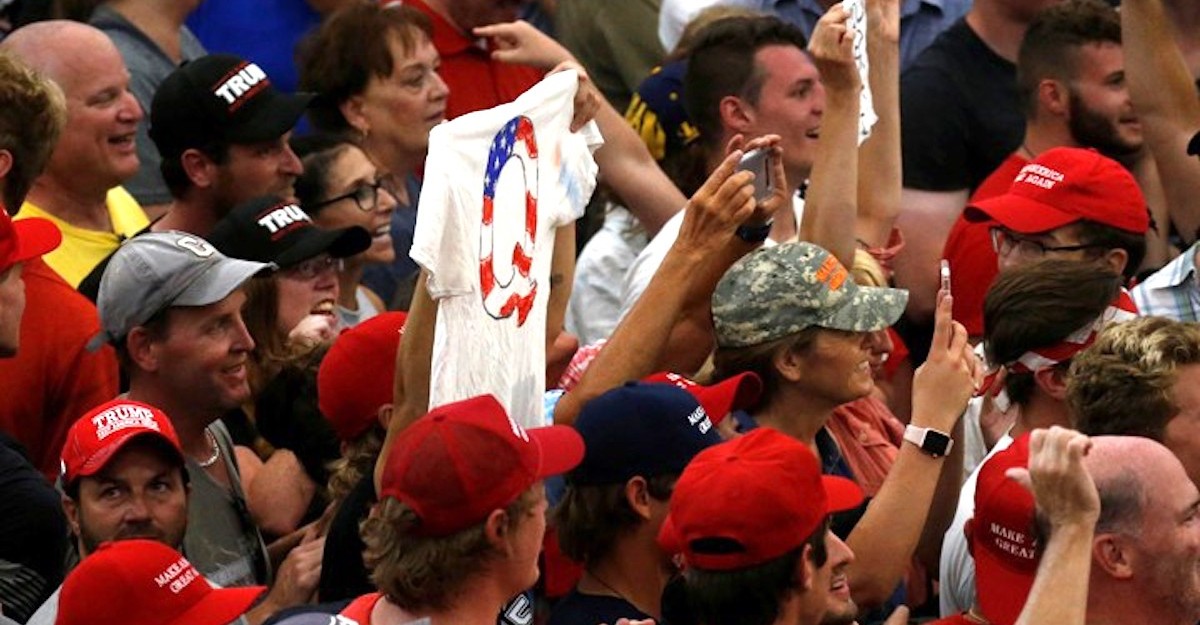
Instagram Is Full of Conspiracy Theories and Extremism
As other social networks wage a very public war against misinformation, it’s thriving on Instagram.
Remotely Coerced Violence: 764, The Com Network, and the Hybridization of Threats - Combating Terrorism Center at West Point
Abstract: This article examines 764 and the wider Com Network as a case study in remotely coerced violence and the hybridization of contemporary terrorist and violent extremist threats. It argues that nihilistic violent extremism is best understood as a victim-driven, youth-centered online ecosystem in which status, belonging, and identity are earned through the production, circulation, … Continued
As many as 48 million Twitter accounts aren't people, says study
A big chunk of those "likes," "retweets," and "followers" lighting up your Twitter account may not be coming from human hands.
Have Any Change to Spare? How the Islamic State Leverages Instagram for Fundraising
Following an internal investigation, Meta has since removed a majority of the flagged accounts after determining that they met the threshold for violating platform policies. Meta has indicated that the remaining accounts do not presently show confirmed violations under their standards. Their policies distinguish between assumed harmful activity and conduct that demonstrably breaches their rules.

Facebook says 50,000 users were targeted by cyber mercenary firms in 2021
An internal investigation shows private-sector mass surveillance is happening on a scale never before revealed.

Leader-driven or Leaderless: How Participation Structure Sustains Engagement and Shapes Narratives in Online Hate Communities
Extremist communities increasingly rely on social media to sustain and amplify divisive discourse. However, the relationship between their internal participation structures, audience engagement, and narrative expression remains underexplored. This study analyzes ten years of Facebook activity by hate groups related to the Israel–Palestine conflict, focusing on anti-Semitic and Islamophobic ideologies. Consistent with prior work, we find that higher participation centralization in online hate groups is associated with greater user engagement across hate ideologies, suggesting the role of key actors in sustaining group activity over time. Meanwhile, our narrative frame detection models—based on an eight-frame extremist taxonomy (e.g., dehumanization, violence justification)—reveal a clear contrast across hate ideologies: centralized Islamophobic groups employ more uniform messaging, while centralized anti-Semitic groups demonstrate greater framing diversity and topical breadth, potentially reflecting distinct historical trajectories and leader coordination patterns. Analysis of the inter-group network indicates that, although centralization and homophily are not clearly linked, ideological distinctions emerge: Islamophobic groups cluster tightly, whereas anti-Semitic groups remain more evenly connected. Overall, these findings clarify how participation structure may shape the dissemination pattern and resonance of extremist narratives online and provide a foundation for tailored strategies to disrupt or mitigate such discourse.
25 years after 9/11, our definition of terrorism continues to expand : Code Switch
In the 25 years since 9/11, we've seen the definition of terrorism expand. The Trump administration has called more and more groups “terrorists,” from “narco-terrorists” in Ecuador to people who protest ICE to the entire Democratic party. This week, our conversation with Saher Selod, an expert on the surveillance of Muslims, about the effects of the war on terror after 9/11, and historian Alex Lubin about how the word “terrorist” has been used to enact violence and surveillance.Support public media with NPR+ and enjoy perks for over 25 podcasts like this one. This show’s perks include sponsor-free listening. Learn more at plus.npr.org.
Uncovering Coordinated Networks on Social Media: Methods and Case Studies
Coordinated campaigns are used to influence and manipulate social media platforms and their users, a critical challenge to the free exchange of information online. Here we introduce a general, unsupervised network-based methodology to uncover groups of accounts that are likely coordinated. The proposed method constructs coordination networks based on arbitrary behavioral traces shared among accounts. We present five case studies of influence campaigns, four of which in the diverse contexts of U.S. elections, Hong Kong protests, the Syrian civil war, and cryptocurrency manipulation. In each of these cases, we detect networks of coordinated Twitter accounts by examining their identities, images, hashtag sequences, retweets, or temporal patterns. The proposed approach proves to be broadly applicable to uncover different kinds of coordination across information warfare scenarios.

Disrupting Dark Networks
Disrupting Dark Networks focuses on how social network analysis can be used to craft strategies to track, destabilize and disrupt covert and illegal networks. The book begins with an overview of the key terms and assumptions of social network analysis and various counterinsurgency strategies. The next several chapters introduce readers to algorithms and metrics commonly used by social network analysts. They provide worked examples from four different social network analysis software packages (UCINET, NetDraw, Pajek and ORA) using standard network data sets as well as data from an actual terrorist network that serves as a running example throughout the book. The book concludes by considering the ethics of and various ways that social network analysis can inform counterinsurgency strategizing. By contextualizing these methods in a larger counterinsurgency framework, this book offers scholars and analysts an array of approaches for disrupting dark networks.
Over 20,000 Instagram accounts stolen in Meta AI support hack
Meta has revealed that 20,225 Instagram users had their accounts hijacked in a recent incident where attackers used Meta's AI-powered support system to reset passwords.

Elena Rossini 🌈 (@_elena@mastodon.social)
Attached: 1 image 📝 #WSocial state of the network - Friday July 10th 📣 for those who are curious about it, considering the enthusiastic endorsement by prestigious European institutions #OpenData allows me to crunch numbers. On day 23 since its beta launch in Brussels, W Social has 11291 accounts: - 469 new users since yesterday - 899 users have published one or more posts - 72 new users posting since yesterday - 92% have never* published a single post *may be related to #WIdentity and its 13-step process
Al Jazeera investigation: Iran girls’ school targeting likely ‘deliberate’
Al Jazeera investigation raises questions over deadliest single attack of war that killed 165 schoolgirls and staff.

Just 18 unverified VIP accounts produce more than half of all W Social content. | W Don't Have Time | Offprint
W Social says users must verify themselves before they can post, yet most of the top 25 posters have no verification records and between them have created over 250,000 posts. Find out who gets to post on W Social without verification.

Facebook and Twitter shutter pro-Trump network reaching 55 million accounts
They used AI-generated faces as profile photos

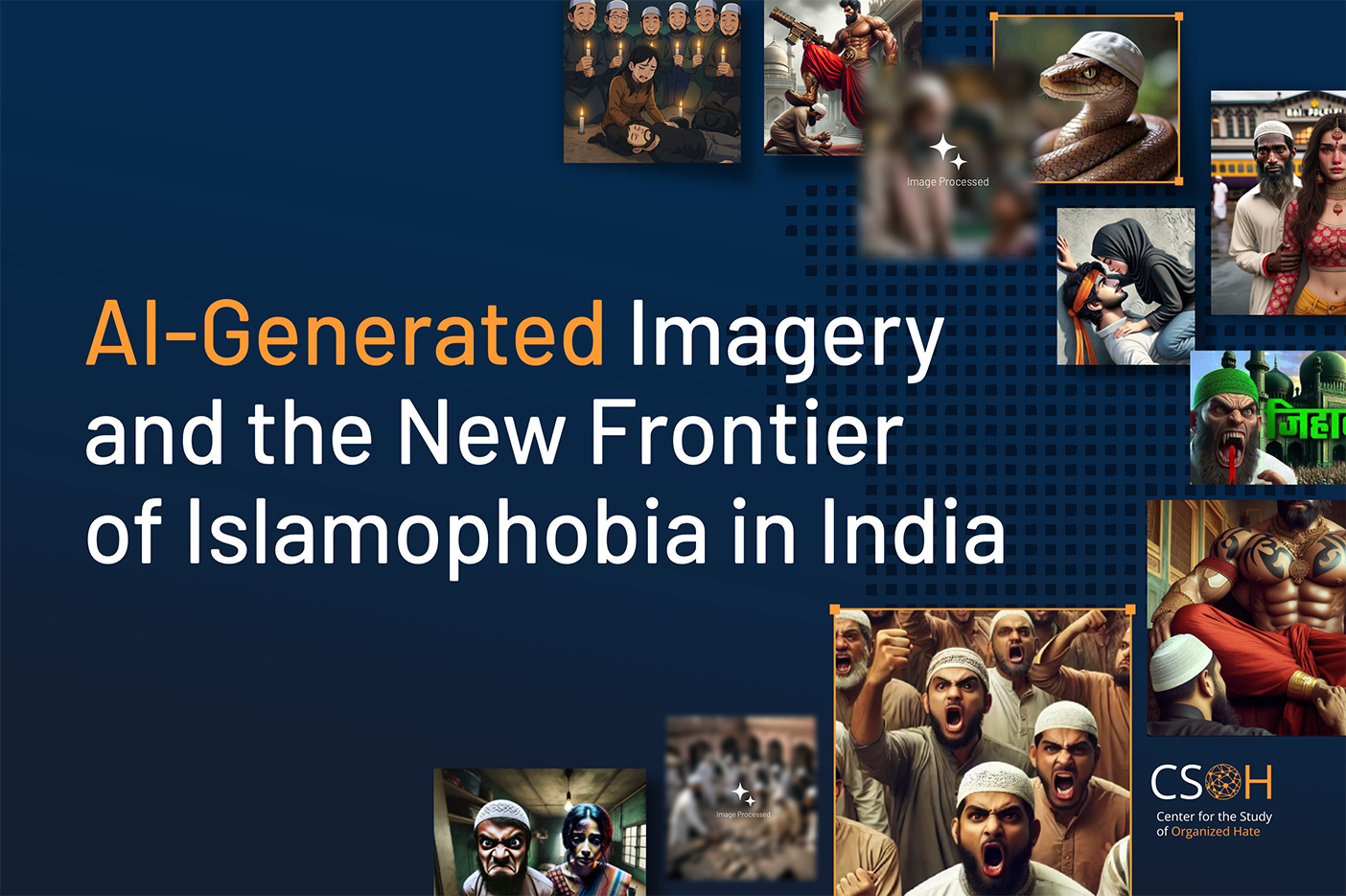
AI-Generated Imagery and the New Frontier of Islamophobia in India
This report studies the weaponization of generative AI tools to produce and spread anti-Muslim visual hate at scale across social media platforms in India.
letsmakejewishbabies • Instagram profile
45K Followers, 5,750 Following, 1,922 Posts - See Instagram photos and videos from @letsmakejewishbabies
