

A key feature of theEducational Reconstructionapproach is that in planning instruction – by teachers or curriculum developers – the science content to be learnedandstudents’ cognitive and affective variables, including their learning processes, should be given equal attention. In addition, the science content is not viewed as “given” but has to undergo certainreconstructionprocesses. Thescience content structure(e.g., for the concept of evolution) has to be transformed into acontent structure for instruction. The two structures are fundamentally different. The first step in this reconstruction, called “elementarization” (in German, Elementarisierung), is to identify the elementary ideas that relate to the aims of instruction, taking into account student perspectives (e.g., their pre-instructional conceptions). Then the content structure for instruction has to be developed. Finally, teaching and learning settings have to be designed. [This is an excerpt from the content].
How Learning Happens | Seminal Works in Educational Psychology and Wha
How Learning Happens introduces 28 giants of educational research and their findings on how we learn and what we need to learn effectively, efficiently, and

What Exactly is Acquired During Skill Acquisition? | Request PDF
Request PDF | What Exactly is Acquired During Skill Acquisition? | In this paper we propose that the term skill acquisition, as commonly used in traditional psychology, and the philosophy, education, movement... | Find, read and cite all the research you need on ResearchGate

A Beginner's Guide to Culture Science
Also known as "memetics", it's the study of the narratives that shape human behavior, and how they propagate & evolve
Mastery learning
Mastery learning is an instructional strategy and educational philosophy that emphasizes the importance of students achieving a high level of competence (e.g., 90% accuracy) in prerequisite knowledge before moving on to new material. This approach involves providing students with individualized support and repeated opportunities to demonstrate mastery through assessments. If a student does not initially achieve mastery, they receive additional instruction and support until they do. Mastery learning is based on the idea that all students can learn effectively with appropriate instruction and sufficient time, and it contrasts with traditional teaching methods that often focus on covering a set amount of material within a fixed timeframe, regardless of individual student needs.
Development Beyond Information: Human Becoming in the Age of AI
Abstract. Discussions of artificial intelligence in education increasingly equate development with the acquisition and deployment of information. This article argues that such accounts rest on false assumptions. Development is better understood not as an informational state but as a relational, historical process of becoming through which persons emerge and continue to change. Drawing on Vygotsky, on Ilyenkov's distinction between living and petrified ideality, and on the enactive approach to cognition, we characterise development through four features: its historicity, its dependence on reciprocal sense-making, its mediation by others who orient the learner, and its cultivation within relations of care. Large language models operate over the sedimented products of these processes without participating in them. As objectifications of human purposes, such systems may mediate human development or foreclose it. We conclude by considering what this account implies for education.

Why Some Students Learn Faster
A hypothesis about teaching and learning
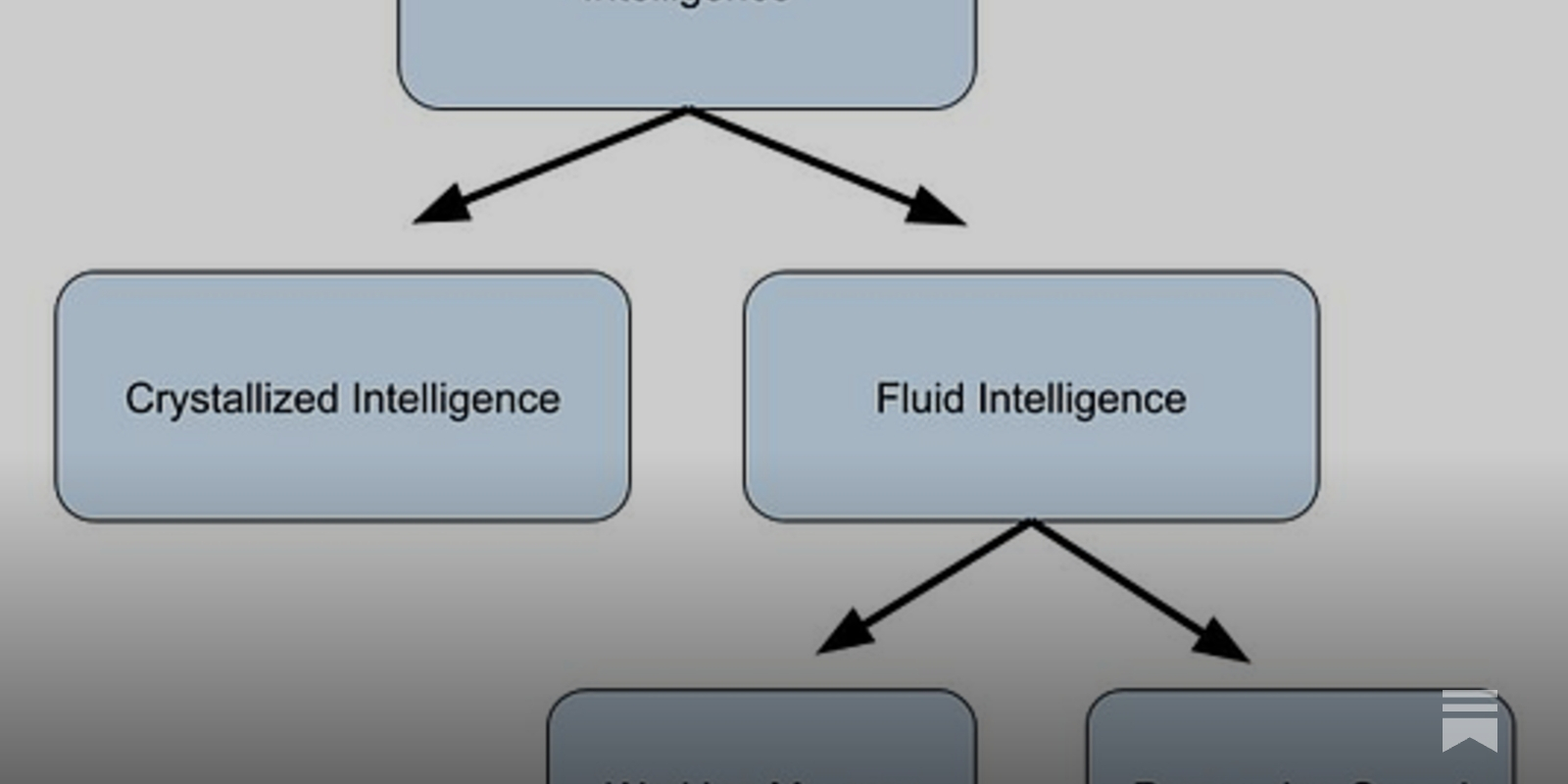
Why Some Students Learn Faster
A hypothesis about teaching and learning
Unlocking Scientific Concepts: How Effective Are LLM-Generated Analogies for Student Understanding and Classroom Practice?
Teaching scientific concepts is essential but challenging, and analogies help students connect new concepts to familiar ideas. Advancements in large language models (LLMs) enable generating analogies, yet their effectiveness in education remains underexplored. In this paper, we first conducted a two-stage study involving high school students and teachers to assess the effectiveness of LLM-generated analogies in biology and physics through a controlled in-class test and a classroom field study. Test results suggested that LLM-generated analogies could enhance student understanding particularly in biology, but require teachers’ guidance to prevent over-reliance and overconfidence. Classroom experiments suggested that teachers could refine LLM-generated analogies to their satisfaction and inspire new analogies from generated ones, encouraged by positive classroom feedback and homework performance boosts. Based on findings, we developed and evaluated a practical system to help teachers generate and refine teaching analogies. We discussed future directions for developing and evaluating LLM-supported teaching and learning by analogy.

Learning How to Learn (And 20+ Studies) – Max's Two Cents
I have been interested in cognitive science and effective learning methods for years. I’ve read multiple books and articles and put many ideas to test. In this post, I aim to synthesize my notes and provide references to scientific studies.
Opinion | My Students Can’t Read
The generational collapse in literacy is measurable, persistent, and likely to get worse.

The Hidden Role of Software in Educational Research: Policy to Practice|eBook
Educational research often discounts the uniqueness and ubiquity of software and the hidden political, economic and epistemological ways it impacts teaching and learning in K-12 settings. Drawing on theories and methodologies from English education, critical discourse analysis, multimodal...
Description not evaluation - The Cynefin Co
One of the things I am enjoying at the moment is the way a lot of things are coming together conceptually. It happens like this when you develop or repurpose knowledge from different sources. Individual practices and ideas make sense in their own right. Then you read more, practice more, and the various origins […]

Learning Outside the Brain: Integrating Cognitive Science and Systems Biology
Learning is commonplace in organisms such as ourselves and even in organisms as far distant as the bee and the octopus. Such learning is implemented by brains, or neuronal networks, and has been extensively studied within ethology, psychology, cognitive science, and neuroscience. Whether learning also takes place in nonneuronal settings has remained a matter of sustained controversy, too often dominated by ideological views. In this survey, I will explain how learning can be rigorously interpreted as a form of information processing and then explore the evidence for whether learning also takes place in organismal contexts outside the brain, such as physiology, development, and individual cells. I will try to explain why it is important to build bridges in this way between cognitive science and systems biology, why concepts and methods from various branches of engineering may be helpful in this task, and what the eventual impact may be on how we think about the organism.
Stephen Krashen: Language Acquisition and Comprehensible Input
Math Academy
The Math Academy curriculum and pedagogy leverage cutting-edge cognitive learning theory. Why? Because it’s been studied extensively, backed up and proven to work. We aren’t providing edu-tainment. This isn’t enrichment. We teach math as if we were training a professional athlete or musician, or anyone looking to acquire a skill to the highest degree possible. This is real work for a student who is serious about learning math. We expect every student using our system to actually master the material, and do it efficiently and effectively.
AT Docs

Documentações e tutoriais úteis relacionados com ATProto
Open Evnt Documentation

atproto wiki
Colibri Social Documentation

The Station Manual — highport.space
designing a storage engine for AT Protocol backlinks - charlotte!

getting started · airspace docs