

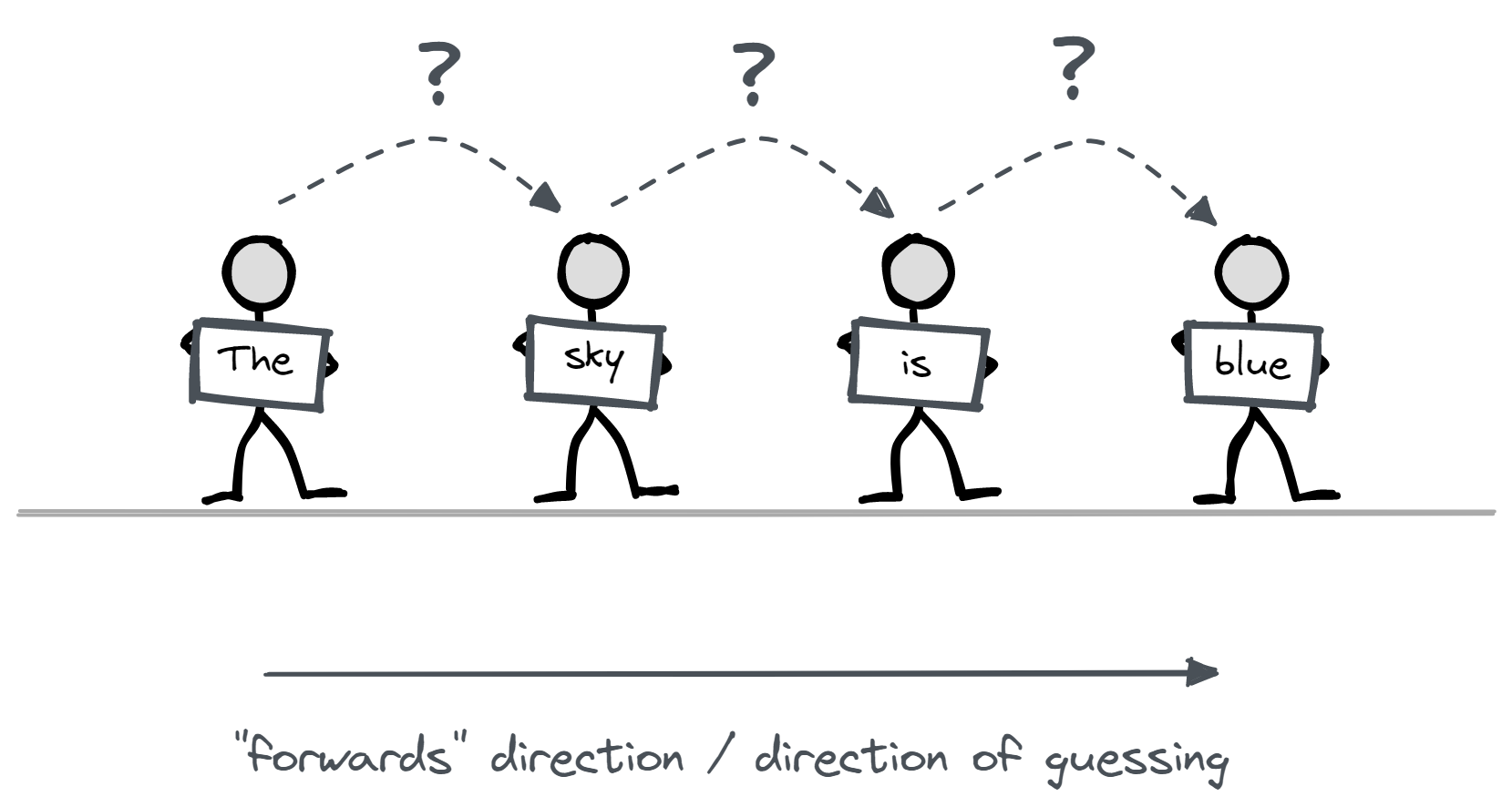
Thanks to the following people for feedback: Tilman Rauker, Curt Tigges, Rudolf Laine, Logan Smith, Arthur Conmy, Joseph Bloom, Rusheb Shah, James Da…
Why Can't Transformers Learn Multiplication?...
Language models are increasingly capable, yet still fail at a seemingly simple task of multi-digit multiplication. In this work, we study why, by reverse-engineering a model that successfully...

Why Can't Transformers Learn Multiplication?...
Language models are increasingly capable, yet still fail at a seemingly simple task of multi-digit multiplication. In this work, we study why, by reverse-engineering a model that successfully...
An Introduction to Transformers
The transformer is a neural network component that can be used to learn useful representations of sequences or sets of data-points. The transformer has driven recent advances in natural language processing, computer vision, and spatio-temporal modelling. There are many introductions to transformers, but most do not contain precise mathematical descriptions of the architecture and the intuitions behind the design choices are often also missing. Moreover, as research takes a winding path, the explanations for the components of the transformer can be idiosyncratic. In this note we aim for a mathematically precise, intuitive, and clean description of the transformer architecture. We will not discuss training as this is rather standard. We assume that the reader is familiar with fundamental topics in machine learning including multi-layer perceptrons, linear transformations, softmax functions and basic probability.
Maintain the unmaintainable - a Hugging Face Space by transformers-community
This application visualizes how over 400 machine learning models in the Transformers library are connected and related to each other. Users can see which models are derived from or import features ...
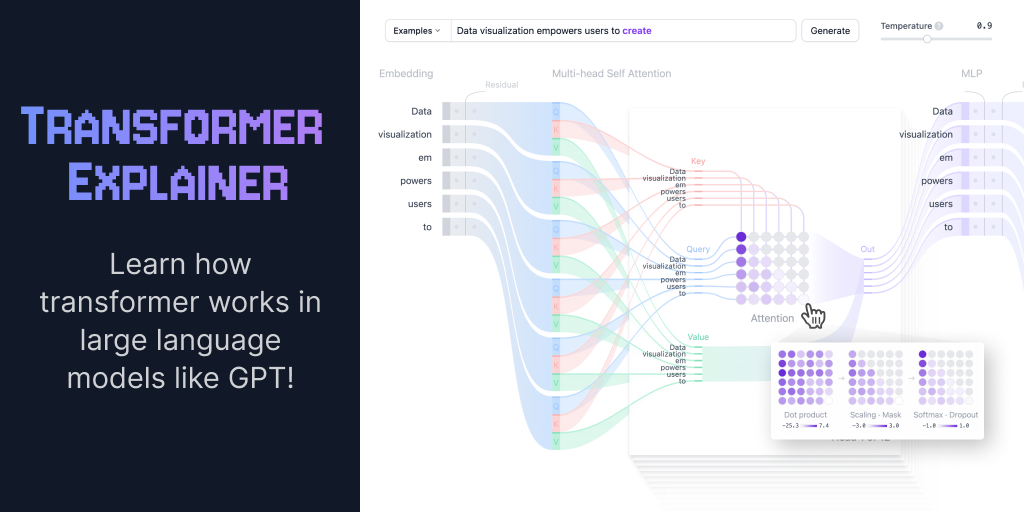
Transformer Explainer: LLM Transformer Model Visually Explained
An interactive visualization tool showing you how transformer models work in large language models (LLM) like GPT.
The Illustrated Transformer
Discussions: Hacker News (65 points, 4 comments), Reddit r/MachineLearning (29 points, 3 comments) Translations: Arabic, Chinese (Simplified) 1, Chinese (Simplified) 2, French 1, French 2, Italian, Japanese, Korean, Persian, Russian, Spanish 1, Spanish 2, Vietnamese Watch: MIT’s Deep Learning State of the Art lecture referencing this post Featured in courses at Stanford, Harvard, MIT, Princeton, CMU and others Update: This post has now become a book! Check out LLM-book.com which contains (Chapter 3) an updated and expanded version of this post speaking about the latest Transformer models and how they've evolved in the seven years since the original Transformer (like Multi-Query Attention and RoPE Positional embeddings). In the previous post, we looked at Attention – a ubiquitous method in modern deep learning models. Attention is a concept that helped improve the performance of neural machine translation applications. In this post, we will look at The Transformer – a model that uses attention to boost the speed with which these models can be trained. The Transformer outperforms the Google Neural Machine Translation model in specific tasks. The biggest benefit, however, comes from how The Transformer lends itself to parallelization. It is in fact Google Cloud’s recommendation to use The Transformer as a reference model to use their Cloud TPU offering. So let’s try to break the model apart and look at how it functions. The Transformer was proposed in the paper Attention is All You Need. A TensorFlow implementation of it is available as a part of the Tensor2Tensor package. Harvard’s NLP group created a guide annotating the paper with PyTorch implementation. In this post, we will attempt to oversimplify things a bit and introduce the concepts one by one to hopefully make it easier to understand to people without in-depth knowledge of the subject matter. 2025 Update: We’ve built a free short course that brings the contents of this post up-to-date with animations: A High-Level Look Let’s begin by looking at the model as a single black box. In a machine translation application, it would take a sentence in one language, and output its translation in another.
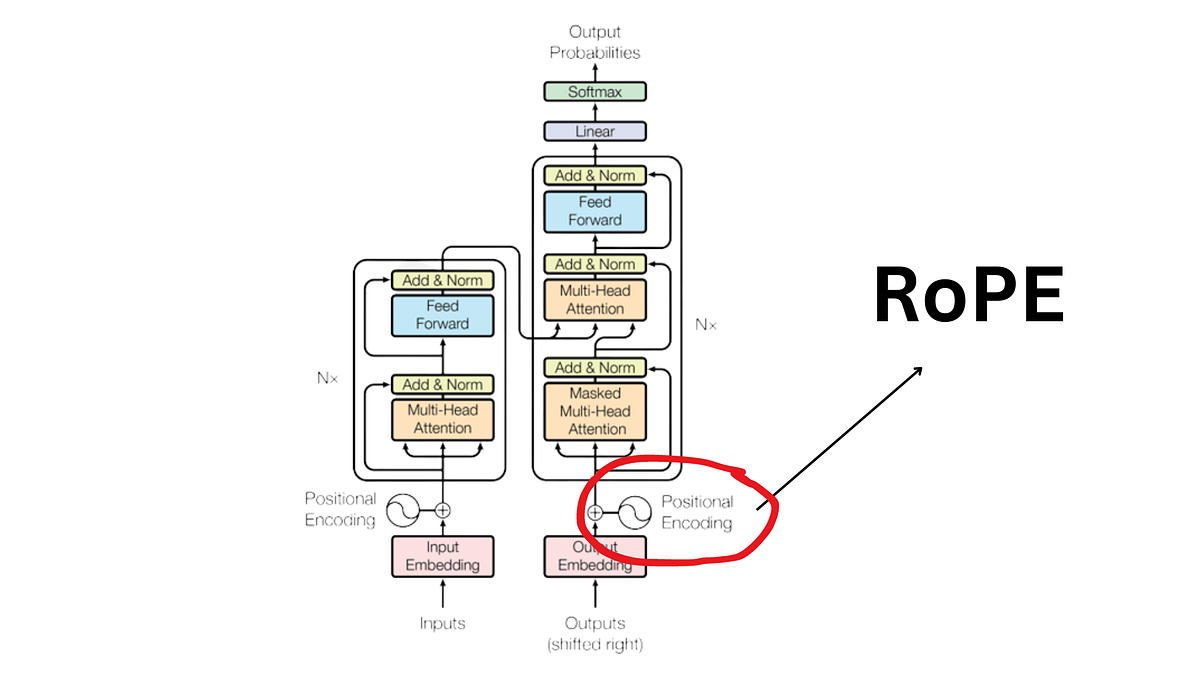
Rotary Positional Embeddings: A Detailed Look and Comprehensive Understanding
Since the “Attention Is All You Need” paper in 2017, the Transformer architecture has been a cornerstone in the realm of Natural Language…
Iron Man’s Mech Suit Is So Wild, He’s Basically a Transformer
Iron Man's Transformers suit is still unmatched.

transformers/src/transformers/models/auto/tokenization_auto.py at 1d5296f2de31ecee4fdd789dc2b2fe068b320284 · huggingface/transformers
🤗 Transformers: the model-definition framework for state-of-the-art machine learning models in text, vision, audio, and multimodal models, for both inference and training. - huggingface/transformers
Getting started with Transformers and TPU using PyTorch
Learn how to get started with Hugging Face Transformers and TPUs using PyTorch, fine-tune a BERT model for Text Classification using the newest Google Cloud TPUs.
An Observation on Generalization
Stanford CS25: V5 I Transformers in Diffusion Models for Image Generation and Beyond
Francois Chaubard on Twitter / X
I believe that LSTM based architectures (constant hidden state, constant flops / step) will crush transformers as we know them in 2-3 years. we will laugh about KV Caches and how dumb we were.. to achieve this, the LSTM will need to have a large external memory bank with…— Francois Chaubard (@FrancoisChauba1) July 30, 2026
1/4 Do LLMs understand? "They understand in a way that’s very different from how humans understand," Dileep George, @dileeplearning.bsky.social, of Google DeepMind at the Simons Institute workshop on The Future of Language Models and Transformers. Video: simons.berkeley.edu/talks/dileep-george-google-de…
