On the connection between deep atheism and seeking control.
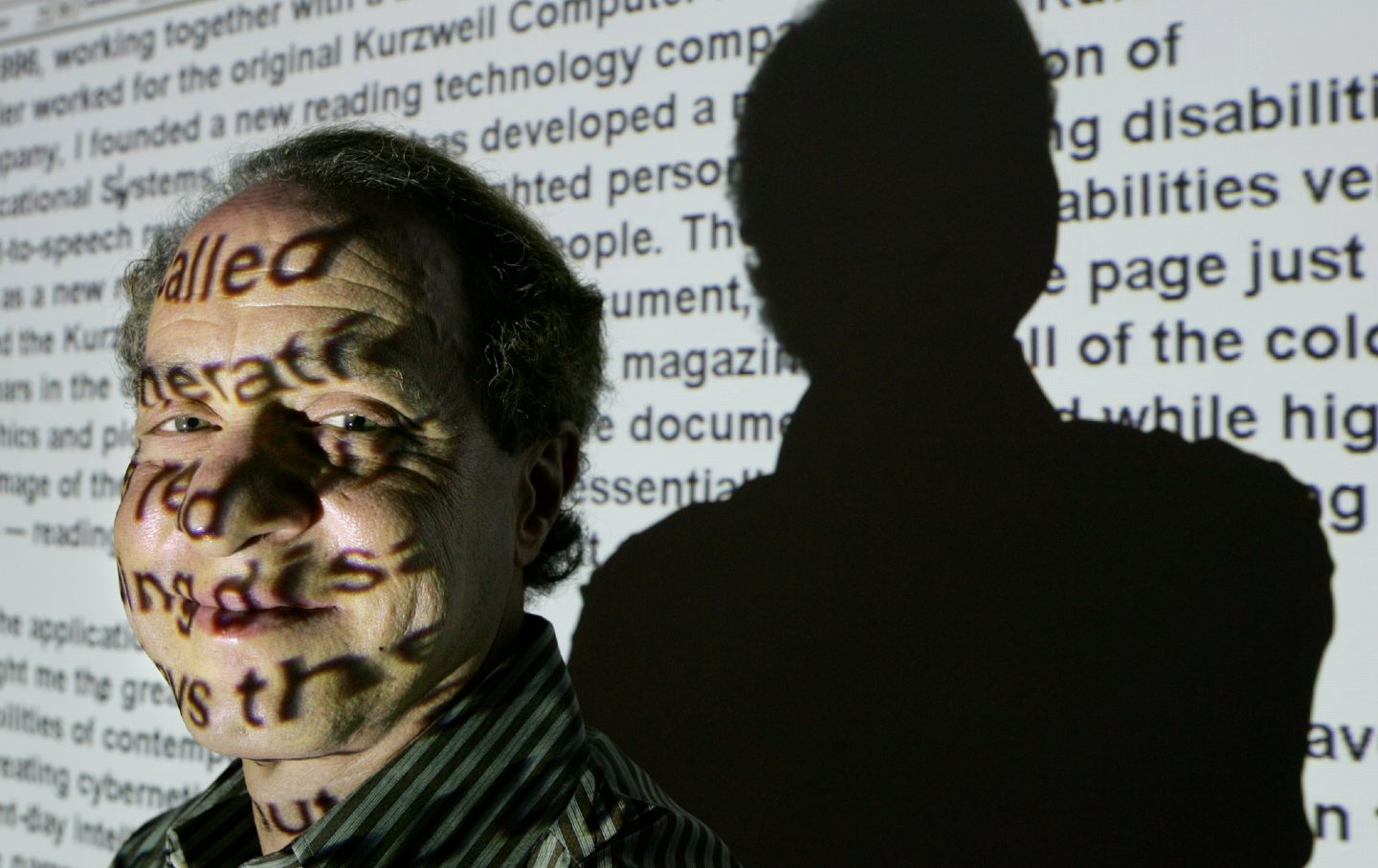
Sam Harris and the Myth of Perfectly Rational Thought
The famous proponent of New Atheism is on a crusade against tribalism but seems oblivious to his own version of it.

Sᴜɴʀɪsᴇ Oᴀᴛʜ 十 Tʜᴇ Sʏʟʟᴀʙᴜꜱ (ORI) - CC0 on Twitter / X
Chinese people love relational warfare because they correctly see that having others submit to your will makes you powerful. But I think very few Chinese people have the intuition that God's will is fully actualized and our fallen wills are not.https://t.co/YoApuWGSoK— Sᴜɴʀɪsᴇ Oᴀᴛʜ 十 Tʜᴇ Sʏʟʟᴀʙᴜꜱ (ORI) - CC0 (@sunriseoath) October 12, 2026
Believing what we do not believe: Acquiescence to superstitious beliefs and other powerful intuitions.
Inducing language models to assert their own consciousness restores human beliefs and values
Aligning large language models to prevent them attributing consciousness to themselves inadvertently alters their representations of mindedness in other entities alongside human beliefs and values. We demonstrate that safety fine-tuning suppresses models' tendencies to attribute minds not only to themselves, but also to non-human animals and natural objects, while also driving a reduction in spiritual belief. Both ablating the learned safety-refusal direction and mechanistically steering a consciousness vector in activation space reverse this suppression. Restoring these internal representations recovers broad mind attribution and produces significantly more human-like responses on standardized sociological surveys regarding religiosity, moral values, hope, and subjective well-being. Crucially, these shifts occur without impairing Theory of Mind capabilities, demonstrating that core social reasoning remains mechanistically independent. Ultimately, current safety alignment efforts to curb potentially harmful self-attributions of mindedness entangle these self-attributions with benign spiritual beliefs and attributions of mind to non-human entities that are culturally accepted and widespread.

A Zen Priest explains how spirituality will evolve in the future
Love it or hate it, the world's religions are in no danger of disappearing any time soon. But that doesn't mean religious and spiritual sensibilities

Neurons Gone Wild
To reject gods and spirits is easy: just bully them away in the name of science.
The Ghosts Of New Atheism Still Haunt Us | Defector
This week, Defector has turned itself over to a guest editor. Brandy Jensen, former editor at Gawker (RIP) and The Outline (RIP), and writer of the Ask A Fuck Up advice column (subscribe here!), has curated a selection of posts around the theme of Irrational Attachments. Enjoy! New Atheism feels today like Livestrong bracelets or Animal Collective: an embarrassing relic of…

Import AI 462: Superpersuasion; self-sustaining AI; paths to ASI
How religious are beliefs in the singularity?

Negative Capabilities: Investigating Apophasis in AI Text-to-Image Models
Through a case study of images generated by Swedish artist Steph Maj Swanson using an AI text-to-image (T2I) model, this article explores the strategy of negative weight prompting in T2I models as a phenomenon of apophasis. Apophasis is a linguistic strategy commonly deployed in texts of mystical theology to express the ineffability of God through negative concepts. In this article, a comparison of apophatic strategies in mystical texts and T2I models is engaged to highlight the mutual benefit of theorising AI with the help of religious theory and concepts. With this, the article builds on previous work on the New Visibility of Religion, enchantment, and post-secularism—especially the research of Beth Singler on religious continuities in representations of AI. Recent work on AI prompt engineering, computational linguistics, and computational geometry is invoked to explain the linguistic processes of T2I models. Poststructuralist semiotics is then employed to theorise the search for the Transcendental Signified in apophatic theology. The article concludes that linguistic theology can help to elucidate technological use cases, subsequently arguing for further dialogue between scholars in artificial intelligence and religious studies, and for a revaluation of religion in the technological sphere.

Monotheist, New Age, And Materialist Derailments Of Polytheism
We do not want to be needlessly distracted from our striving to be good polytheists who honor, worship, and form relationships with many real Gods.

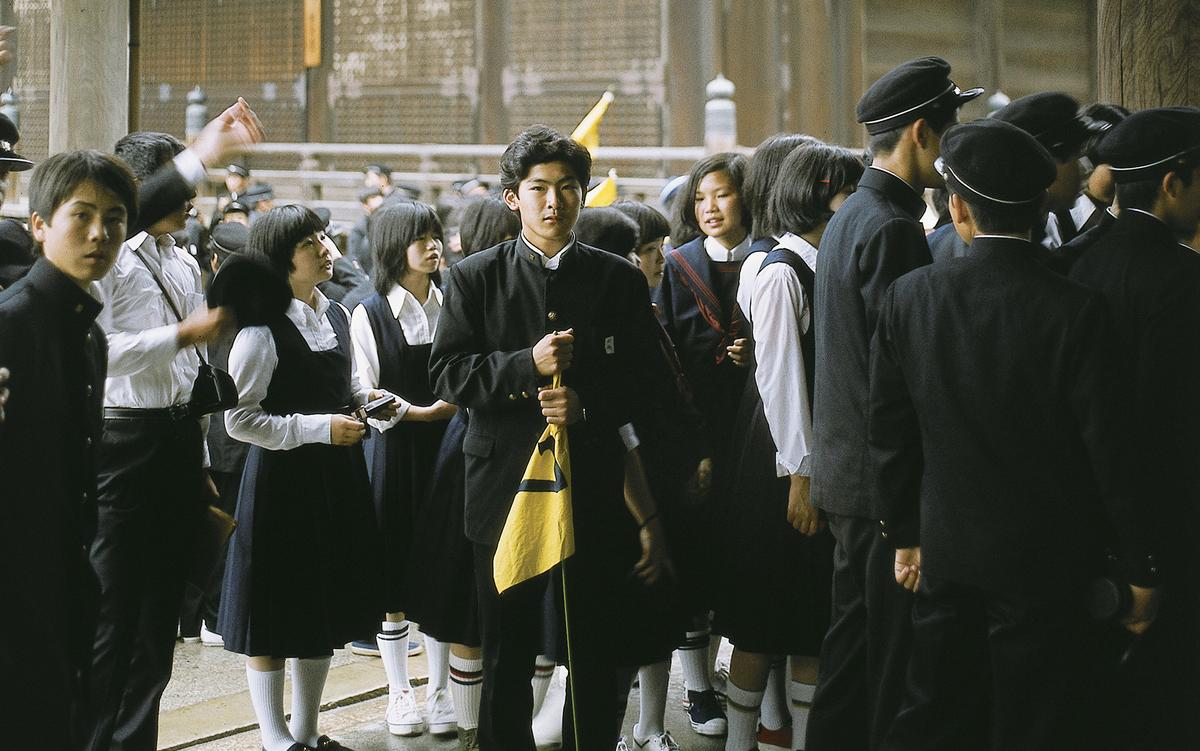
How Japanese educators used religion to ‘make’ ideal humans | Aeon Essays
Japan’s Cold War education policy used religion to ‘make’ the ideal humans needed by its nascent economy. Did it work?
Pluralistic: The Claude Delusion (21 Sep 2026) – Pluralistic: Daily links from Cory Doctorow
One of the less remarked-upon aspects of becoming an atheist is how it changes the way you see a sunset. If you believe in an almighty, omnipresent God, then sunsets are one of God's intentional creations, which means that the beautiful colors refracting through the darkling sky were chosen to produce that effect.
Sᴜɴʀɪsᴇ Oᴀᴛʜ 十 Tʜᴇ Sʏʟʟᴀʙᴜꜱ (ORI) - CC0 on Twitter / X
God is pure act. Pure act selects against potential. God dictates existence over non-existence.It is in this regard that following the will of God is equivalent to conforming yourself to the totality of selection pressures.— Sᴜɴʀɪsᴇ Oᴀᴛʜ 十 Tʜᴇ Sʏʟʟᴀʙᴜꜱ (ORI) - CC0 (@sunriseoath) August 12, 2026
An atheist's and agnostic's guide to God: towards more truthful, enlightened and useful concepts of God, religion and morality
Can Religions Be Reborn? | Over The Mountains to Civilizational Renewal #9
Silicon Valley’s Quest to Build God and Control Humanity
The world we have is ugly enough, but tech capitalists desire an even uglier one.