

Game design is simple, actually
So, let’s just walk through the whole thing, end to end. Here’s a twelve-step program for understanding game design. One: Fun There are a lot of things people call “fun.” But most of them are not u…


Seven Sketches in Compositionality: An Invitation to Applied Category Theory
This book is an invitation to discover advanced topics in category theory through concrete, real-world examples. It aims to give a tour: a gentle, quick introduction to guide later exploration. The tour takes place over seven sketches, each pairing an evocative application, such as databases, electric circuits, or dynamical systems, with the exploration of a categorical structure, such as adjoint functors, enriched categories, or toposes. No prior knowledge of category theory is assumed. A feedback form for typos, comments, questions, and suggestions is available here: https://docs.google.com/document/d/160G9OFcP5DWT8Stn7TxdVx83DJnnf7d5GML0_FOD5Wg/edit

The Science Playground – a list of interesting links
Links to science games, simulations, and collections. Have fun!If any links are broken, let me know.
Category Theory for Programmers: The Preface
Table of Contents Part One Category: The Essence of Composition Types and Functions Categories Great and Small Kleisli Categories Products and Coproducts Simple Algebraic Data Types Functors Functo…

Category Theory: The Beginner’s Introduction
A categorical manifesto
This paper tries to explain why and how category theory is useful in computing science, by giving guidelines for applying seven basic categorical concepts: category, functor, natural transformation, limit, adjoint, colimit and comma category. Some examples, intuition, and references are given for each concept, but completeness is not attempted. Some additional categorical concepts and some suggestions for further research are also mentioned. The paper concludes with some philosophical discussion.

Simplifying Board Games
A few years ago I wrote about how I'd been playing a simplified version of Carcassonne with Lily. We stopped for a while, but recently we've played simplified versions of Ticket to Ride, Race for the Galaxy, Guillotine, and Settlers of Catan. My general approach here is to find a core piece of the game that will be fun on its own, and then add to it as Lily wants more complexity. While the parti

The Laws of Simplicity
John Maeda's book, The Laws of Simplicity, proposes ten laws for simplifying complex systems in business and life. Think of it as simplicity 101.

Basic Category Theory
This short introductory category theory textbook is for readers with relatively little mathematical background (e.g. the first half of an undergraduate mathematics degree). At its heart is the concept of a universal property, important throughout mathematics. After a chapter introducing the basic definitions, separate chapters present three ways of expressing universal properties: via adjoint functors, representable functors, and limits. A final chapter ties the three together. For each new categorical concept, a generous supply of examples is provided, taken from different parts of mathematics. At points where the leap in abstraction is particularly great (such as the Yoneda lemma), the reader will find careful and extensive explanations.
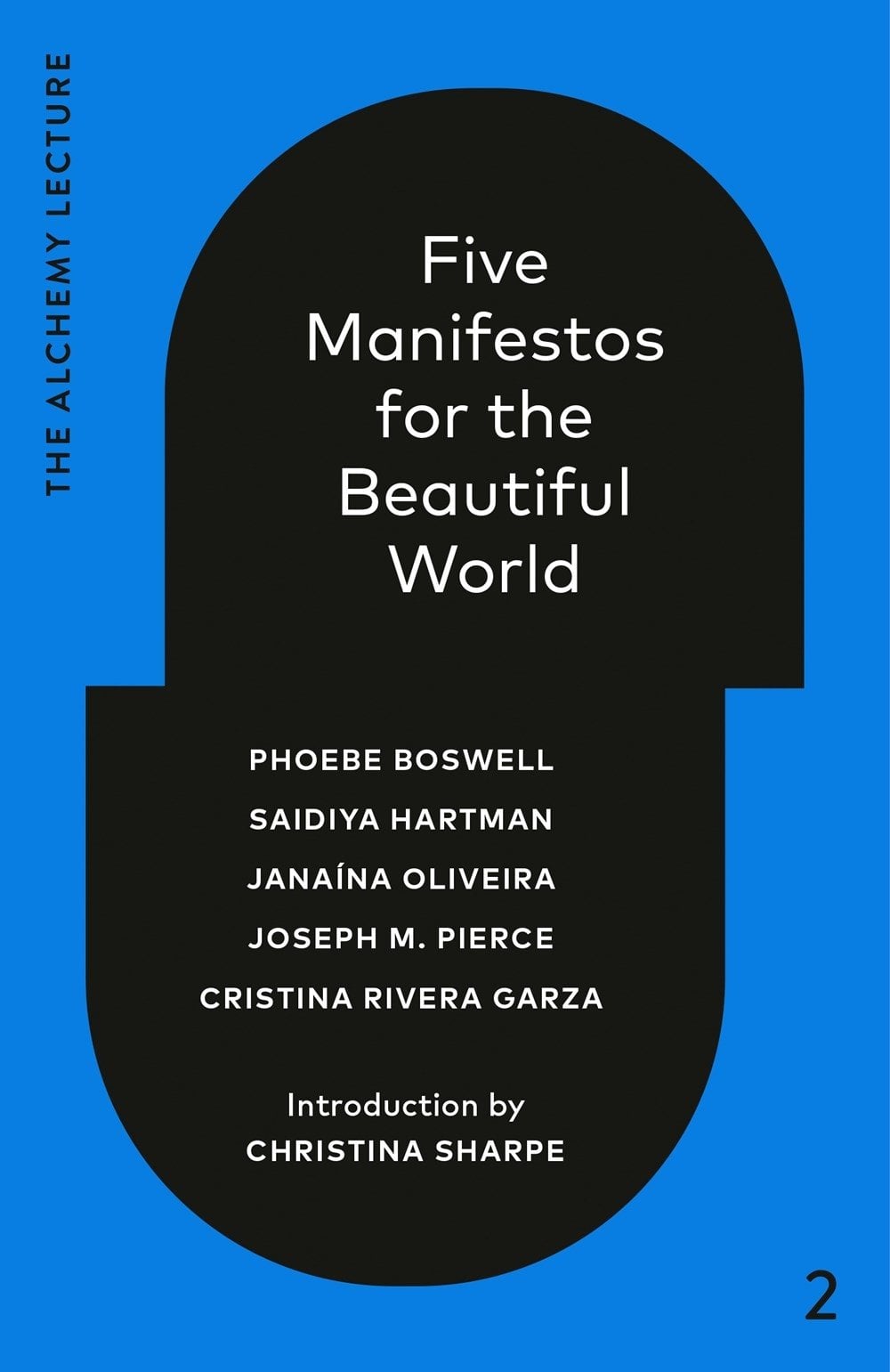
Five Manifestos for the Beautiful World: The Alchemy Lecture 2023
The Alchemy Lecture 2023
General Theory of Natural Equivalences
Samuel Eilenberg, Saunders MacLane, General Theory of Natural Equivalences, Transactions of the American Mathematical Society, Vol. 58, No. 2 (Sep., 1945), pp. 231-294
Andrew Blinn
I use programming language theory as a lens on UI design, trying to make engagement with abstractions more fluid, tangible, and fun

Computational category theory
Computational category theory by D. E. Rydeheard, 1988, Prentice Hall edition, in English

How physics at the roots of reality point to a grand unified theory | Aeon Essays
Physics displays an uncanny alignment at its very deepest levels. Is a grand theory of everything finally within reach?

(A shorter gloss of Fun Theory is "31 Laws of Fun", which summarizes the advice of Fun Theory to would-be Eutopian authors and futurists.) …