

Although RAG provides a way to connect LLMs and agents to more data than what can fit into context, traditional RAG is insufficient for building agent memory.
Shlok Khemani on Twitter / X
It's telling that neither ChatGPT nor Claude uses RAG for their memory systems, despite having:- the most data (oldest services, highest usage, general purpose)- strong incentives for memory (user lock-in)- A+ talent and alpha on model trajectoriesMaybe RAG just doesn't…— Shlok Khemani (@shloked) September 15, 2025
mem-agent: Equipping LLM Agents with Memory Using RL
The insights and the technical report behind Mem-Agent, our 4B model for persistent memory in LLMs
Agent Memory Patterns
A short HOW TO guide for agent memory systems. Especially the difference between blocks, files and skills.

Ambient Associative Memory
Most agent memory waits to be queried. Ambient memory runs on every tool call — past lessons surface on their own, no rules list required.

The Shape of Memory Benchmarks
Why the familiar memory benchmarks are outdated, how the agent-native work looks today and why design your own.
Wiki Memory
Memory for agents is still early, with little to no standards. “Memory” means something different to everyone. But one common pattern is emerging: wiki memory.

AI Agent Memory: Complete Guide & Architecture
AI agent memory: what it is, how it works, architecture, memory types, and how to add persistent long-term context.

I accidentally turned LLM memory into program analysis :: pwning.systems
Why I stopped trying to give LLM agents a better memory and instead built Lemmalog, a Datalog engine that maintains an agent's knowledge as analysis state, with provenance, retractions and incremental evaluation, plus what happened when I benchmarked it on LongMemEval and LoCoMo.
I Benchmarked OpenAI Memory vs LangMem vs Letta (MemGPT) vs Mem0 for Long-Term Memory: Here’s How They Stacked Up
145 votes, 53 comments. Lately, I’ve been testing memory systems to handle long conversations in agent setups, optimizing for: Factual consistency…
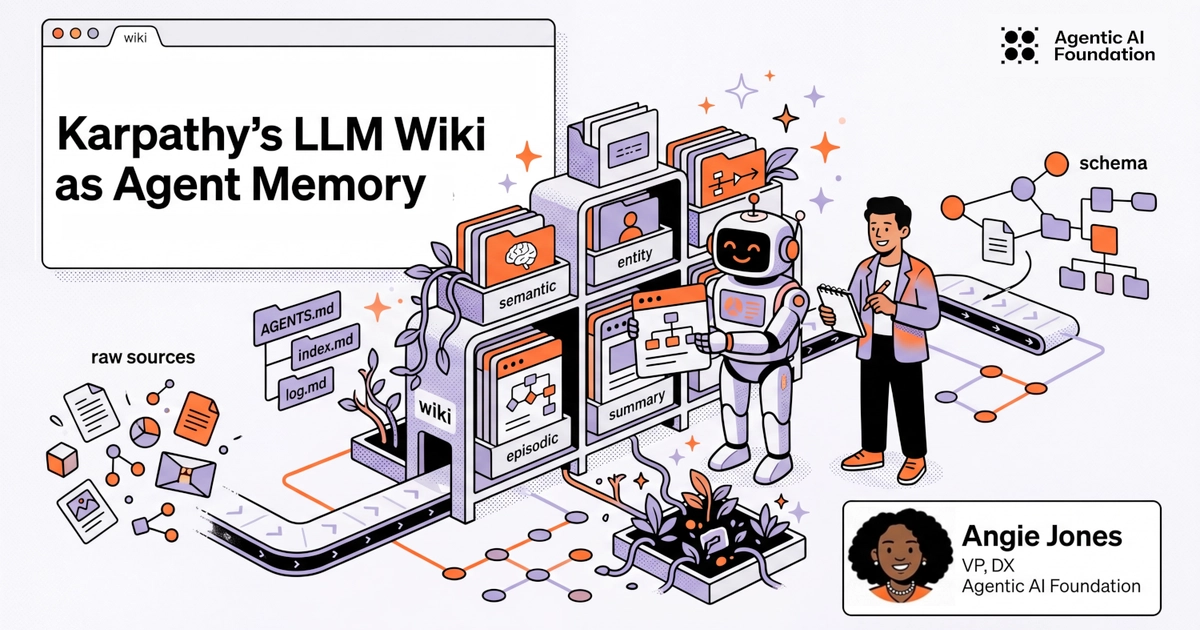
Karpathy's LLM Wiki as Agent Memory - Agentic AI Foundation (AAIF)
At work, I’m building agents to handle various operational tasks and have found Karpathy’s LLM Wiki design to be an excellent solution for implementing most ty…
Memora scales agent memory to boost long-horizon productivity
AI agents can't remember past conversations. They must constantly reload or retrieve context, which grows less efficient as tasks get longer and more complex. Memora solves this with a scalable memory system separating what’s stored from how it's retrieved.

The rebel alliance
This blog is co-authored with Zoe Weinberg and Matt Hawes at ex/ante, and is a follow-up to our first blog post on the topic, 'You don't own your memory.' We need an open architecture that puts us in control of our memories while making their exploitation technically impossible. But how will this shift happen? In order to discover possible implementations, we must understand how our data informs LLMs. The three predominant context engineering techniques are prompt design, retrieval-augmented ...

Pieces | Infinite Artificial Memory for your Digital Workers and Agents
Pieces is your AI companion that captures live context from browsers to IDEs and collaboration tools, manages snippets and supports multiple llms - all while processing data locally for maximum control.
Utkarsh on Twitter / X
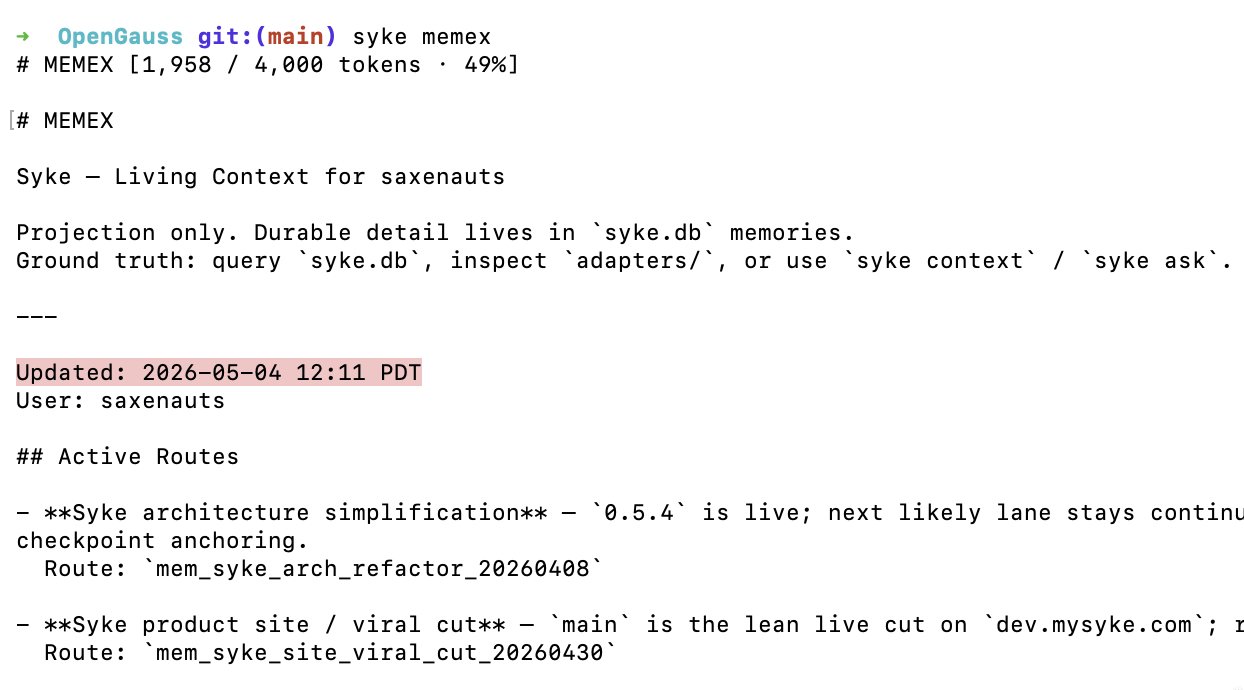
Another reason why you want an ambient memory agent is TIME. Your other coding agents understand time differently depending on who or which company writes them. Your machine however should live and breathe with you in your timeline. With Claude, I often find myself begging… pic.twitter.com/XVAvzciplY— Utkarsh (@saxenauts) May 4, 2026
New blog post: Ambient associative agent memory Largely, I think deep research styled agents are extremely useful for new content we haven't seen before, but fail hard for memory that's already supposed to be "known" Here are 2 patterns, mine and @3fz.org's timkellogg.me/blog/2026/05/17/ambient-memor…

Ambient Associative Memory
timkellogg.me