

Primary season is closer than you think—can Democrats avoid their most damaging mistakes of 2020?
The real reason Democrats lost in 2024
The DNC "autopsy" omits the biggest reason Democrats lost in 2024. In doing so, it fails to prepare the party for the future
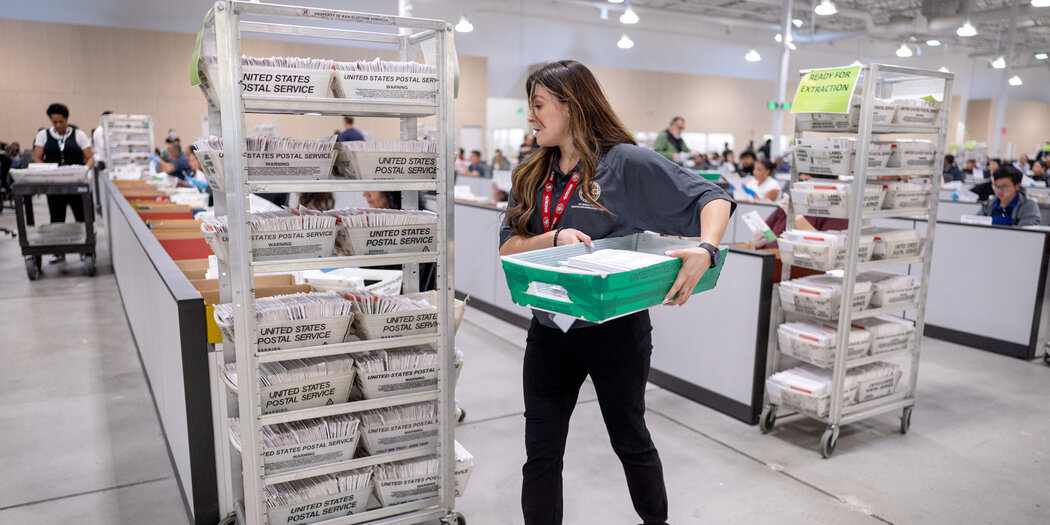
Anticipating Election Misinformation in the 2026 Midterms
Election misinformation often follows the same pattern every cycle. Here are some of the false and misleading claims that voters are likely to see.
What Are Democrats Thinking?
Democratic voters want to end the filibuster, nationalize artificial intelligence, and prosecute every Trump toady.
‘I never want to hear again that the Democratic Party has a problem with young men’
Democrats stormed back with young men in off-year elections. But the biggest test will come next year.

Read the DNC’s 2024 autopsy obtained by CNN | CNN Politics
CNN is publishing a copy of a report into why Democrats lost the 2024 presidential election conducted at the request of Democratic National Committee Chair Ken Martin.

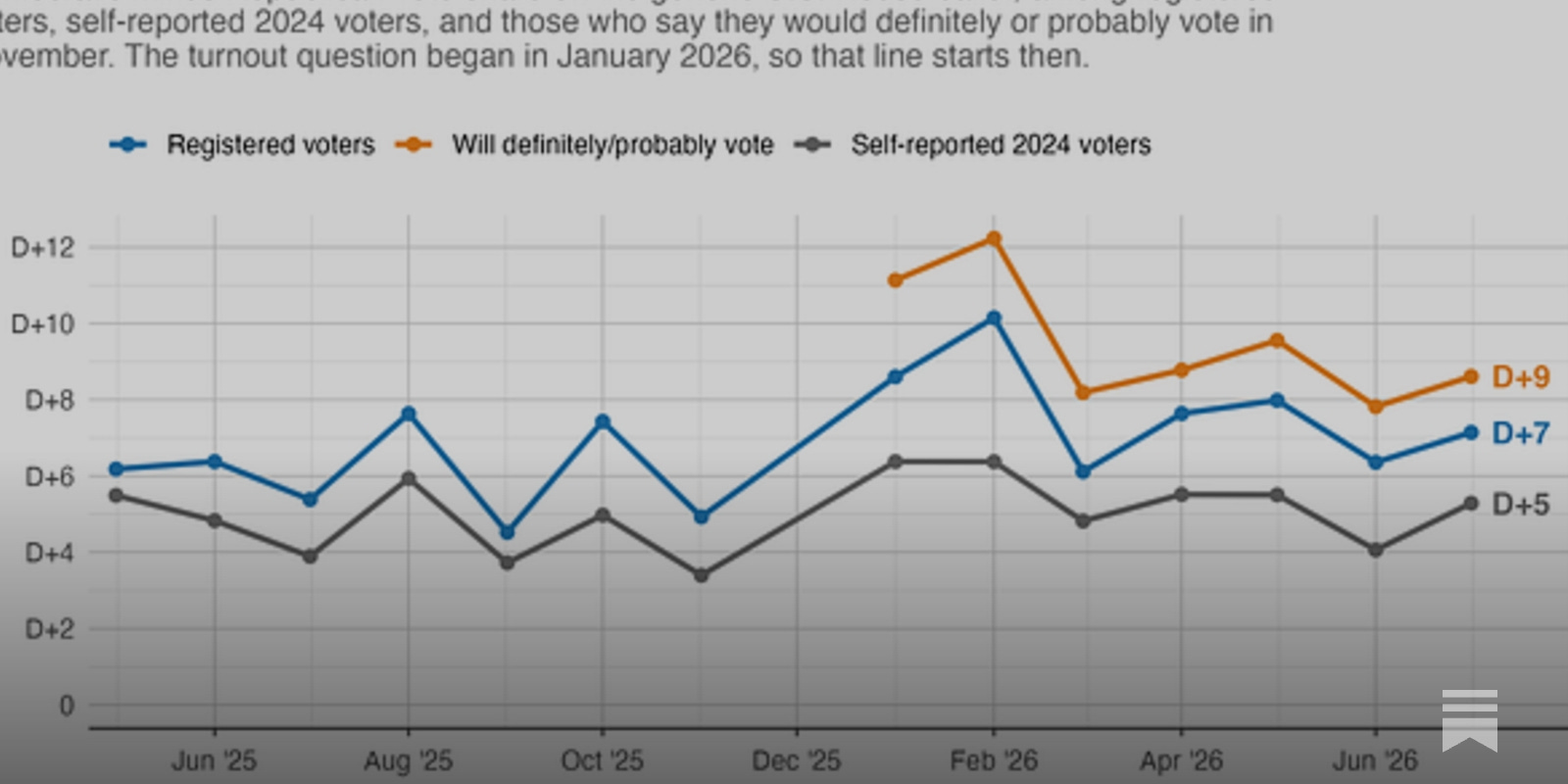
Likely voters lean more Democratic for November's midterms, a change from past cycles
In every wave of our poll this year, screening for likely voters has nudged the congressional generic ballot a point or two bluer
‘Nothing worse’: Energy prices are closing in on GOP’s midterm chances
Relentlessly rising fuel costs are feeding inflation and threatening Republican reelection chances.

The Democratic image is underwater — but they're not losing
The party has a near-historically low favorability rating. This is mostly due to disaffection on the left, where voters still say they'll vote Democratic for the midterms
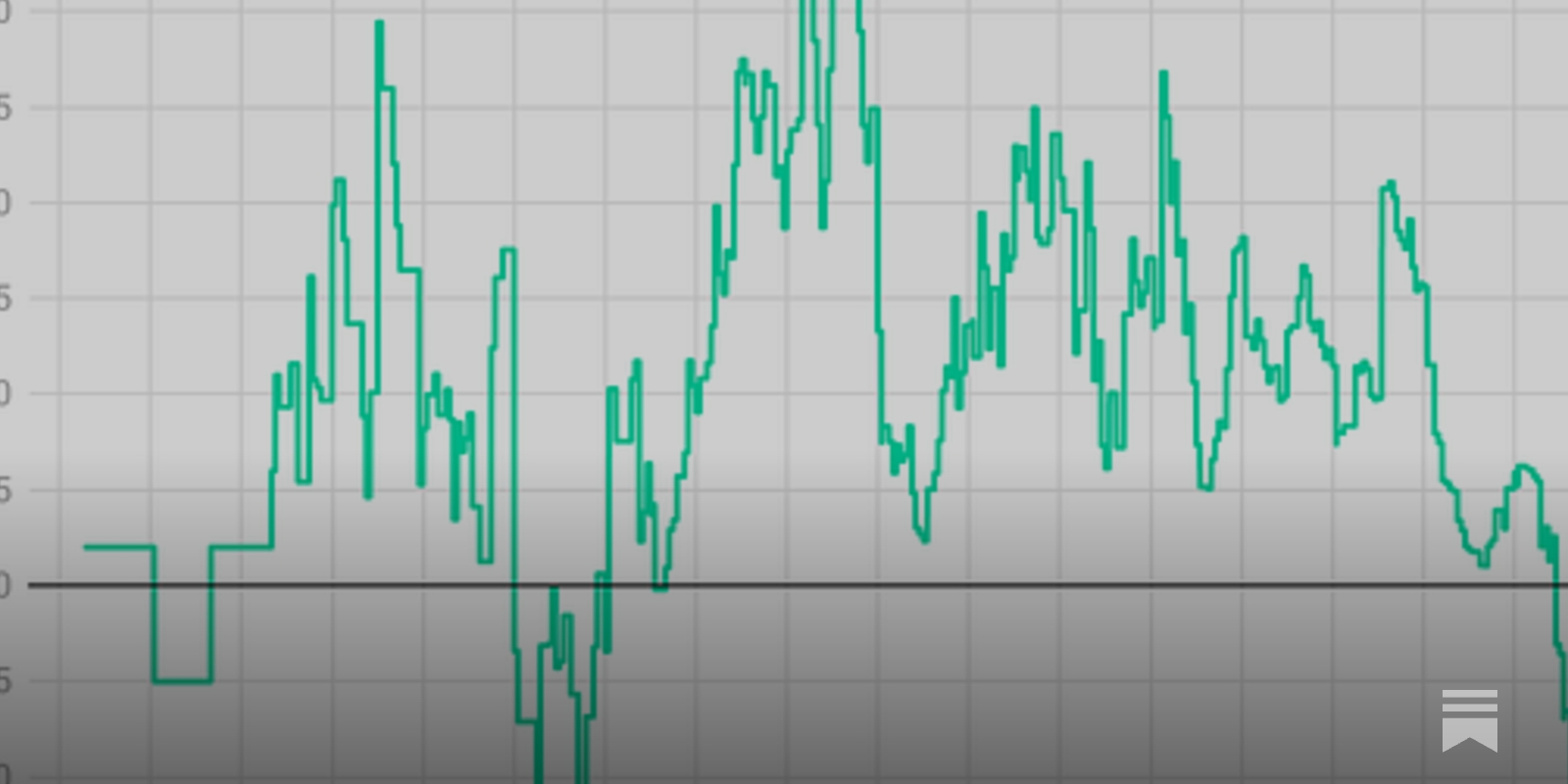
Trump sidesteps Hegseth 2028 speculation: 'We have to get through the midterms first'
The president's Republican Party is fighting to maintain control of both chambers of the US Congress in November's elections.

Exit polls: Election 2025 | CNN Politics
See exit polls data for the 2025 US elections. For more information on voting and election results, visit cnn.com/election.

The hacking threat to the midterms is huge. And technology won’t protect us.
An investigation into the US election system reveals frightening vulnerabilities at almost every level.

Why Are American Presidential Election Campaign Polls so Variable When Votes Are so Predictable?
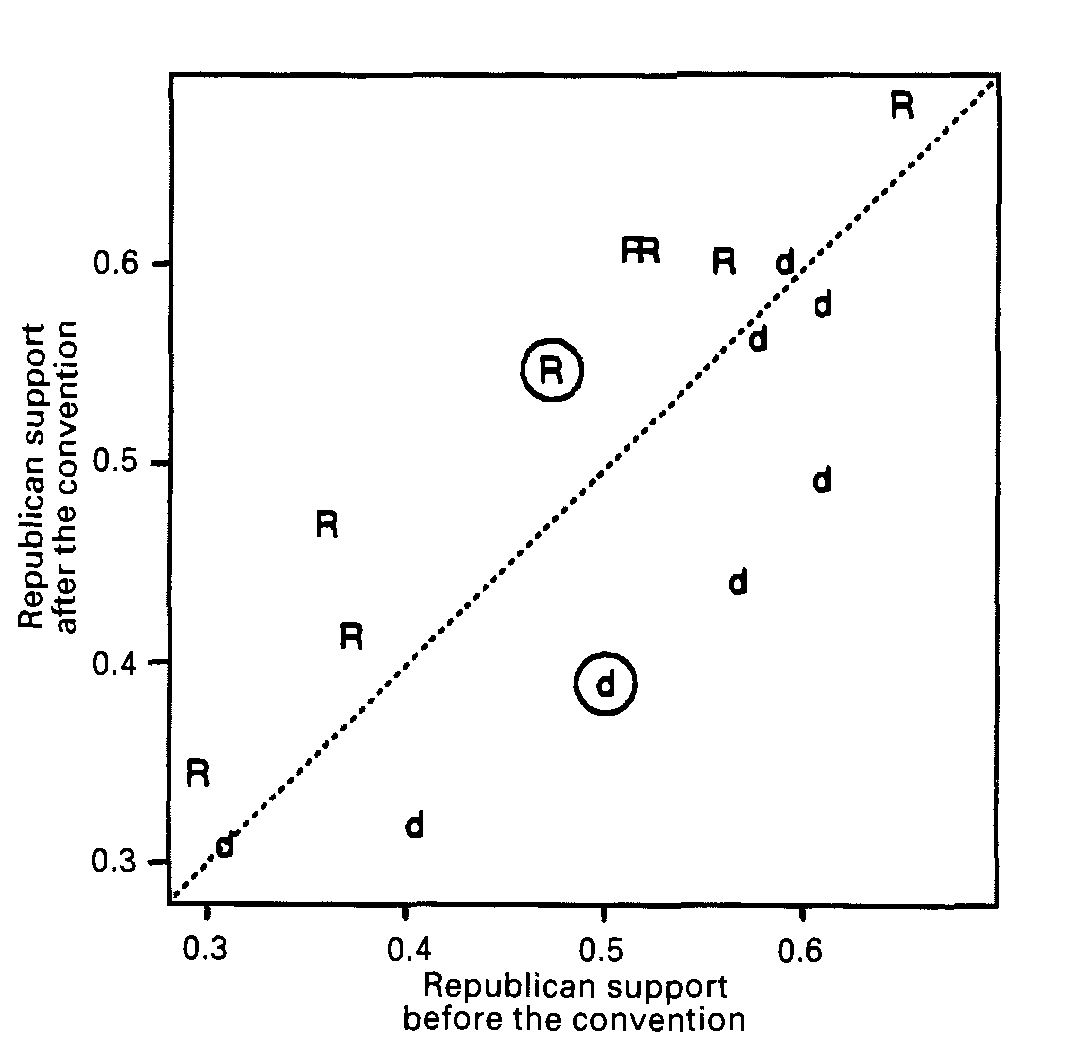
As most political scientists know, the outcome of the U.S. Presidential election can be predicted within a few percentage points (in the popular vote), based on information available months before the election. Thus, the general election campaign for president seems irrelevant to the outcome (except in very close elections), despite all the media coverage of campaign strategy. However, it is also well known that the pre-election opinion polls can vary wildly over the campaign, and this variation is generally attributed to events in the campaign. How can campaign events affect people's opinions on whom they plan to vote for, and yet not affect the outcome of the election? For that matter, why do voters consistently increase their support for a candidate during his nominating convention, even though the conventions are almost entirely predictable events whose effects can be rationally forecast? In this exploratory study, we consider several intuitively appealing, but ultimately wrong, resolutions to this puzzle, and discuss our current understanding of what causes opinion polls to fluctuate and yet reach a predictable outcome. Our evidence is based on graphical presentation and analysis of over 67,000 individual-level responses from forty-nine commercial polls during the 1988 campaign and many other aggregate poll results from the 1952–1992 campaigns. We show that responses to pollsters during the campaign are not generally informed or even, in a sense we describe, "rational." In contrast, voters decide which candidate to eventually support based on their enlightened preferences, as formed by the information they have learned during the campaign, as well as basic political cues such as ideology and party identification. We cannot prove this conclusion, but we do show that it is consistent with the aggregate forecasts and individual-level opinion poll responses. Based on the enlightened preferences hypothesis, we conclude that the news media have an important effect on the outcome of Presidential elections–-not due to misleading advertisements, sound bites, or spin doctors, but rather by conveying candidates' positions on important issues. Winner of the Pi Sigma Alpha Awardfor the best paper at the previous year's meetings of the Midwest Political Science Association. Replication data at the Harvard Dataverse: [https://doi.org/10.7910/DVN/I7GIKD](https://doi.org/10.7910/DVN/I7GIKD).
New Polls: Democrats Demand 2028 Presidential Nominee Back Arms Embargo and Sanctions On Israel — IMEU Policy Project
August 2026

What to know about the 2024 Democratic National Convention
All the focus will be on Vice President Kamala Harris and Minnesota Gov. Tim Walz.

AI backlash is coming for elections
Americans are worried about AI — but how it will play into the midterms is less clear.

Analysis: Donald Trump’s top 25 lies of 2025 | CNN Politics
It was hard to pick only 25. But it was easier than it used to be.
