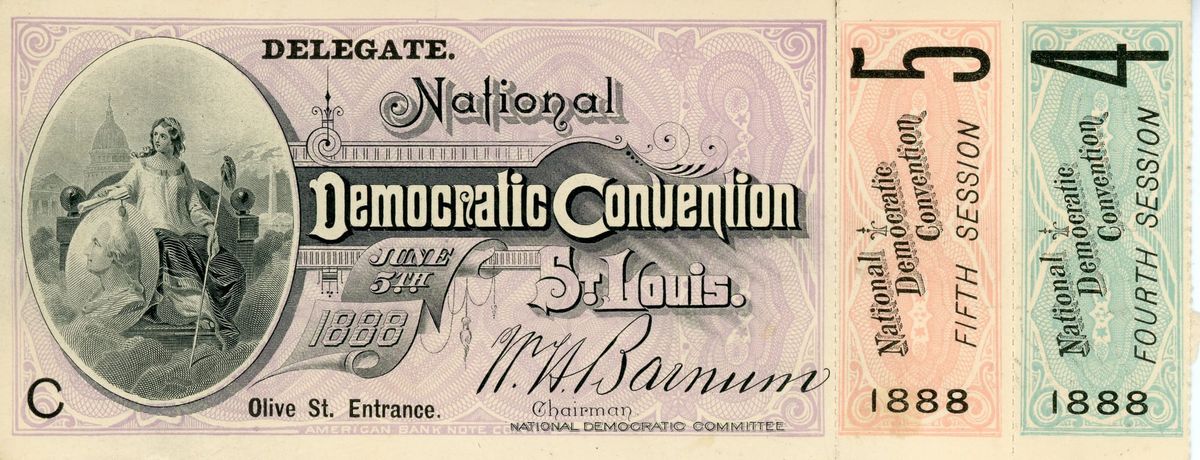
We can change the structure of elections in America to make them more free, more democratic, and more fair to every voter.
Proportional representation & competitiveness
How a more proportional electoral system would increase political competition.
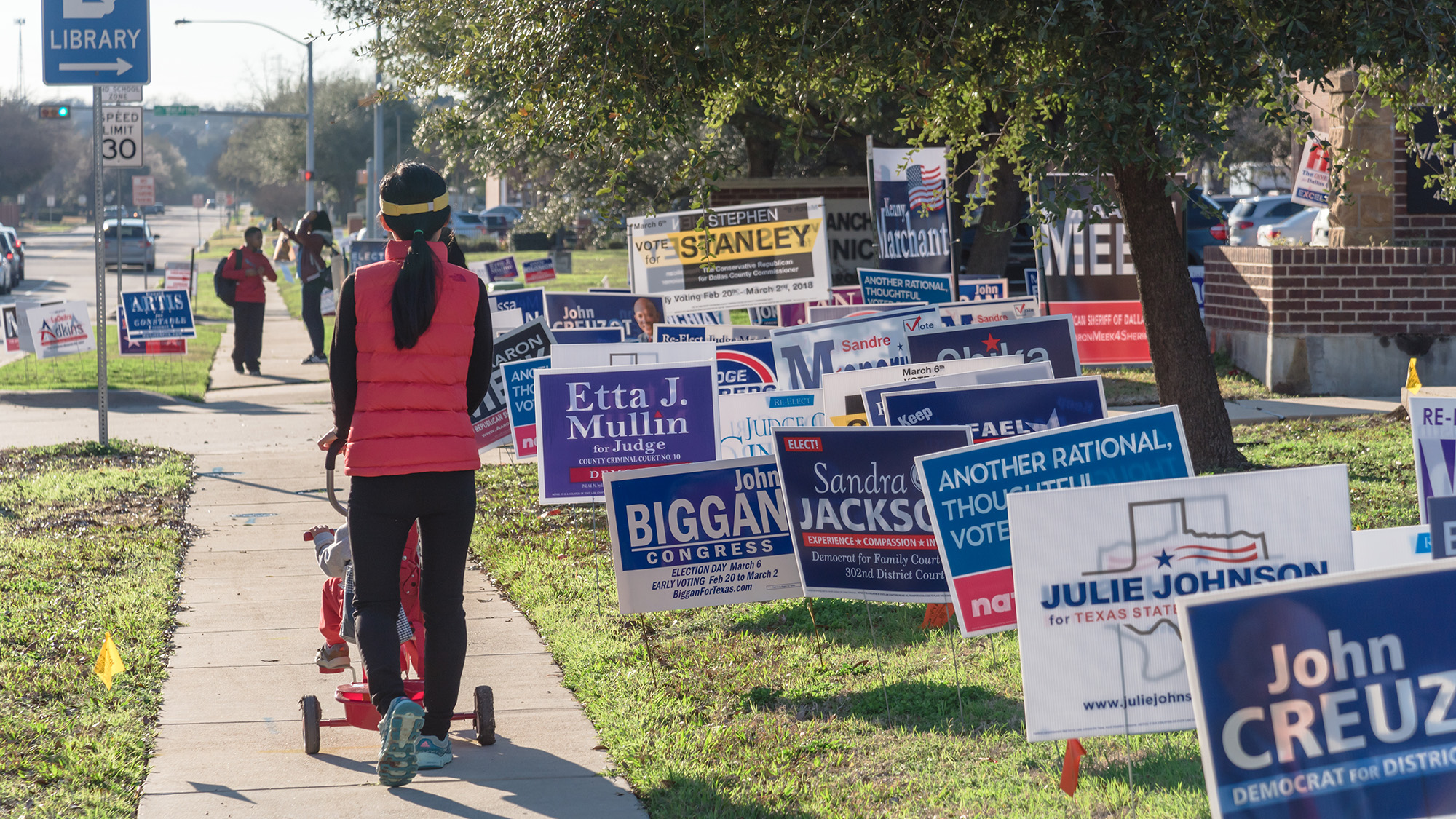
Many voters say Congress is broken. Could proportional representation fix it?
With Congress increasingly polarized, there are growing calls to replace the winner-take-all approach for House elections with a system that advocates say could better reflect the country's diversity.

PR Library: How Proportional Representation Would Finally Solve Our Redistricting and Gerrymandering Problems - FairVote
By Douglas J. AmyDepartment of PoliticsMount Holyoke College This piece is part of the Proportional Representation Library. (This piece is...

Proportional Representation Can Reduce the Impact of Gerrymandering
Implementing multimember districts is one possible response to partisan gerrymandering.
Reimagining American Elections to Combat Gerrymandering
Read the latest by Democracy Docket.

Opinion | Give ranked voting a shot. Our democracy would benefit.
Ranked-choice voting empowers the majority by allowing voters to order their choices.

The Median Voter Theorem is a Clarity Trap
What the Democratic party needs - what it demands - is bold, persistent experimentation
The two-party system is killing our democracy
Here’s a long-shot idea to fix our system and make our democracy more democratic.

An Examination of Ranked Choice Voting in the United States, 2004-2022
From the perspective of social choice theory, ranked-choice voting (RCV) is known to have many flaws. RCV can fail to elect a Condorcet winner and is susceptible to monotonicity paradoxes and the spoiler effect, for example. We use a database of 182 American ranked-choice elections for political office from the years 2004-2022 to investigate empirically how frequently RCV's deficiencies manifest in practice. Our general finding is that RCV's weaknesses are rarely observed in real-world elections, with the exception that ballot exhaustion frequently causes majoritarian failures.

How Media – Namely News, Ads and Social Posts – Can Shape an Election
How Media – Namely News, Ads and Social Posts – Can Shape an Election
Making Victoria's Elections Fairer and More Transparent
“Fair elections are the bedrock of democracy, and we are delivering these reforms to ensure Victorians can be confident in their electoral processes.”

Priorities | celeste4sos.com
The right to vote, better representation and election integrity.

The Geometry of Alliances: Vote Transfer Modelling in French Two-Round Elections
Two-round legislative elections are decided not only by first-round vote shares, but by how voters whose preferred party did not advance redistribute their votes among the surviving candidates. We develop a principled model of this transfer process, grounded in multi-dimensional ideological embeddings derived from the Chapel Hill Expert Survey, and apply it to French legislative elections. Calibrated on the 2017 and 2022 elections, the model is evaluated on the unusually complex 2024 contest, in which three ideologically distinct blocs reached the second round simultaneously, achieving 90.34 percent constituency-level accuracy. We show that ideological proximity alone explains the large majority of vote transfers, that a simple left-right axis is insufficient to capture the relevant distances, and that the structural configuration of the 2024 electorate was far less favorable to the far right than pre-election forecasts suggested.
Correlates of the Mamdani Vote
No class gradient is a big win for democratic socialism


The Dispersion of Power: A Critical Realist Theory of Democracy
Abstract The Dispersion of Power is an urgent call to rethink centuries of conventional wisdom about what democracy is, why it matters, and how to make it better. Drawing from history, social science, psychology, and critical theory, it explains why elections do not and cannot realize the classic ideal of popular rule, and why prevailing strategies of democratic reform often make things worse. Instead, Bagg argues, we should see democracy as a way of protecting public power from capture—an alternative vision that is at once more realistic and more inspiring. Despite their many shortcomings, real-world elections do prevent the most extreme forms of tyranny, and are therefore indispensable. In dealing with the vast inequalities that remain, however, we cannot rely on standard solutions such as electoral reform, direct democracy, deliberation, and participatory governance. Instead, Bagg shows, protecting and enriching democracy requires addressing underlying inequalities of power directly. In part, this entails substantive policies attacking the advantages of wealthy elites. Even more crucially, deepening democracy requires the organization of oppositional, countervailing power among ordinary people. Neither task is easy, but historical precedents exist in both cases—and if democracy is to survive contemporary crises, leaders and citizens alike must find ways to revive and reinvent these essential democratic practices for the twenty-first century.