

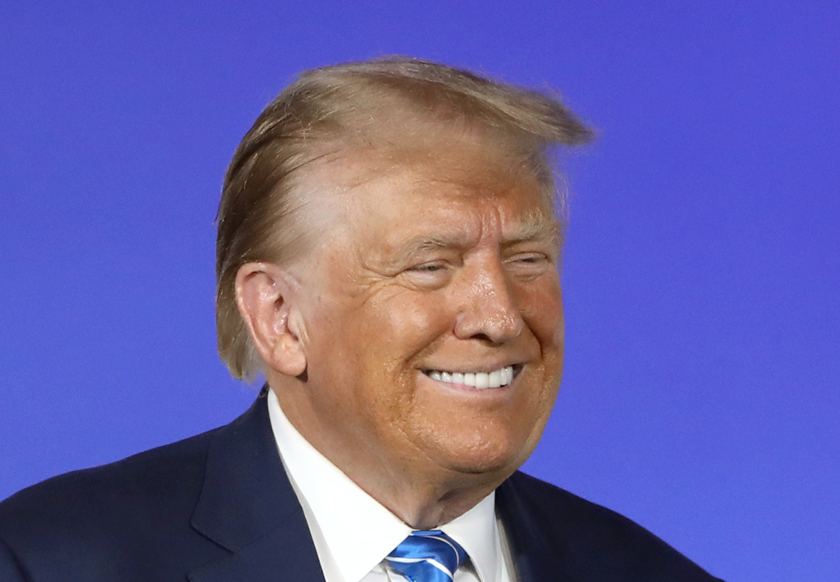
Trump stands out in the GOP not for his racism, but his vision of emancipatory irresponsibility.
Opinion | Where Trump Is Vulnerable and How to Act on It
People and institutions of civil society must coordinate against him.

Opinion | Trump and the Democrats: 13 Black Democratic Voters Discuss
The group discusses Donald Trump, America today and the future of the Democratic Party.

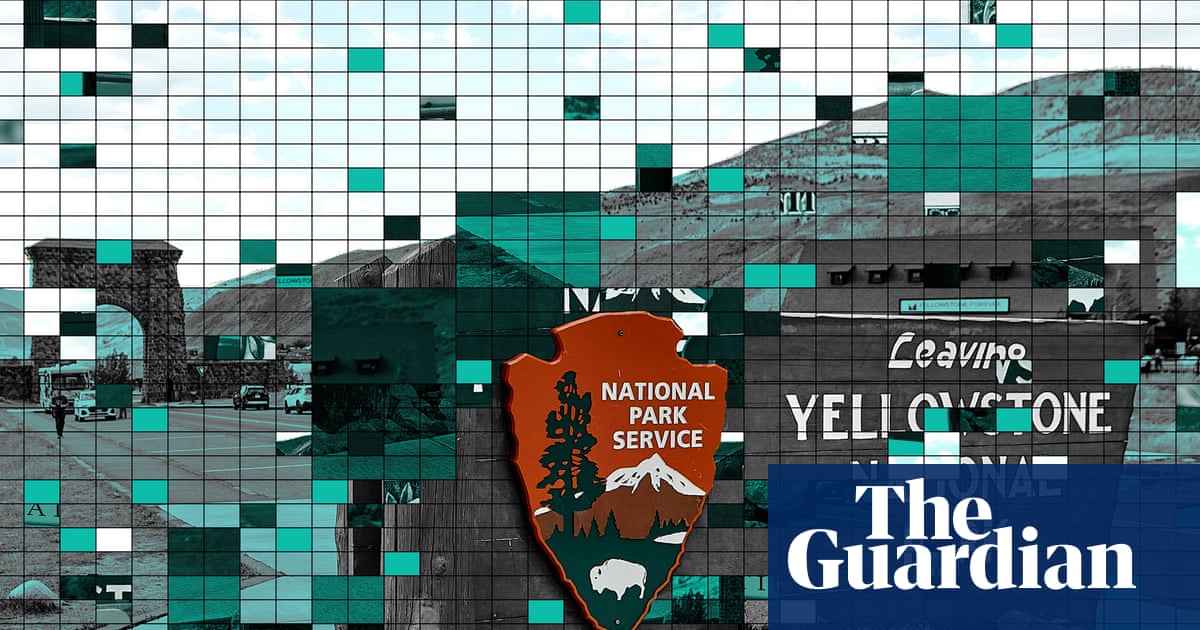
‘A sanitized view of America’: inside Trump’s campaign to erase US history from national parks
Critics say the Trump administration is trying to rewrite and whitewash history by removing and altering scores of signs on public lands
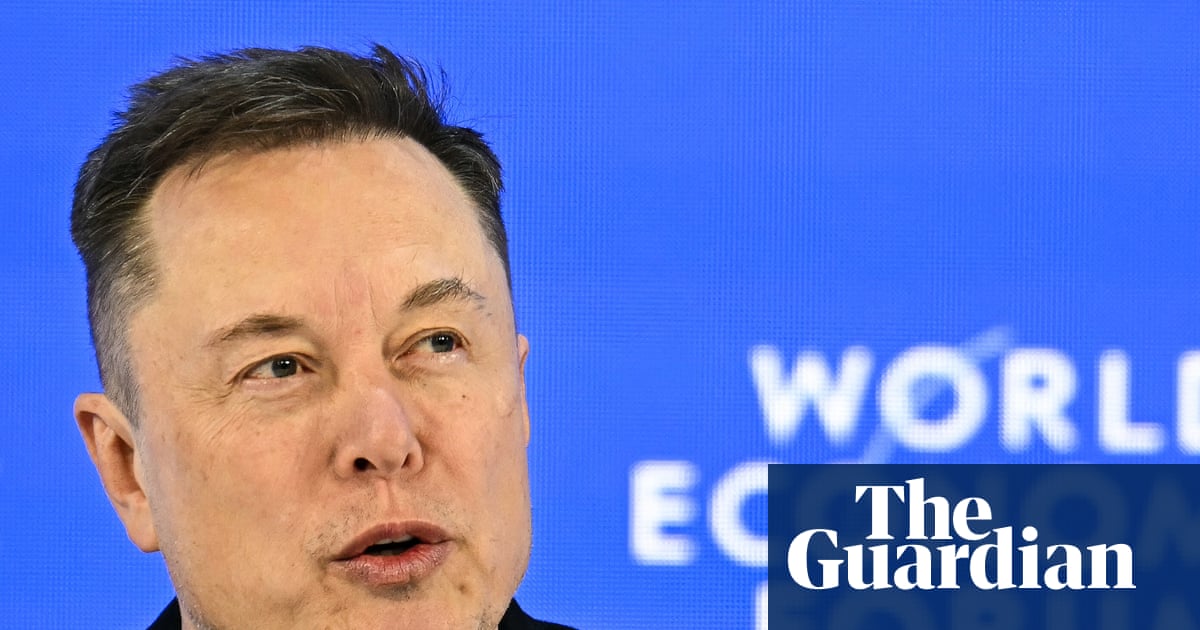
Elon Musk posted about race almost every day in January
Many social media posts by Tesla CEO on his platform are indiscernible from those of white supremacists, say experts
Trump acknowledges ‘real problems’ at reflecting pool after $14m makeover, blaming ‘vandalism’
US president also claims vandals have been arrested, as Washington attraction sees algae bloom and peeling paint

Resisting Racial Capitalism: An Antipolitical Theory of Refusal
An Antipolitical Theory of Refusal
The Emancipator
The Emancipator is an award-winning nonprofit platform that provides news, expert analysis, and investigative reporting about the structure of racism and antiracist efforts to abolish it. The Emancipator works in the revolutionary spirit of antislavery journalists who covered the scourge of slavery and efforts to abolish it. We are emancipating through evidence, experience, expertise, and empathy.

Donald Trump: A Critical Theory-Perspective on Authoritarian Capitalism
This paper analyses economic power, state power and ideological power in the age of Donald Trump with the help of critical theory. It applies the critical theory approaches of thinkers such as Franz Neumann, Theodor W. Adorno and Erich Fromm. It analyses changes of US capitalism that have together with political anxiety and demagoguery brought about the rise of Donald Trump. This article draws attention to the importance of state theory for understanding Trump and the changes of politics that his rule may bring about. It is in this context important to see the complexity of the state, including the dynamic relationship between the state and the economy, the state and citizens, intra-state relations, inter-state relations, semiotic representations of and by the state, and ideology. Trumpism and its potential impacts are theorised along these dimensions. The ideology of Trump (Trumpology) has played an important role not just in his business and brand strategies, but also in his political rise. The (pseudo-)critical mainstream media have helped making Trump and Trumpology by providing platforms for populist spectacles that sell as news and attract audiences. By Trump making news in the media, the media make Trump. An empirical analysis of Trump’s rhetoric and the elimination discourses in his NBC show The Apprentice underpins the analysis of Trumpology. The combination of Trump’s actual power and Trump as spectacle, showman and brand makes his government’s concrete policies fairly unpredictable. An important question that arises is what social scientists’ role should be in the conjuncture that the world is experiencing.See also the related blog post "How The Frankfurt School Helps Us To Understand Donald Trump’s Twitter Populism"http://www.huffingtonpost.co.uk/christian-fuchs1/how-the-frankfurt-school-_b_14156190.html?utm_hp_ref=uk-donald-trumpThe German translation of this shorter piece was published in Der Falter 5/2017: 21-23.
Why Trump Will Lose His Trade War
His people don’t know what they’re doing or what they want
The Predatory Hegemon
Ever since Donald Trump first became U.S. president, in 2017, commentators have searched for an adequate label to describe his approach to U.S. foreign relations. Writing in these pages, the political scientist Barry Posen suggested in 2018 that Trump’s grand strategy was “illiberal hegemony,” and the analyst Oren Cass argued last fall that its defining essence was a demand for “reciprocity.” Trump has been called a realist, a nationalist, an old-fashioned mercantilist, an imperialist, and an isolationist.

Elon Musk: The Normalizer of Fascism
The world's richest man needs you to believe fascist parties are part of the democratic spectrum
Trump accounts are fool's gold, and they don't benefit working class families
Tucker Carlson
Tucker Carlson is a veteran television personality who emerged in 2016 as one of the most influential figures of the authoritarian, anti-democracy, right-wing movement that rose to prominence around the political career of former President Donald J. Trump. Carlson’s propaganda, which obsessively portrays white men as being victims of a corrupt, feminist, multicultural system, often mirrors the talking points found in fringe internet spaces where extremists congregate. He injects these talking points into his commentary on current events, giving extremists both an audience and a TV-ready polish that would be otherwise difficult to obtain. Carlson is undoubtedly the most listened-to pundit the anti-immigrant movement in America has ever seen and is regarded as a heroic figure to white supremacists and other admirers of fascism. Outside of Trump himself, arguably no single figure has proven to be more influential in radicalizing the right in the 21st century.
Regime Change: Inside the Imperial Presidency of Donald Trump
INSTANT #1 NEW YORK TIMES BESTSELLER “Regime Change is exceptional. It transcends its genre...the book is packed with news that will stay news...This is reporting of consequence.” —David Remnick, The New Yorker “A flabbergasting feat of political reporting.” —Tina Brown “Riveting and richly textured...What the authors add is the vivid detail that makes these events feel actual. They wrest reality itself back from the distorted world of entertainment, illusion, fantasy, and denial that Trump has generated around himself. It is this flood of provocation, atrocity, self-dealing, and fabrication that makes Haberman and Swan’s counternarrative so vital.” —Fintan O’Toole, The New York Times A riveting, intimate, and revelatory account of the most radical and consequential presidency of our time.From the two reporters who have covered him more closely than perhaps anyone else over the past decade comes this definitive portrait of Donald Trump in the White House. Regime Change covers the first year of Trump’s second presidency—a term liberated from every constraint that defined his first. The generals who once told him “no” are gone, and the lawyers who remain have learned to pick their battles. His administration has flouted court orders and he has claimed powers that Congress once checked. What remains is a President willing to take enormous risks that have upended global markets and toppled heads of state; an imperial President operating almost entirely on instinct alone. Based on hundreds of interviews and unprecedented reporting from deep within the administration’s most closely guarded rooms, Regime Change takes the reader inside the Situation Room and into the secret Oval Office deliberations that have launched a new war in the Middle East and seen Trump seal the border, surge National Guard troops into cities, and send immigration agents into deadly clashes with protestors. Maggie Haberman and Jonathan Swan bring us behind the scenes of a presidency that has transformed the culture, turned the Justice Department into an agent of retribution against the President’s enemies and the office itself into a brazen vehicle for profit. They reveal a second term propelled by a historical irony that Trump himself has come to understand: that the indictments, the convictions, the assassination attempts, and four years of exile made him not weaker but far more powerful, more vengeful, and more willing to gamble than any President in modern history. This is the story of how Trump has used that power, who has tried to stop him, and why nearly all of them have failed. It is also the story of something American journalists are more accustomed to chronicling in distant capitals than in their own: a President who has fundamentally altered the nature of the office he holds—and, with it, how the rest of the world understands American power. It is an account of Regime Change right here in America—a landmark real-time history of a modern presidency like no other.


