Sweden often gets held up as an example of how socialism can work better than markets. But, as Norberg shows, Sweden’s history in fact points to the opposite conclusion.
‘What is it actually about?’ Asymmetric mobilisation and the defeat of wage-earner fund policies in Sweden
‘Wage-earner funds’, an ultimately-defeated idea for union-controlled funds to develop stakes in Swedish companies, dominated Swedish politics in the late 1970s and early 1980s. They are regularly cited as a prominent attempt to introduce economic democracy. However, factors behind the funds’ defeat are often under-analysed, with the sequencing of events particularly neglected. This article corrects for this. It seeks to explain the defeat of wage-earner funds by tracing decision-making processes in the Social Democratic Party. It argues that the funds were defeated due to asymmetries in mobilisation, which were connected to asymmetries in everyday experiences. While capital owners mobilised strongly against wage-earner funds as an existential threat, most Social Democratic leaders, voters and union members saw the issue as detached from their everyday concerns. This points to the importance that asymmetries in experience and mobilisation can have in policy contests, which provides an advantage to capital in contests over investment control.

Sweden Wants To Fight Our Disposable Culture With Tax Breaks For Repairing Old Stuff - Fast Company
A proposed new law takes aim at wasteful consumerism.

Work, Justice, and Collective Capital Institutions: Revisiting Rudolf Meidner and the Case for <span style="font-variant:small-caps;">Wage‐Earner</span> Funds
ABSTRACT This article makes the case for a specific variety of what we call Collective Capital Institutions (CCIs), by returning to the idea of Wage‐Earner Funds (WEFs) – a 1970s Swedish policy proposal designed gradually to shift ownership and control over parts of the economy to democratically controlled institutions. We identify two attractive rationales in favour of such a scheme and argue that both can fruitfully be transposed to the current worldwide economic situation. The egalitarian rationale is that WEFs could help in the pursuit of equality by giving a wider set of people a stake in collectively owned companies and a right to their profits. The democratic rationale is that WEFs redistribute not only these profits, but also the power over economic decisions made within companies. We then contrast such schemes for collective capital ownership with the similar but much more privatised proposals set out in, for instance, John Rawls's idea of a ‘property‐owning democracy’. We argue that CCIs ultimately are more likely to contribute to the development of the ‘sense of justice’ within society that is needed for a stable just society. We conclude that CCIs deserve a great deal more exploration in academic and political discussions of egalitarian economic systems.

Sweden's Anti-Immigration Wave Is Based on a Failure to Integrate
Rising nationalists are wrong to blame the recent wave of migrants. But the rest of Sweden must own up to an even harder problem.

W Social, Public Institutions and the Theater of European Digital Sovereignty
European public institutions are betting big on digital sovereignty and open source software. And yet they recently moved their Bluesky accounts to W Social, a private, for profit network owned by Swedish entrepreneurs that has quietly gone closed-source.

Wage Compression Drives Nordic Income Equality
Income inequality in the Nordic countries — Denmark, Finland, Norway, and Sweden — is substantially lower than in the United States or the United Kingdom despite similar levels of per capita income. The Gini coefficient for disposable income in Nordic countries averages 0.27, compared to 0.39 in the US and 0.36 in the UK. In Income Equality in the Nordic Countries: Myths, Facts, and Lessons (NBER Working Paper 33444), Magne Mogstad, Kjell G. Salvanes, and Gaute Torsvik analyze the underlying source of these disparities. They employ detailed microeconomic data and statistical decomposition techniques and consider distributional statistics on income, wages, working hours, education, and skills across these countries.

Not just books - how renting a sewing machine from the library can improve democracy
Finland's libraries are increasingly being valued not by how many books they lend, but how they help societies function.

The Strongest Criticism of Socialism
The most serious argument against socialism isn't about human nature, it's about economic possibilities. Let's dive into what Mises and Hayek have to say.

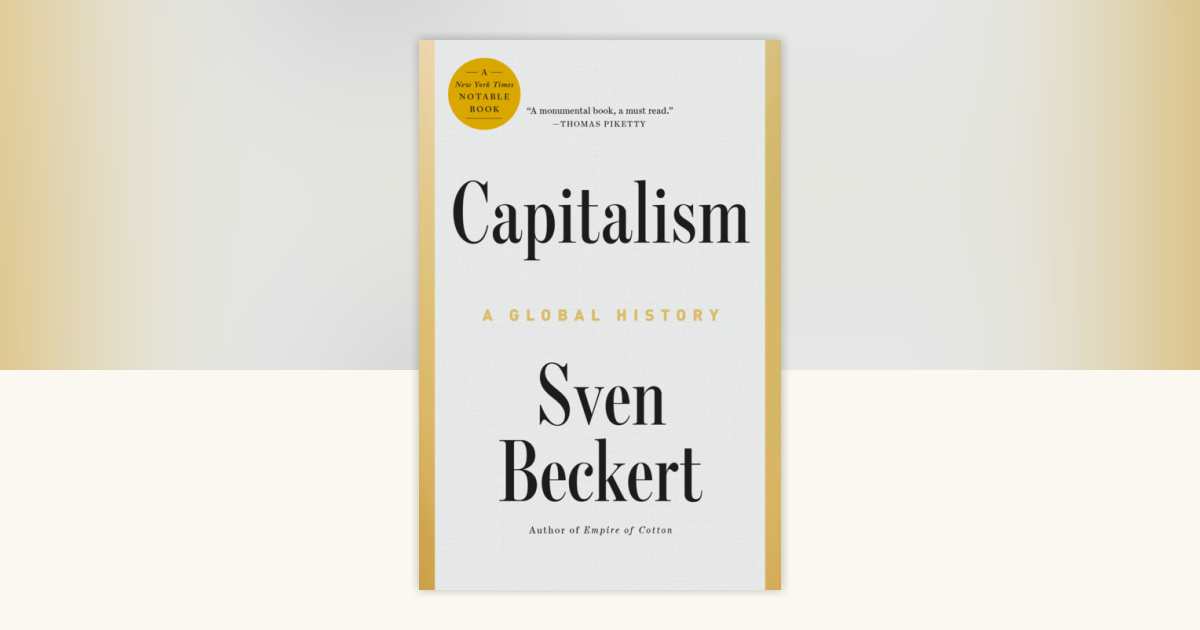
Capitalism by Sven Beckert: 9780735220836 | PenguinRandomHouse.com: Books
Buy Capitalism by Sven Beckert from Penguin Random House
Poland's Economic Experiment, Starring Thomas Piketty
Prime Minister Mateusz Morawiecki's strategy is inherently self-contradictory. But it just might work.

How the Six-Hour Workday Actually Saves Money
A Swedish experiment may have missed the bigger picture of how shorter days can mean long-term profit.

New Capitalism II: Compositional vs income inequality
Are all class-based societies unequal?

Le nouveau capitalisme (1/3)
Traduction de "New capitalism in America. Richest capitalists and richest workers are increasingly the same people" de Branko Milanovic

Le nouveau capitalisme (2/3) : inégalités compositionnelles versus inégalités de revenu
Traduction de "New capitalism II: Compositional vs income inequality. Are all class-based societies unequal?" de Branko Milanovic

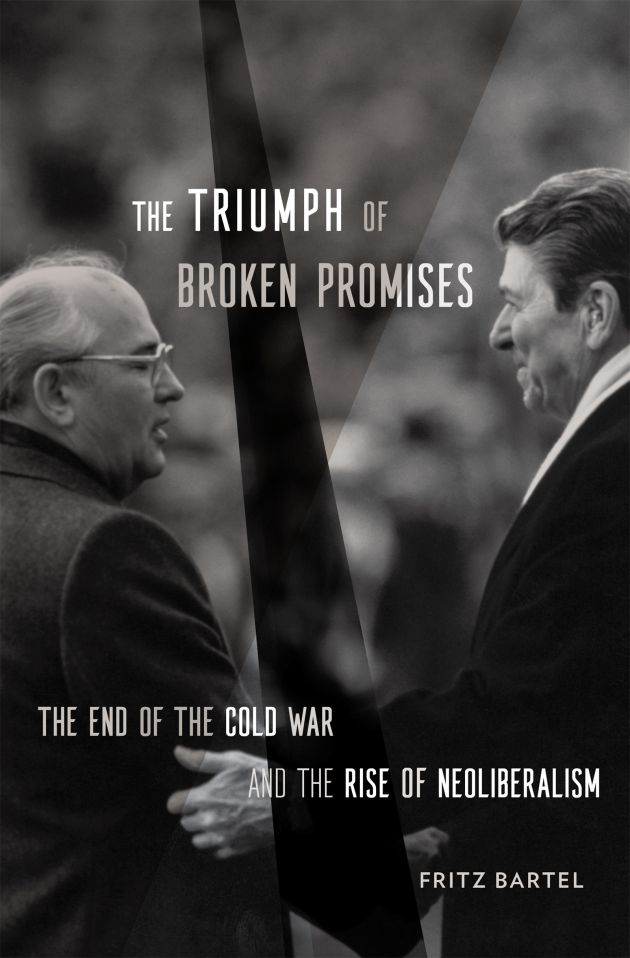
The Triumph of Broken Promises — Harvard University Press
A powerful case that the economic shocks of the 1970s hastened both the end of the Cold War and the rise of neoliberalism by forcing governments to impose austerity on their own people.Why did the Cold War come to a peaceful end? And why did neoliberal economics sweep across the world in the late twentieth century? In this pathbreaking study, Fritz Bartel argues that the answer to these questions is one and the same. The Cold War began as a competition between capitalist and communist governments to expand their social contracts as they raced to deliver their people a better life. But the economic shocks of the 1970s made promises of better living untenable on both sides of the Iron Curtain. Energy and financial markets placed immense pressure on governments to discipline their social contracts. Rather than make promises, political leaders were forced to break them.In a sweeping narrative, The Triumph of Broken Promises tells the story of how the pressure to break promises spurred the end of the Cold War. In the West, neoliberalism provided Western leaders like Ronald Reagan and Margaret Thatcher with the political and ideological tools to shut down industries, impose austerity, and favor the interests of capital over labor. But in Eastern Europe, revolutionaries like Lech Walesa in Poland resisted any attempt at imposing market discipline. Mikhail Gorbachev tried in vain to reform the Soviet system, but the necessary changes ultimately presented too great a challenge.Faced with imposing economic discipline antithetical to communist ideals, Soviet-style governments found their legitimacy irreparably damaged. But in the West, politicians could promote austerity as an antidote to the excesses of ideological opponents, setting the stage for the rise of the neoliberal global economy.
Comment on “Banning the purchase of sex increases cases of rape: evidence from Sweden”
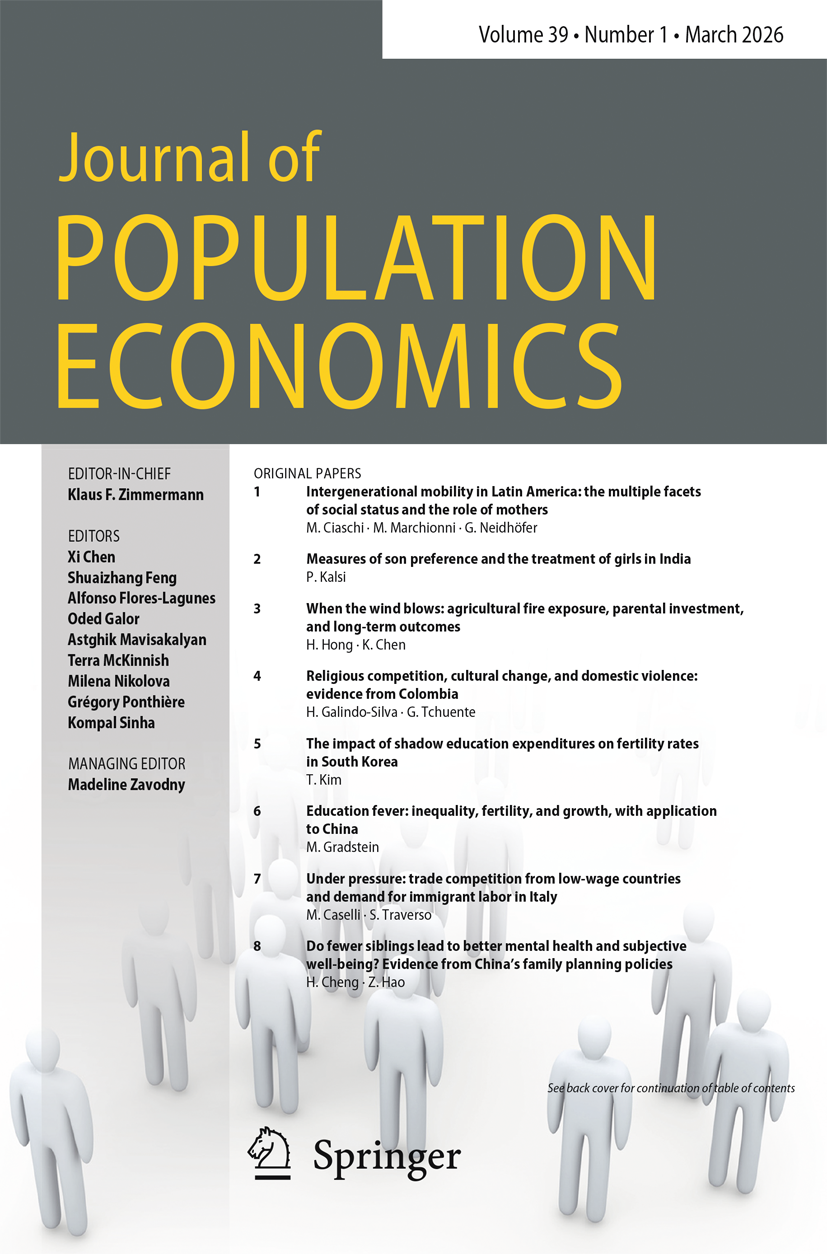
Journal of Population Economics -