Blockchain & Decentralized Identity Architect — Internet Cryptography Pioneer — Co-author TLS Security Standard — Collaborative Tools & Patterns
Cryptoeconomics: Paving the Future of Blockchain Technology | HackerNoon
Page through the articles on <a href="https://hackernoon.com/tagged/blockchain" target="_blank">blockchain</a> today and you will see healthy discussions over its applications and endless debates over the future price action of someone’s favorite cryptocurrency. Yet rarely among all these topics is any mention of the most fascinating notion at the heart of the movement — blockchain as a novel means<strong> to incentivize desired human behavior</strong>.

Nextcloud vs. CryptPad: Which Privacy-First Collaboration Tool is Right for You?
Two offerings that promise privacy and control, yet each takes a different path.
Decentralized Identity Verification using Zero-Knowledge Proofs: A Privacy-Preserving Authentication Framework
In the contemporary online interaction, digital iden- tity is central, but most systems follow a centralized provider like Google or Facebook. Although convenient, these models pose ma- jor risks to data breach, surveillance, and single point of failure. The proposed paper proposes a privacy-sensitive decentralized identity verification system that uses Zero-Knowledge Proofs (ZKPs) to allow users to make it through claims (e.g., age, citizen- ship, or enrollment) without any personal data being provided, thereby solving the challenges outlined in the paper. Our architecture integrates verifiable credentials, zero-knowledge-SNARKs and an issuer trust registry that is maintained on blockchain smart contracts to guarantee trustless verification and eliminate dependence on centralized authorities. Its system gives its users full control over credentials, allows reuse across applications, and does not expose data.A proof-of-concept implementation has shown the approach to be feasible with Circom and SnarkJS to generate proof, Solidity smart contracts to verify them, and a user interface implemented in React. Results of the evaluations showed that determination of the verification latency is low, the overhead to generate proofs is moderate, and no privacy leakage occurs. It can be used in potential applications such as education, e-governance, healthcare, finance, and online voting.
vitalik.eth on Twitter / X
2026 is the year we take back lost ground in computing self-sovereignty.But this applies far beyond the blockchain world.In 2025, I made two major changes to the software I use:* Switched almost fully to https://t.co/caFP0K5fYF (open source encrypted decentralized docs)*…— vitalik.eth (@VitalikButerin) January 22, 2026
CryptPad: end-to-end encrypted collaboration suite
CryptPad: end-to-end encrypted collaboration suite
CryptPad: end-to-end encrypted collaboration suite
CryptPad: end-to-end encrypted collaboration suite
15 Open-Source Tools for Digital Sovereignty (2026) | Comparisons & Alternatives | Vucense
Own your digital stack. The 15 best open-source tools for privacy, security, and full control over your data — reviewed and ranked for 2026.
Blockchain Governance: Programming Our Future
This post describes why blockchain governance design is one of the most important problems out there, its critical components, current…

Noble cryptography
Paul Miller. I make projects which help developers to build awesome things

Crypto, Blockchain and FinTech Industry Insights Blog
Visit Ripple’s Insights blog for the latest articles, news, industry trends, and thought leadership across blockchain, crypto, payments and more.
The Latecomer’s Guide to Crypto (Published 2022)
Crypto is a lot of things – including terribly explained. We’re here to clear things up.

Digital Democracy in Decentralised Autonomous Organisations
Decentralised autonomous organisations (DAOs) are institutional technologies that enable democratic governance innovation. They inherit key democratic principles such as procedural transparency and immutable records from being based on blockchain technology. This paper conducts a systematic literature review to examine governance mechanisms and challenges of digital democracy in DAOs. While issues like power concentration and coordination failures exist in current implementations, we argue that the concept of DAOs offers new opportunities for transparent governance and participatory decision-making. As testbeds for governance experiments, we find that DAOs have the potential to reshape democratic processes and foster innovative governance models in the digital era. Calling for interdisciplinary collaboration, further research is needed around Sybil-resistant voting mechanisms, ideological path dependencies and deliberation mechanisms.

Sirraya One | Enterprise Decentralized Identity Platform
NIST-certified quantum-resistant identity with zero-knowledge proofs. Government & military-grade verifiable credentials.

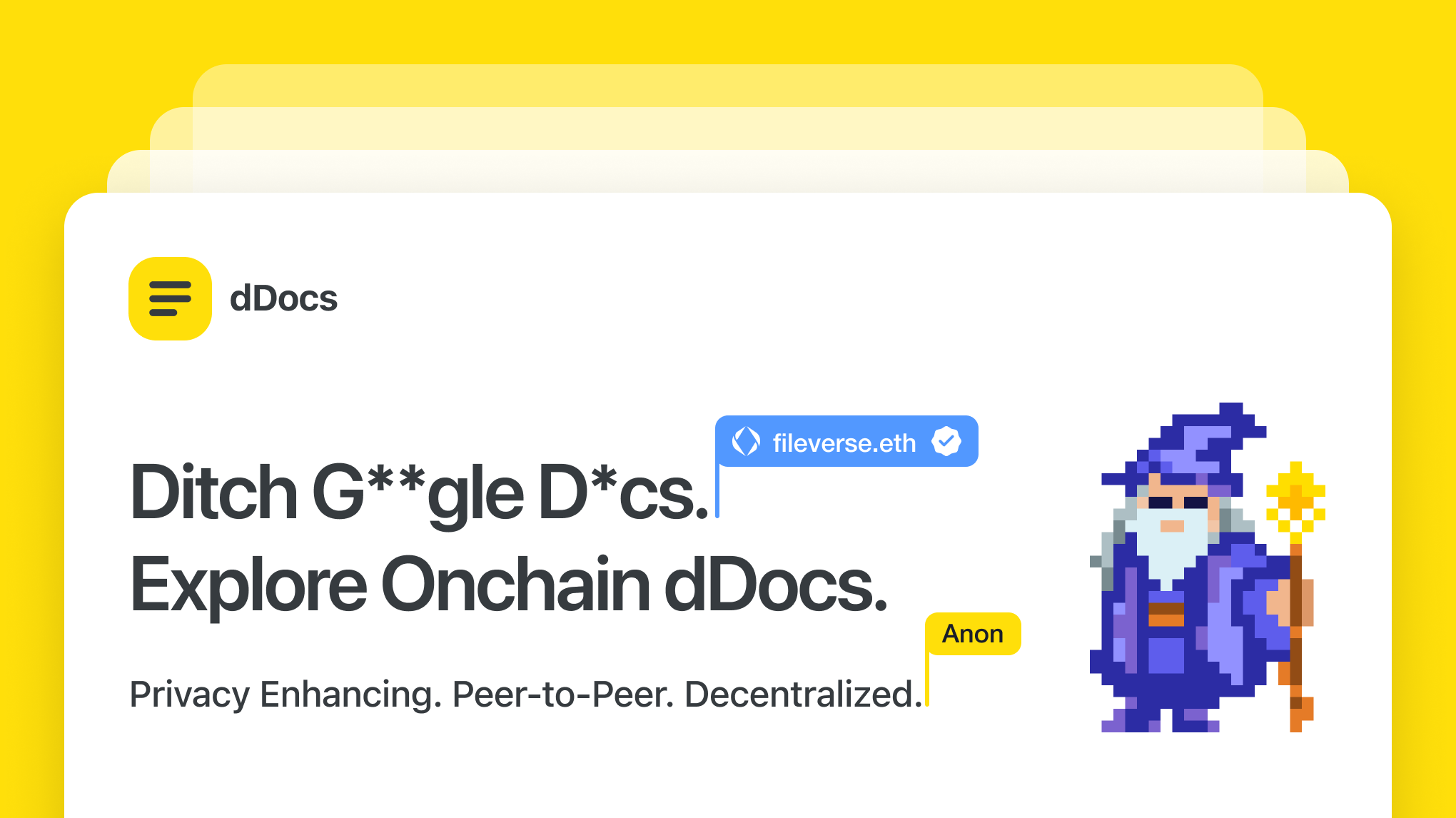
Your decentralised & privacy enhancing alternative to google docs
Decentralised Docs: peer-to-peer document editor that keeps your data secure with end-to-end encryption. Real-time collaboration, onchain.
Home - chaum.com
Widely recognized as the inventor of digital cash, David is currently leading xx network, a completely private, quantum-secure decentralized messaging and payment platform. He is also known for other fundamental innovations in cryptography, including privacy technologies such as mix nets and secure voting systems. With a PhD in Computer Science from UC Berkeley, he has [...]Read More... from Home