


ABSTRACT: Self-Sovereign Computing is a transformative paradigm designed to empower individuals to take command of their digital journey and to uphold t...
Self-sovereign identity: the future of personal data ownership?
Despite the economic value of online identities, major concerns remain around privacy issues. Could the self-sovereign identity model be the solution?

Is "acceptably non-dystopian" self-sovereign identity even possible?
In the recent paper about "soulbound" tokens, Vitalik Buterin et al. write that they aim to build technology that is "acceptably non-dystopian". Do any of today's self-sovereign identity projects fit that bill?
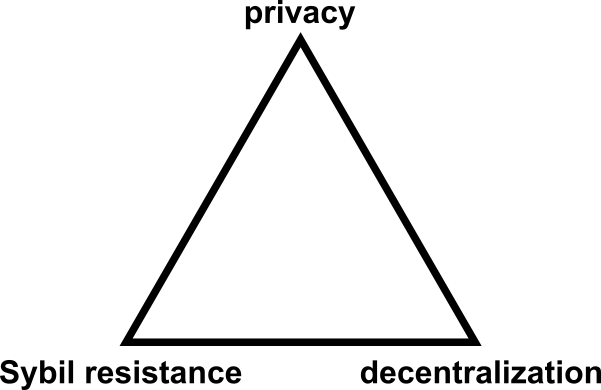
Digital Sovereignty
The term “digital sovereignty” has become an integral part of current political discourse. Across party lines and administrative levels, there is consensus: Being digitally sovereign is desirable and important. However, it often remains unclear what it actually means to be digitally sovereign and how this desirable state should be achieved.
The dystopia of self-sovereign identity (SSI)
SSI has distressing emergent outcomes — the antithesis of the hopes and plans of the SSI community and those attracted to SSI's real-world application. We have to reflect and rethink.

HUGE — AI Without Giving Up Your Privacy
We're building an Agentic AI Platform running on your Device that lives with YOU, isolated from the cloud, fundamentally reimagining the relationship between humans and artificial intelligence through ownership, privacy, and massive context. In an age of capture and control, HUGE sells independence and sovereignty.
Sovereignty and Landscape | Simon Wardley | 15 comments
X : What is digital sovereignty? Me : I was asked that question by some friends within Government at the beginning of this month. I know some have been working on the idea, which is very encouraging, but I gave my tuppence worth of a definition. "Digital sovereignty is a country's ability to make its own decisions about the technology it uses, the data it creates, and how digital systems work in service of its people rather than being forced to accept choices made by other entities. This requires continuous situational awareness of the economic and technological landscape to anticipate changes, maintain strategic advantage, and shape international digital norms. Digital sovereignty is achieved through strategic control over critical digital assets and relationships, extending from public sector systems to the broader digital ecosystem affecting citizens and economic interests." The key is choice. You are sovereign if you retain the ability to make your own decisions rather than being forced to accept the decisions of others. This doesn't mean you need to own the entire tech stack, or all the data but you do need to maintain control over critical assets and relationships. This can be achieved by many means not just by conflict with others but through co-operation and collaboration (i.e. all the forms of competition matter). You also can consciously compromise, accepting some loss of sovereignty in one space to gain sovereignty in another. Anyway, I quite like the Mike Bracken description https://lnkd.in/eFjzcAdr "Digital sovereignty is the agency and capacity of any organisation to make intelligent, informed choices to shape its digital future by design". I used to do a lot of work on sovereignty many years ago, so if you want to know more about my view and how to achieve this, well I have a series of hopefully useful but somewhat introductory posts. Sovereignty and Landscape https://lnkd.in/eku2X_Ea Societal versus Market benefit https://lnkd.in/eXxkCv-K Whose interests are you serving? https://lnkd.in/eAgHS5wc | 15 comments on LinkedIn

Self-Sovereign Identity: 5 Years On
ABSTRACT: On April 26, 2016, Christopher released “The Path to Self-Sovereign Identity”, a foundational article on SSI. Five years on, self-sovereign id...

vitalik.eth on Twitter / X
2026 is the year we take back lost ground in computing self-sovereignty.But this applies far beyond the blockchain world.In 2025, I made two major changes to the software I use:* Switched almost fully to https://t.co/caFP0K5fYF (open source encrypted decentralized docs)*…— vitalik.eth (@VitalikButerin) January 22, 2026
15 Open-Source Tools for Digital Sovereignty (2026) | Comparisons & Alternatives | Vucense
Own your digital stack. The 15 best open-source tools for privacy, security, and full control over your data — reviewed and ranked for 2026.
Interoperable Sovereignty: The Democratic Alternative to Digital Authoritarianism
A Democratic Architecture for the Digital Age Digital sovereignty has become a central concern for governments worldwide, yet its meaning remains contested. Too often it is framed as...

Musings of a Trust Architect: The Origins of Self-Sovereign Identity
ABSTRACT: The idea of Self-Sovereign Identity emerged in 2016, but it has inspirations dating back centuries. This article explores the historic evoluti...
Principal Authority: A New Perspective on Self-Sovereign Identity
This summer, we’ve been iterating through an article intended to talk about the success that Blockchain Commons has had working with the Wyoming legisla...
Declaration of Digital Autonomy
We demand a world in which technology is created to protect and empower those who are impacted by it. Our technology must respect the rights and freedoms of those users. We need to take control for the purpose of collectively building a better world in which technology works in service to the good of human kind, protecting our rights and digital autonomy as individuals.
Greyhaven — Sovereign AI Systems for Enterprise
Greyhaven builds custom sovereign AI systems: on-premise inference, private data pipelines, and model-agnostic architecture so enterprises maintain full control over their AI.
Sovereign computing

Luke Kanies | Building on ATProto
Tiles
Steps to Data Sovereignty (by mohr26.bsky.social) — Semble

The Eye 02: When is sovereignty not sovereign?
Ronen Tamari (@ronentk.me)
Ronen Tamari (@ronentk.me)