

This is some very cool work by some awesome colleagues Jean-Rémi King, and Teon Brooks! Seriously not enough good things can be said about how cool it is. You should enjoy it and play with it. And kudos to Meta for open sourcing it. At the same time, I'm already seeing posts about how the model will replace fMRI experiments as researchers will simulate how the brain "really works" instead of running costly experiments. I think this goes WELL beyond what its creators intend. We are already seeing that use of AI in science allows you to explore charted ideas more thoroughly and much more rapidly but slows us down in finding novel ideas (https://lnkd.in/eMR2akqt). At the same time, there is growing concern that LLM performance will collapse as they are increasingly trained on their own output (https://lnkd.in/eavgfyuY). Leaving neuroscience to AI simulations risks following the same fate, where we generate seemingly new findings without gaining new meaning. A mechanistic understanding of how the brain works (if that is still your goal) will be found at the margins, in errors and idiosyncrasies of neural function. What TRIBE provides is a super useful and cool instantiation of our current understanding on how and where neural activity is instantiated in the brain. But it won't help us make groundbreaking new findings of how neural circuits lead to cognition and behavior. Experiments on real human brains, may be costly, but they will always be necessary!
Introducing TRIBE v2: A Predictive Foundation Model Trained to Understand How the Human Brain Processes Complex Stimuli | Keith Doelling
This is some very cool work by some awesome colleagues Jean-Rémi King, and Teon Brooks! Seriously not enough good things can be said about how cool it is. You should enjoy it and play with it. And kudos to Meta for open sourcing it. At the same time, I'm already seeing posts about how the model will replace fMRI experiments as researchers will simulate how the brain "really works" instead of running costly experiments. I think this goes WELL beyond what its creators intend. We are already seeing that use of AI in science allows you to explore charted ideas more thoroughly and much more rapidly but slows us down in finding novel ideas (https://lnkd.in/eMR2akqt). At the same time, there is growing concern that LLM performance will collapse as they are increasingly trained on their own output (https://lnkd.in/eavgfyuY). Leaving neuroscience to AI simulations risks following the same fate, where we generate seemingly new findings without gaining new meaning. A mechanistic understanding of how the brain works (if that is still your goal) will be found at the margins, in errors and idiosyncrasies of neural function. What TRIBE provides is a super useful and cool instantiation of our current understanding on how and where neural activity is instantiated in the brain. But it won't help us make groundbreaking new findings of how neural circuits lead to cognition and behavior. Experiments on real human brains, may be costly, but they will always be necessary!
Introducing TRIBE v2: AI Model Predicts Human Brain Responses | AI at Meta posted on the topic | LinkedIn
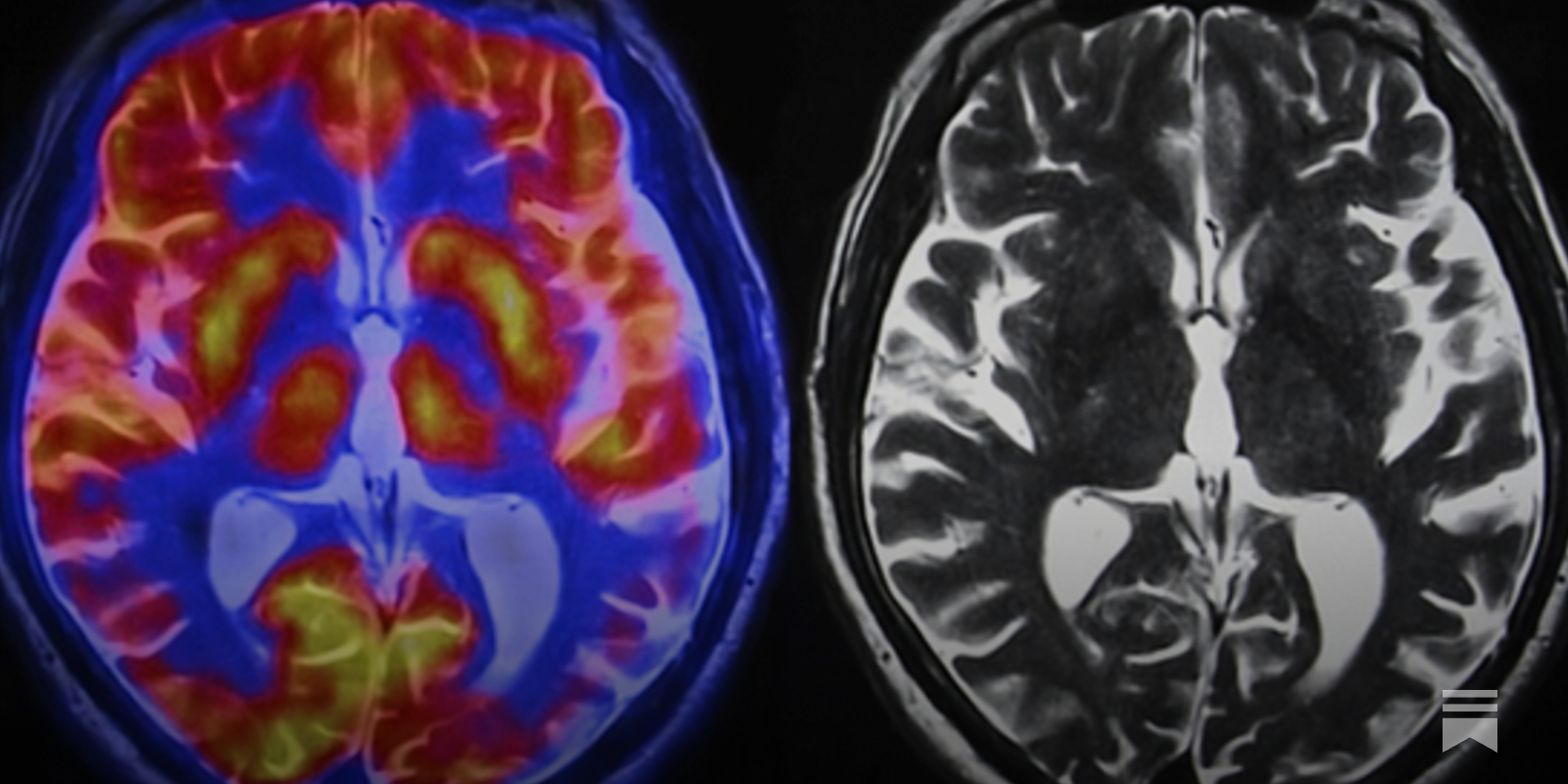
Today we're introducing TRIBE v2, a foundation model trained to predict how the human brain responds to almost any sight or sound. Building on our Algonauts 2025 award-winning architecture, TRIBE v2 draws on 500+ hours of fMRI recordings from 700+ people to create a digital twin of neural activity. It enables zero-shot predictions for new subjects, languages, and tasks, consistently outperforming standard modeling approaches. We’re releasing the model, codebase, paper, and an interactive demo to help researchers advance neuroscience, apply brain insights to build better AI, and use computational simulation to speed up breakthroughs in neurological disease diagnosis and treatment. Try the demo and learn more here: https://go.meta.me/tribe2 | 175 comments on LinkedIn
Introducing TRIBE v2: A Predictive Foundation Model Trained to Understand How the Human Brain Processes Complex Stimuli
Understanding how the human brain processes the world around us is one of the greatest open challenges in neuroscience. Breakthroughs here could transform how we understand and treat neurological conditions affecting hundreds of millions of people — and improve AI systems by directly guiding their development from neuroscientific principles.

🚨 We're very happy to introduce TRIBE v2: a foundation model of the human brain's responses to sight, sound, and language. Leveraging 1,000+ hours of fMRI across 720 subjects, it generalizes… | Stéphane d'Ascoli | 16 comments
🚨 We're very happy to introduce TRIBE v2: a foundation model of the human brain's responses to sight, sound, and language. Leveraging 1,000+ hours of fMRI across 720 subjects, it generalizes zero-shot to new stimuli, tasks and people, finetunes efficiently, and enables in-silico experiments. ❓How does it work? Stemming from our v1, which won the Algonauts 2025 challenge, TRIBE v2 combines video, audio, and language embeddings to predict brain activity for any brain, then adapts to each individual. Key results: 📊 High-quality predictions — TRIBE v2 predicts brain activity across cortical and subcortical regions, significantly better than standard linear models, with a log-linear scaling law and no plateau in sight. 🎯 Zero-shot generalization — Without retraining, the predictions of TRIBE v2 are more correlated with group-averaged brain responses than almost any individual fMRI scan! A short finetuning step vastly improves over linear models trained, from scratch, on each individual. 🧪 In-silico experiments — Can we do useful experiments with TRIBE v2? Yes: classic vision and language paradigms replicate in-silico. It zero-shot recovers the FFA, PPA, EBA, VWFA, Broca's lateralization, and syntactic responses in STG — all without training on these artificial tasks. 🔍 Interpretability & multimodality — ICA on the weights rediscovers known functional networks (auditory, language, motion, default mode, visual) from naturalistic data alone. Ablating modalities further maps how vision, audition, and language integrate, with the largest gains at the temporo-parietal-occipital junction. 🧠 This effort is a step toward a foundation model of the human brain. Much remains to be understood, but we hope this opens a path for neuroscience, AI, and medical research alike. All code, weights, and a live demo are open — find it useful or mistaken in some conditions? Let us know, new test cases can only help improving this effort. 📄 Paper: https://lnkd.in/e7cbunJp 💻 Code: https://lnkd.in/ebwBVuJp ▶️ Demo: https://lnkd.in/eEUVxP4S 🤗 Model: https://lnkd.in/e2T8nPJP Joint work with Jérémy RAPIN, Yohann Benchetrit, Teon Brooks, Katie Begany, Joséphine Raugel, Hubert Banville and Jean-Rémi King. 🙏 Special thanks to Elisa Cascardi, Diego Marcos, Dominic Giardini, AI at Meta, and the open-source and neuroscience communities (in particular Lune Bellec and Bertrand Thirion for the amazing Courtois NeuroMod and IBC datasets) | 16 comments on LinkedIn
The brain in the machine: How AI could help explain how we think | IBM
Scientists are using large AI models to predict patterns of brain activity at scale, a development that researchers say is pushing neuroscience toward a new kind of digital imaging.

What the Studies Say About How AI Affects Your Brain: A (Very Big) Compilation
The entire literature clearly points to a single surprising finding
Many Minds: Science, AI, and illusions of understanding
AI will fundamentally transform science. It will supercharge the research process, making it faster and more efficient and broader in scope. It will make scientists themselves vastly more productive, more objective, maybe more creative. It will make many human participants—and probably some human scientists—obsolete… Or at least these are some of the claims we are hearing these days. There is no question that various AI tools could radically reshape how science is done, and how much science is done. What we stand to gain in all this is pretty clear. What we stand to lose is less obvious, but no less important. My guest today is . Molly is a Professor in the Department of Psychology and the University Center for Human Values at Princeton University. In a recent , Molly and the anthropologist presented a framework for thinking about the different roles that are being imagined for AI in science. And they argue that, when we adopt AI in these ways, we become vulnerable to certain illusions. Here, Molly and I talk about four visions of AI in science that are currently circulating: AI as an Oracle, as a Surrogate, as a Quant, and as an Arbiter. We talk about the very real problems in the scientific process that AI promises to help us solve. We consider the ethics and challenges of using Large Language Models as experimental subjects. We talk about three illusions of understanding the crop up when we uncritically adopt AI into the research pipeline—an illusion that we understand more than we actually do; an illusion that we're covering a larger swath of a research space than we actually are; and the illusion that AI makes our work more objective. We also talk about how ideas from Science and Technology Studies (or STS) can help us make sense of this AI-driven transformation that, like it or not, is already upon us. Along the way Molly and I touch on: AI therapists and AI tutors, anthropomorphism, the culture and ideology of Silicon Valley, Amazon's Mechanical Turk, fMRI, objectivity, quantification, Molly's mid-career crisis, monocultures, and the squishy parts of human experience. Without further ado, on to my conversation with Dr. Molly Crockett. Enjoy! A transcript of this episode is available . Notes and links 5:00 – For more on LLMs—and the question of whether we understand how they work—see our with Murray Shanahan. 9:00 – For the paper by Dr. Crockett and colleagues about the social/behavioral sciences and the COVID-19 pandemic, see . 11:30 – For Dr. Crockett and colleagues’ work on outrage on social media, see this . 18:00 – For a recent exchange on the prospects of using LLMs in scientific peer review, see . 20:30 – Donna Haraway’s essay, 'Situated Knowledges: The Science Question in Feminism and the Privilege of Partial Perspective’, is . See also Dr. Haraway's book, . 22:00 – For the recent essay by Henry Farrell and others on AI as a cultural technology, see . 23:00 – For a recent report on chatbots driving people to mental health crises, see . 25:30 – For the already-classic “stochastic parrots” article, see . 33:00 – For the study by Ryan Carlson and Dr. Crockett on using crowd-workers to study altruism, see . 34:00 – For more on the “illusion of explanatory depth,” see with Tania Lombrozo. 53:00 – For more about Ohio State’s plans to incorporate AI in the classroom, see . For a recent essay by Dr. Crockett on the idea of “techno-optimism,” see . Recommendations , by Adam Becker , by L. A. Paul , by Miranda Fricker Many Minds is a project of the , which is made possible by a generous grant from the John Templeton Foundation to Indiana University. The show is hosted and produced by , with help from Assistant Producer and with creative support from DISI Directors Erica Cartmill and Jacob Foster. Our artwork is by . Our transcripts are created by . Subscribe to Many Minds on Apple, Stitcher, Spotify, Pocket Casts, Google Play, or wherever you listen to podcasts. You can also now subscribe to the Many Minds newsletter ! We welcome your comments, questions, and suggestions. Feel free to email us at: manymindspodcast@gmail.com. For updates about the show, visit or follow us on Twitter () or Bluesky ().

How AI coding is reshaping theoretical neuroscience
Agentic coding makes it possible to specify a neuroscience model in hours instead of months. Neuroscientists weigh in on that tectonic change.
Position: Don't Just "Fix it in Post": A Science of AI Must Study Training Dynamics
What would it mean to have a scientific understanding of AI? Models are not static objects: they are snapshots of time-evolving processes shaped by data, objectives, architectures, and optimization dynamics. Yet much of AI research treats models as fixed artifacts, analyzing behaviors after training rather than asking why they emerge. This position paper argues that a science of AI must move beyond post-hoc fixes and study the training dynamics that produce model behavior. Such a science should support progressively stronger forms of understanding: predicting outcomes from early training signals, intervening when trajectories go wrong, and ultimately designing training procedures that more reliably produce desired properties. Scaling laws have made prediction routine for loss; the challenge is extending this success to capabilities, biases, robustness, and safety-relevant behaviors. We articulate requirements for such theories grounded in the history and philosophy of science, examine progress in mechanistic interpretability, fairness, memorization, and simplicity bias, and identify concrete open problems.

Understanding Artificial Neural Networks: Mysterianism about Known Mechanism is Mysticism
Mysterianism is the idea that human cognition, mind, cannot be understood. Taking this concept and applying it to known mechanism — such that claims are made that we do not know how engineered systems, such as artificial neural networks (ANNs), work, or that they constitute black boxes that we can only open with difficulty — is inappropriate at best and malicious at worst. We do know the mechanistic structure of such models because we designed and built them. We also do know their functional role (what they are for) as well as the mathematical function they are asked to approximate (map inputs to target outputs). Because mysterianist beliefs about known systems, such as ANNs, are often expressed, scientists need to sit up and take notice. We provide an error theory as to what is going on to help unpick this metatheoretical blunder. Ultimately, the problem is that 'understanding' is not a technical term in these cases: the word is co-opted for a specific narrative to sell 'artificial intelligence' through mystification. All computational systems, from pendulums to databases, will behave in ways we cannot predict or control — this is not a unique property of ANNs — and experts do indeed grasp the computational properties of these systems nonetheless.
Understanding Artificial Neural Networks: Mysterianism about Known Mechanism is Mysticism
Mysterianism is the idea that human cognition, mind, cannot be understood. Taking this concept and applying it to known mechanism — such that claims are made that we do not know how engineered systems, such as artificial neural networks (ANNs), work, or that they constitute black boxes that we can only open with difficulty — is inappropriate at best and malicious at worst. We do know the mechanistic structure of such models because we designed and built them. We also do know their functional role (what they are for) as well as the mathematical function they are asked to approximate (map inputs to target outputs). Because mysterianist beliefs about known systems, such as ANNs, are often expressed, scientists need to sit up and take notice. We provide an error theory as to what is going on to help unpick this metatheoretical blunder. Ultimately, the problem is that 'understanding' is not a technical term in these cases: the word is co-opted for a specific narrative to sell 'artificial intelligence' through mystification. All computational systems, from pendulums to databases, will behave in ways we cannot predict or control — this is not a unique property of ANNs — and experts do indeed grasp the computational properties of these systems nonetheless.
Foundation Model Predicts Brain Responses to Visual and Auditory Stimuli | Elisa Cascardi posted on the topic | LinkedIn
Thrilled to share this work with the world! Today, we're releasing a foundation model that predicts how the human brain responds to almost any sight or sound -- and replace the need for human scans to significantly fast-track neuroscience and clinical research. 🧠 With this model, we can simulate brain responses to advance our understanding of the brain -- without the need for costly human brain scans 🌐 By using improved understanding of how efficient our brains perceive the world around us, we can guide the development of more advanced AI systems 👩⚕️ With computer-simulated experimentation, we can now speedup clinical research to diagnose neurological diseases and find treatments faster We've open sourced the model and code for researchers to use and build on, and an interactive demo for you to learn more -- see below! 📄 Paper: https://lnkd.in/e7cbunJp 💻 Code: https://lnkd.in/ebwBVuJp ▶️ Demo: https://lnkd.in/eEUVxP4S 🤗 Model: https://lnkd.in/e2T8nPJP So thrilled to be a part of this team with Stéphane d'Ascoli Jean-Rémi King Jérémy RAPIN Yohann Benchetrit Teon Brooks Katelyn Begany Joséphine Raugel Hubert Banville and for the great teamwork with Diego Marcos Dominic Giardini bringing this research to life! #neuroscience #AI #aiforscience #opensource #neuroAI
Addressing the Precision-Breadth-Simplicity Impossible Trinity in Psychological Research: A Comprehensive Exploration Approach
Psychological research faces a fundamental challenge—the Precision-Breadth-Simplicity (PBS) impossible trinity. While experimental findings are often precise and simple, they tend to be narrow in scope. Conversely, broad-and-simple concepts frequently lack precision. Developing theories that are both precise and broad is scientifically valuable but inevitably introduces complexity, which conflicts with humans’ cognitive limitations in processing complexity. To address this impossible trinity, I propose a comprehensive exploration (CE) approach—a data-guided theory-building framework that involves: (1) designing experimental conditions in a stimulus-driven way, with minimal upfront theoretical specification; (2) conducting experiments with tens of millions of observations (e.g., 40 million responses in Huang, 2025a); (3) modeling the results through iterative improvements; and (4) producing the outcome: a moderately complex quantitative information-processing model to integrate diverse empirical findings. Inspired by similar strategies that drove breakthroughs in artificial intelligence (e.g., ImageNet’s role in advancing object recognition), the CE approach offers a promising path toward more integrative psychological theories. Initial implementations in visual working memory research demonstrate both its practicality and potential to transform how we study mental processes.

AI Isn't as Powerful as We Think | Hannah Fry
#precision #scaling #generalization #impact | Jean-Rémi King
Well, we did not expect that: in 10 days: 1.6K ⭐ on Github, 70K downloads on HuggingFace 🤗, >6M views on socials. 🧠 TRIBE v2, our new foundation model of the human brain responses to sight, sound, and language, has led to a surge of community demos, dozens of PRs and issues, and a level of engagement that rivals major flagships model at Meta (e.g. Llama4: 3.6M views, and DINOv3: 900K): https://lnkd.in/eQgqyDvf As this raised several questions, let me emphasize some elements of clarification: 1. #Precision: This model exclusively uses fMRI recordings. While powerful, these data are slow-paced proxy measurements of brain activity, and aggregate responses ~100k-3M neurons per data point. This means we are very far from a neuronal-level modeling of the brain. 2. #Scaling: We leveraged ~1,000 hours of naturalistic fMRI data. This is very substantial for a functional imaging study with naturalistic data; but still this is "small data" compared to medical or biology foundation models in general (e.g. structural MRI models are typically tens of thousands of individual brains). 3. #Generalization: The model shows surprising out-of-domain generalization, but it is **not** a replacement for new data collection. The model will almost surely fail in areas it hasn't seen: task-specific behaviors, memory protocols, touch sensation etc. And these are the "known unknowns" - I expect we'll discover many more unknown unknowns along the way. 4. #Impact: The goal of this model, and of our team in general, is fundamental research in neuroscience. While I am optimistic about how such foundation models will help clinical diagnosis, prognosis, and patient care, the physics of MRI is such that there is no clear path for making this kind of technology directly usable to consumer/wearable products. We're in for the science, hence the open sourcing: 📄 Paper: https://lnkd.in/e7cbunJp 💻 Code: https://lnkd.in/ebwBVuJp ▶️ Demo: https://lnkd.in/eEUVxP4S 🤗 Model: https://lnkd.in/e2T8nPJP
1. New preprint resolving a conundrum in systems neuroscience with an AI scientist, and humans Reilly Tilbury, Dabin Kwon, @haydari.bsky.social, @jacobmratliff.bsky.social, @bio-emergent.bsky.social, @carandinilab.net, @kevinjmiller.bsky.social, @neurokim.bsky.social biorxiv.org/content/10.1101/2025.11.12.68…

Characterizing neuronal population geometry with AI equation discovery
www.biorxiv.org