


Note: To make this an easier and shorter article to read, I tried to convey the most important points in simple language and bolded them, so you can get the gist of the whole thing in just a few minutes by focusing on what’s in bold. Past chapters from the series can be found here: Introduction, Cha
annotations: Introduction à la géoéconomie
Traduction française de l'article "Geoeconomics" de Cathrin Mohr & Christoph Trebesch
annotations: La globalisation, la fragmentation et le système monétaire international
Traduction française de "Globalisation, fragmentation, and the international monetary system" de Barry Eichengreen
annotations: Que faire face à la sous-évaluation des monnaies asiatiques ?
Traduction française du billet de blog de Jeffrey Frankel, "Undervaluation of Asian currencies"
How The US Took Over The World
annotations: Une réévaluation du yuan chinois contribuerait à réduire les déséquilibres mondiaux
traduction française du billet de blog "Currency revaluation is income rebalancing" de Michael Pettis
annotations: L'impact économique du colonialisme
traduction de "The economic impact of colonialism" de Daron Acemoglu & James A. Robinson
annotations: L’obsession pour les taux de change fixes nuit aux pays en développement
Traduction du billet de blog "Fixation with fixed exchange rates harms developing countries" de Douglas A. Irwin, Adnan Mazarei & Maurice Obstfeld
Long cycles
I have long been sympathetic to the concept of long cycles in capitalist production and accumulation. This is the idea that capitalist production moves in cycles, not just in booms and slumps every…

annotations: Comment devons-nous enseigner la macroéconomie aux étudiants après la crise ?
Traduction française du billet de blog "How to teach intermediate macroeconomics after the crisis?" d'Olivier Blanchard (PIIE)
Imperial Ends: The Decay, Collapse, and Revival of Empires
Despite their historical importance, empires have received scant attention from social scientists. Now, Alexander J. Motyl examines the structure, dynamics, and continuing relevance of empire—and asks, "Why do empires decline? Why do some empires collapse? And why do some collapsed empires revive?"Rejecting choice-centered theories of imperial decline, Motyl maintains that the very structure of empires promotes decay and that decay in turn facilitates the progressive loss of territory. Although most major empires have in fact declined in this manner, some, such as the Soviet Union, have collapsed suddenly and comprehensively. Motyl explains how and why collapse occurs, why such an outcome is hard to foresee, and why some collapsed empires revive. While broad-ranging historically and empirically, Imperial Ends focuses on five modern empires: the Soviet, Romanov, Ottoman, Habsburg, and Wilhelmine.Examining the possibility of a revival of the Soviet empire, Motyl points out that the expansion of NATO and the European Union, along with increasing globalization, will isolate Russia and its neighbors, promoting their dependence upon one another and perhaps facilitating the rise of the former core. With boldly stated conclusions and concise analytical interpretations, Imperial Ends cohesively illustrates to policymakers and social scientists alike the importance of possible imperial revivals and the rise of future empires.
The State and Revolution — Chapter 5
The State and Revolution: Chapter 5: The Economic Basis of the Withering Away of the State
annotations: La Richesse des nations, une icône mal comprise des marchés libres
Traduction française du billet "The Wealth of Nations at 250! Misunderstood icon of free markets" de Matías Vernengo
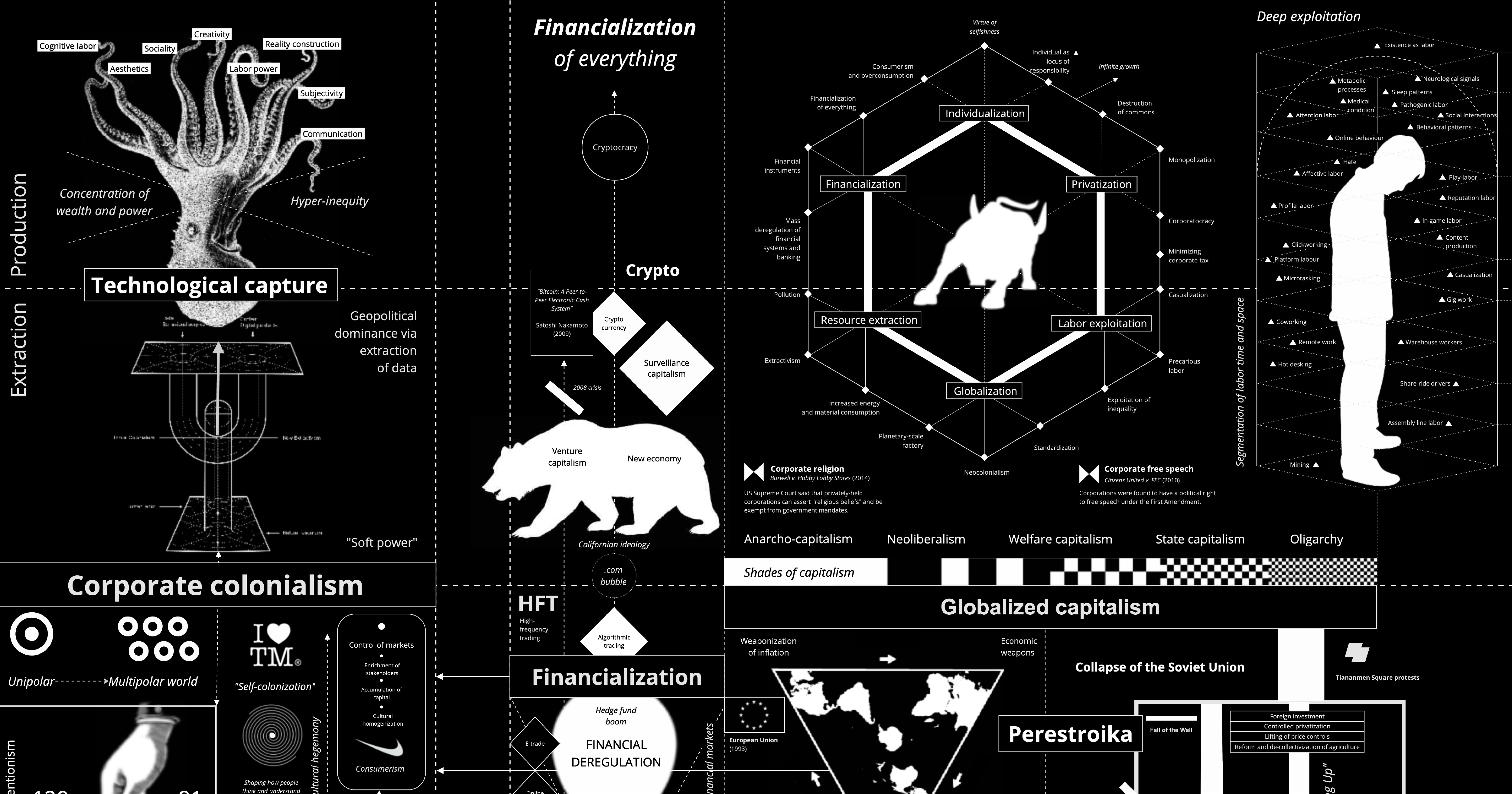
Calculating Empires: A Genealogy of Technology and Power since 1500
Explore how technical and social structures co-evolved over five centuries in this large-scale research visualization.
Imperialism in the Twenty-First Century - Monthly Review
John Smith teaches international political economy at Kingston University in London. This paper has been abstracted from his book Imperialism in the Twenty-First Century, forthcoming from Monthly Review Press in... READ MORE

Empire: World History