

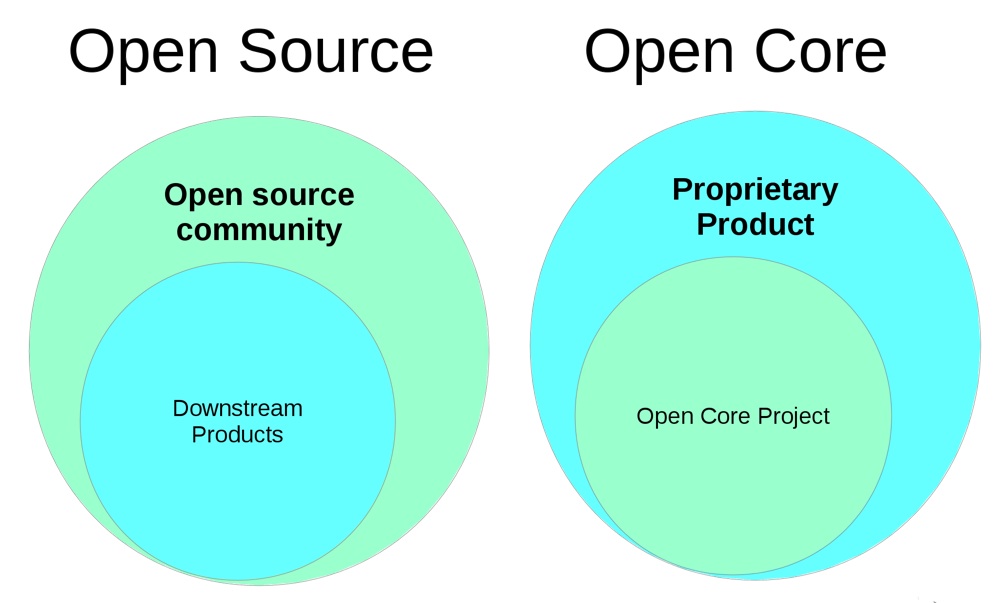
John Mark Walker is the Open Source Ecosystems Manager at Red Hat. I never thought I’d have to write this article in 2015. By now, I thought it would be self-evident how to derive revenue from open source software platforms. But alas, no. Despite the fact that the success of open source software is unparalleled and […]
Making money from Open Source Software: How we do it?
How we make money from open source software with RavenDB: dual licensing, AGPL, support reduction, and treating OSS like a commercial product.

Why Your Open Source Project Is Not A Product - Linux.com
I’ve spent a good bit of time explaining the ins and outs of open source products: what they are, how to make money with them, and what they are not. Namely, products are products, no matter the source code license they are published under. But there’s a journey that a software project must undergo before […]

Embrace Open Source, For the Good of Nerdmanity | Fortune
More businesses are willing to use open source software for key projects.

Why There Will Never Be Another Red Hat: The Economics of Open Source | Andreessen Horowitz
Open source software powers the world’s technology. In the past decade, there has been an inexorable adoption of open source in most aspects of computing. Without open source, Facebook, Google, Amazon, and nearly every other modern technology company would not exist. Thanks to an amazing community of innovative, top-notch programmers, open source has become the...

The Money In Open-Source Software | TechCrunch
It’s no secret that open-source technology -- once the province of radicals, hippies and granola eaters -- has gone mainstream. According to industry estimates, more than 180 young companies that give away their software raised roughly $3.2 billion in financing from 2011 to 2014. Despite the growing popularity of open-source software, though, many open-source companies are not financially healthy.

Open source and the software supply chain
Managing something as esoteric as resources for building software with a variety of contributions made by the open source community is more amorphic.

It’s actually open source software that's eating the world
At Lightspeed we’ve been investing aggressively in open source software (OSS) businesses for the past 10 years. Recently, we’ve seen a significant increase in entrepreneurs pitching open source startups, and we’ve also seen greater competition for these deals. We pulled together some numbers in an attempt to measure the acceleration in interest in and funding for OSS businesses in the last few years. The results were staggering even to us.
Open Source Endowment — World's First Endowment Fund for OSS
The Open Source Endowment provides truly sustainable funding for critical open source software through a community-driven endowment model.
Open Source Initiative
The steward of the Open Source Definition, setting the foundation for the Open Source Software ecosystem.

Some startups are going ‘fair source’ to avoid the pitfalls of open source licensing | TechCrunch
New alternative category to 'closed source' could help companies monetize software in the open -- without going all-in on open source.

More Money For Better Open-Source Software
Time for Net Giants to Pay Fairly for the Open Source on Which They Depend | Linux Journal
Licensing lies at the heart of open source. Arguably, free software began with the publication of the GNU GPL in 1989. And since then, open-source projects are defined as such by virtue of the licenses they adopt and whether the latter meet the Open Source Definition. The continuing importance of licensing is shown by the periodic flame wars that erupt in this area. Recently, there have been two such flarings of strong feelings, both of which raise important issues.
Paying people to work on open source is good actually - Jacob Kaplan-Moss
If you have a problem with maintainers getting paid then you have a problem with me and I suggest you let that one marinate.
Reimagining OSS Licensing and Commercialization with Fair Source - Adam Jacob, System Initiative
When Free Software Isn't (Practically) Superior - GNU Project - Free Software Foundation
The Open Source Initiative's mission statement reads, “Open source is a development method for software that harnesses the power of distributed peer review and transparency of process. The promise of open source is better quality, higher reliability, more flexibility, lower cost, and an end to predatory vendor lock-in.”