

Let me just start with the TLDR as I have a tendency to write too much, all of our Selkies based images can now be launched into a Wayland mode using the env var -e PIXELFLUX_WAYLAND=true or checking a box in Sealskin. This Wayland mode is an entire ground up stack leveraging a virtual framebuffer in userspace that can live on a GPU or CPU. The net result on any hardware with a GPU is a remote monitor in your web browser. I am not talking about a compromise or half baked "this is kinda cool cause it is in my web browser and it can run in Docker" I am talking about turning your web browser into a true virtual display for the remote session. There are two major wins out of this mode:
Wayland vs X11: 2026 Comparison
The Linux display server landscape has been evolving dramatically over the past decade. Wayland,...

Make a secure Ubuntu web kiosk
A kiosk or smart display is a full-screen application running on a secure device, with the sole purpose of driving that display to provide specific information or a particular function at that loca...

Datastar: Modern web dev, simplified
You love building web apps with Python, and HTMX got you excited about the hypermedia approach -- let the server drive the HTML, skip the JavaScript build step, keep things simple. But then you hit that last 10%: You need Alpine.js for interactivity, your state gets out of sync, and suddenly you're juggling two unrelated libraries that weren't designed to work together. What if there was a single 11-kilobyte framework that gave you everything HTMX and Alpine do, and more, with real-time updates, multiplayer collaboration out of the box, and performance so fast you're actually bottlenecked by the monitor's refresh rate? That's Datastar. On this episode, I sit down with its creator Delaney Gillilan, core maintainer Ben Croker, and Datastar convert Chris May to explore how this backend-driven, server-sent-events-first framework is changing the way full-stack developers think about the modern web.
Selkies
Open-Source Low-Latency Accelerated Linux WebRTC HTML5 Remote Desktop Streaming Platform for Self-Hosting, Containers, Kubernetes, or Cloud/HPC
Using Fcitx 5 on Wayland - Fcitx
Wayland is the next generation of display server protocol. While the initial release of the protocol is in 2008, the support of input method is not really ideal.
selkies-project/selkies
Open-Source Low-Latency Accelerated Linux WebRTC HTML5 Remote Desktop Streaming Platform for Self-Hosting, Containers, Kubernetes, or Cloud/HPC
Hyper-Frame - an iframe that can frame any website
Try the live console. Embed, navigate, automate, and capture pages through a remote browser-backed iframe.
WebGPU is now supported in major browsers | Blog | web.dev
Read about the biggest web graphics launch since WebGL. WebGPU is supported across major browsers, bringing unparalleled performance to the web.
Wilderland
Wilderland has two websites, one always-on, higher resolution website that is heavier to run, and one experimental, situated site, that is solar powered, and in the Nephin Park
Session live view - Browserbase Documentation
An interactive window to display or control a browser session.

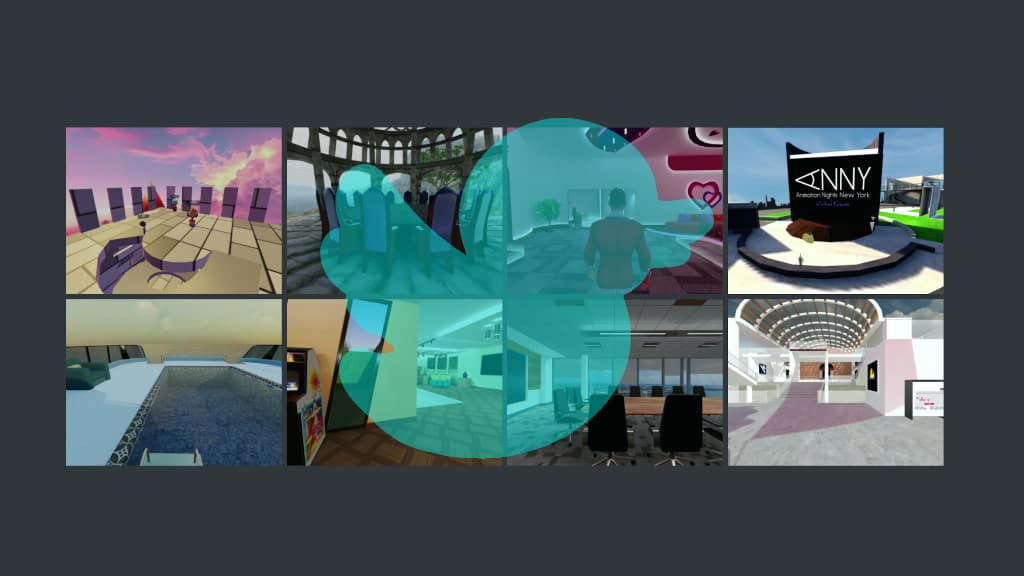
Hubs
Official instance of the Hubs Foundation — Immersive spaces, right in your browser, powered by Hubs
letoram/arcan
Arcan - [Display Server, Multimedia Framework, Game Engine] -> "Desktop Engine"