

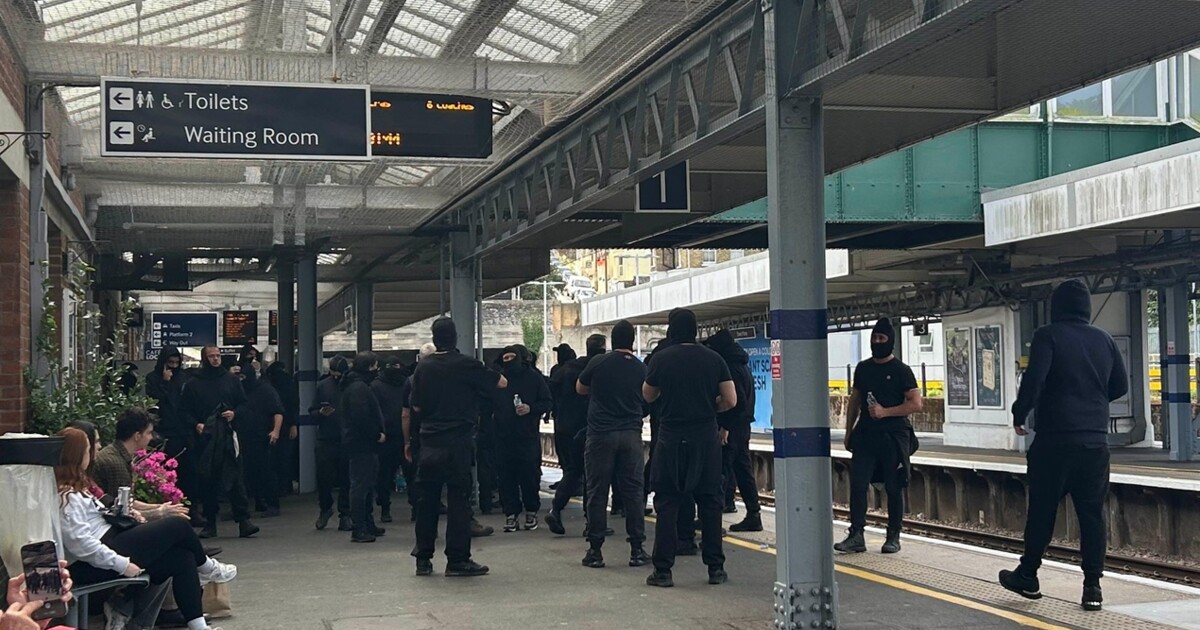
The emergence of Patriot Platform is not necessarily a sign that the far right is getting its way. Radical right-wing...
You Are Not a Rebel | Laurie Penny
The new far right has recognized the enduring appeal of adventurism and appropriated its rhetoric for reactionary ends.

Public support for the <i>cordon sanitaire</i> : Descriptive evidence from Spain
Reactions to the rise of far-right parties that advocate democratic backsliding, and the dilution of socially liberal democratic norms present a dilemma for existing political parties. How should existing political parties respond to this challenge? A commonly adopted strategy is to apply a cordon sanitaire which excludes radical right-wing challengers from the government-forming process. Do voters support this policy? Leveraging data from Spain – where the mainstream right has accommodated the radical right-wing party, VOX, via numerous governing coalitions – I rely on individual citizens’ views on how parties should respond to rise of the far-right party, to answer this question. Empirically, the results show very low-level support for the cordon sanitaire in Spain. Indeed, the modal position of the electorate, regardless of their ideological position, is to treat the party just like any other. These results are not conditioned by the propensity of individuals to identify VOX as indeed being a “radical right” party. These descriptive findings suggest that whilst radical right-wing parties may present an inimical threat to democratic norms, citizens do not necessarily view the means of squashing this threat to be one of strategic exclusion. This likely explains why the mainstream right has been able to institutionalise VOX as a political ally: where strategic exclusion is not expected, the mainstream right need not fear violating an expectation that does not exist.
The Great Realignment: Why the New Right Is Here to Stay
The re-election of Donald Trump has illustrated in spectacular fashion the extent to which politics all over the world is in a state of continual flux. Old political configurations and parties are under unprecedented strain, with new forces, particularly on the hard right, challenging the status quo everywhere. Rejecting stale analyses based on moralistic panics about 'populism' or social media, political commentator Steve Davies shows how we are going through a deep-seated process of realignment rooted in underlying structural trends. We are transitioning, he argues, from an era where the key political division was over the economic structure of society to one where the primary division is between a vision rooted in national identity and sovereignty, and an essentially post-national cosmopolitanism. This change upends the ideological and electoral alliances that have structured our political systems for decades. No-one who wishes to truly understand the crises currently roiling the political status quo can afford to miss this stunning panoramic analysis of how this process works and how it is playing out across the world, from the USA and Germany to Argentina and India, and beyond.
To understand right-wing media's power, study improv and theater of influencers | Opinion
Right-wing populism is leveraging online platforms' participatory nature. A counter-movement must amplify its constituents' values, with a commitment to truth.
Cornel West’s ‘leftist’ presidential bid has right-wing DNA
The people framing newly announced presidential candidate Cornel West as a leftist seem to be lazily sanitizing his recent history. And voters deserve better.

The Reform Councillors Embedded in Britain’s Masked 'Patriot' Anti-Migrant Network
A Reform councillor and campaign co-ordinater urged his followers to join and support the masked group

The rise of end times fascism | Naomi Klein and Astra Taylor
The governing ideology of the far right has become a monstrous, supremacist survivalism. Our task is to build a movement strong enough to stop them
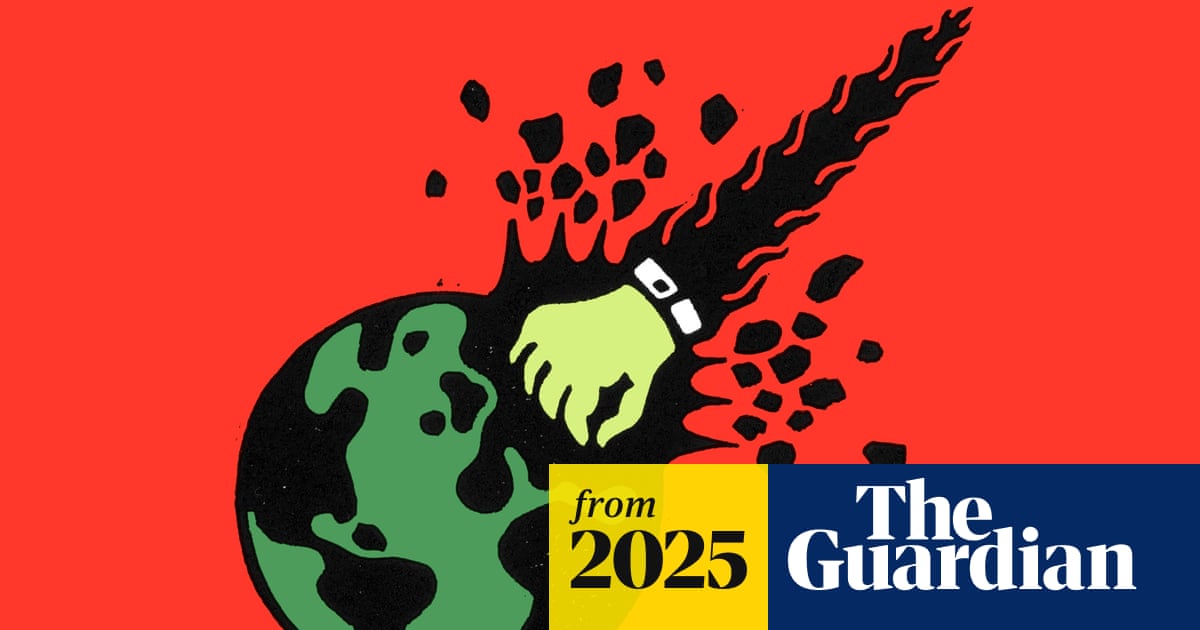
The Trump administration’s global campaign against ‘radical left terrorism’ is built on a national security memo without congressional approval
Almost a year after President Trump authorized preemptive law enforcement measures based on political or ideological beliefs, a wave of terrorism prosecutions against left-wing protesters has begun.
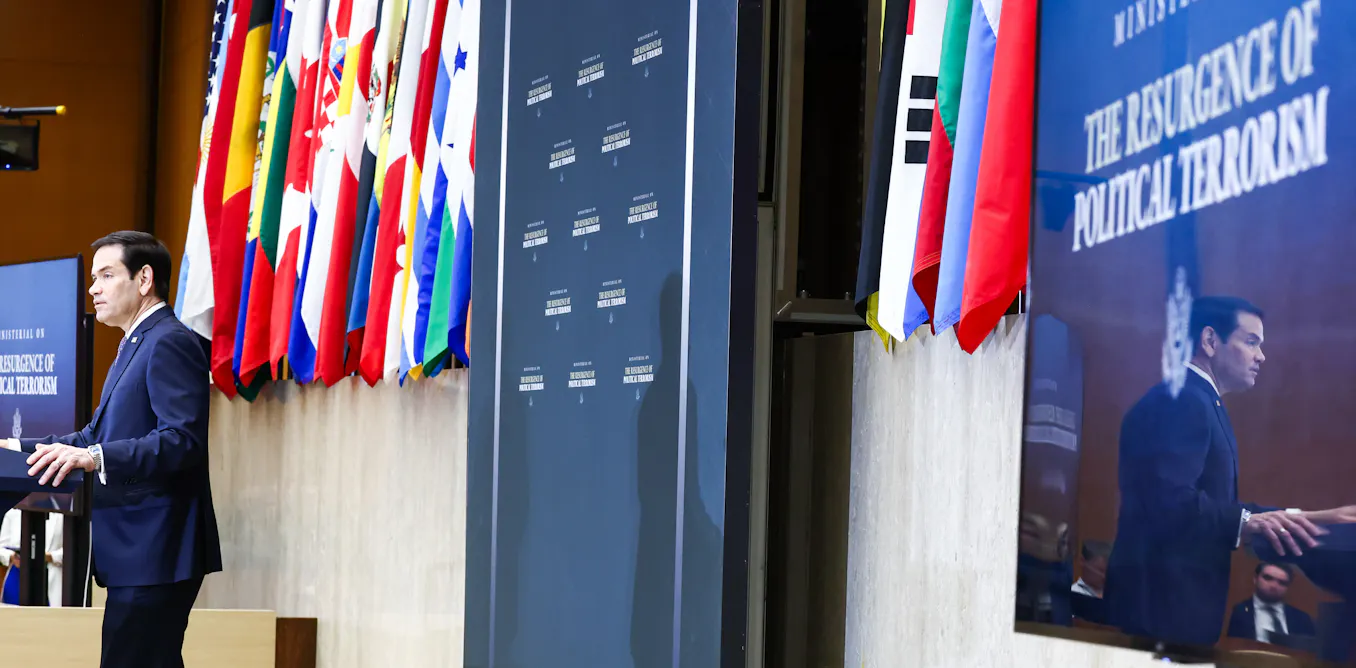
The Trump administration’s global campaign against ‘radical left terrorism’ is built on a national security memo without congressional approval
Almost a year after President Trump authorized preemptive law enforcement measures based on political or ideological beliefs, a wave of terrorism prosecutions against left-wing protesters has begun.
How to break populist parties’ appeal? An experimental evaluation of communication counter-strategies
Right-wing populist parties have become a major challenge to liberal democracies worldwide. How can mainstream parties effectively counter their appeal? While prior research has focused on the drivers of populist support, much less is known about how to counter right-wing populist rhetoric. We test four communication counter-strategies that target core elements of right-wing populist appeals: (i) undermining populists’ claims to democratic credibility, (ii) promoting inclusive in-group identity to counter exclusionary narratives, (iii) highlighting their performance legitimacy, and (iv) emphasizing the procedural legitimacy of mainstream parties. Drawing on real-world party communications from social media, manifestos, and press releases, we created 170 experimental treatments (posters and social media posts varying in format and complexity) to simulate how voters encounter political messages in everyday life. In a large-scale survey experiment with over 24,000 respondents in Germany, messages undermining right-wing populists’ democratic credibility prove most effective, particularly among citizens with high initial support for such parties.
<i>Insurgent Supremacists</i> – a new book about the U.S. far right
My book Insurgent Supremacists: The U.S. Far Right’s Challenge to State and Empire is due out this May and is being published jointly by K...

The AI/Fascism Nexus
The AI/Fascism Nexus By Alex Oops, we did it again. I can't say that I'm terribly surprised, as Harris ran a center right campaign and tossed a mighty chunk...

When Do Parties Lie? Misinformation and Radical-Right Populism Across 26 Countries - Petter Törnberg, Juliana Chueri, 2026
The spread of misinformation has emerged as a global concern. Academic attention has recently shifted to emphasize the role of political elites as drivers of mi...
‘Polarization’ has become the master concept for diagnosing our current democratic crisis. But this is not polarization. It is the radicalization of the political right. By misdiagnosing it, we risk becoming complicit in the crisis. 🧵 Just out in Perspectives on Politics doi.org/10.1017/S1537592726105246
