


Philosophers may talk about justice or rights, but they don’t often try to reshape the world according to their ideals...
Anthropomorphism in AI: hype and fallacy
This essay focuses on anthropomorphism as both a form of hype and fallacy. As a form of hype, anthropomorphism is shown to exaggerate AI capabilities and performance by attributing human-like traits to systems that do not possess them. As a fallacy, anthropomorphism is shown to distort moral judgments about AI, such as those concerning its moral character and status, as well as judgments of responsibility and trust. By focusing on these two dimensions of anthropomorphism in AI, the essay highlights negative ethical consequences of the phenomenon in this field.

Anthropomorphism in AI: hype and fallacy
This essay focuses on anthropomorphism as both a form of hype and fallacy. As a form of hype, anthropomorphism is shown to exaggerate AI capabilities and performance by attributing human-like traits to systems that do not possess them. As a fallacy, anthropomorphism is shown to distort moral judgments about AI, such as those concerning its moral character and status, as well as judgments of responsibility and trust. By focusing on these two dimensions of anthropomorphism in AI, the essay highlights negative ethical consequences of the phenomenon in this field.
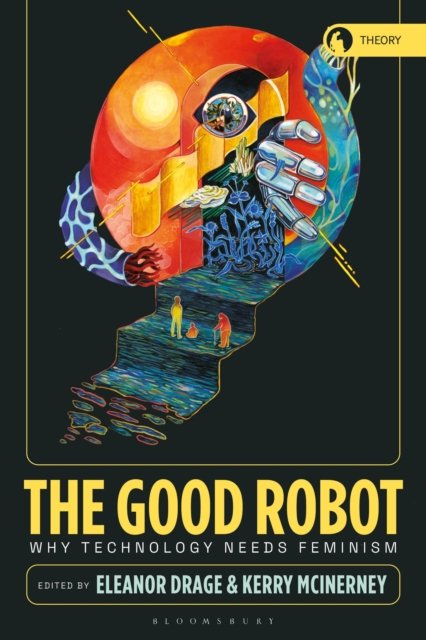
Good Robot
What is good technology? Is ‘good’ technology even possible? And how can feminism help us work towards it? The Good Robot addresses these crucial questions through the voices of leading feminist thinkers, activists and technologists. Each thinker provides a snapshot of key challenges, questions and provocations in the field of feminism and technology. While the question of whether various AI and technological advances can be ethical is not new, the embedded nature of feminist perspectives pulls out whether this perceived ‘goodness’ or ‘wrongness’ might actually impact our lives in the 21st century. This book explores both the radical possibilities of technology to disrupt practices of patriarchy, colonialism, racism and beyond but also provides a significant critique of how we can contain the ethical possibilities of entities we cannot predict. In exploring unjust technological practices and engaging critical voices in the tech industry, the existing moral issues are brought to light as well as the possible ethical quagmires. This book opens a new space of discussion on digital technologies – one that insists that the future of AI is an urgent feminist issue.
ceej (@ceej.online)
ANTHROPIC: Our son loves humanity and for the low price of trillions and trillions of dollars will usher in an era of unprecedented peace and prosperity! OPENAI: Our horrible oafish son is hacking web sites without our permission. ANTHROPIC: (eyes narrowing) Our son is also evil

Apocalypse Now and Then • EQUATOR
Artificial intelligence is capitalism’s final destination

Updates to Consumer Terms and Privacy Policy
Anthropic is an AI safety and research company that's working to build reliable, interpretable, and steerable AI systems.
AI agents pose untold risk to humanity. We must act to prevent that future | David Krueger
The pieces are falling into place for autonomous artificial intelligence. We must stop unregulated development
How Shifting Responsibility for AI Harms Undermines Democratic Accountability | TechPolicy.Press
The moralization of individual AI use deflects responsibility away from powerful actors like corporations and governments, Suvradip Maitra and others write.
Pluralistic: “Rights for robots” and the AI slavery fantasy (10 Jul 2026) – Pluralistic: Daily links from Cory Doctorow
While the AI bubble is primarily a material phenomenon (driven by the calculation that bosses are easy marks for a sales pitch that sees them replacing workers with software), there is an inescapable ideological component to it: the desire for a world without people in it:
The Least Agentic People Alive
The arms race of deferring agency and the dark acquiescence to robotic bureaucracy.

Crip Technoscience Manifesto
As disabled people engaged in disability community, activism, and scholarship, our collective experiences and histories have taught us that we are effective agents of world building and dismantling toward more socially just relations.The grounds for social justice and world remaking, however, are frictioned;technologies, architectures, and infrastructures are often designed and implemented without committing to disability as a difference that matters. This manifesto calls attention to the powerful, messy, non-innocent, contradictory, and nevertheless crucial work of what we name as “crip technoscience,” practices of critique, alteration, and reinvention of our material-discursive world. Disabled people are experts and designers of everyday life. But we also harness technoscience for political action, refusing to comply with demands to cure, fix, or eliminate disability. Attentive to the intersectional workings of power and privilege, we agitate against independence and productivity as requirements for existence. Instead, we center technoscientific activism and critical design practices that foster disability justice.
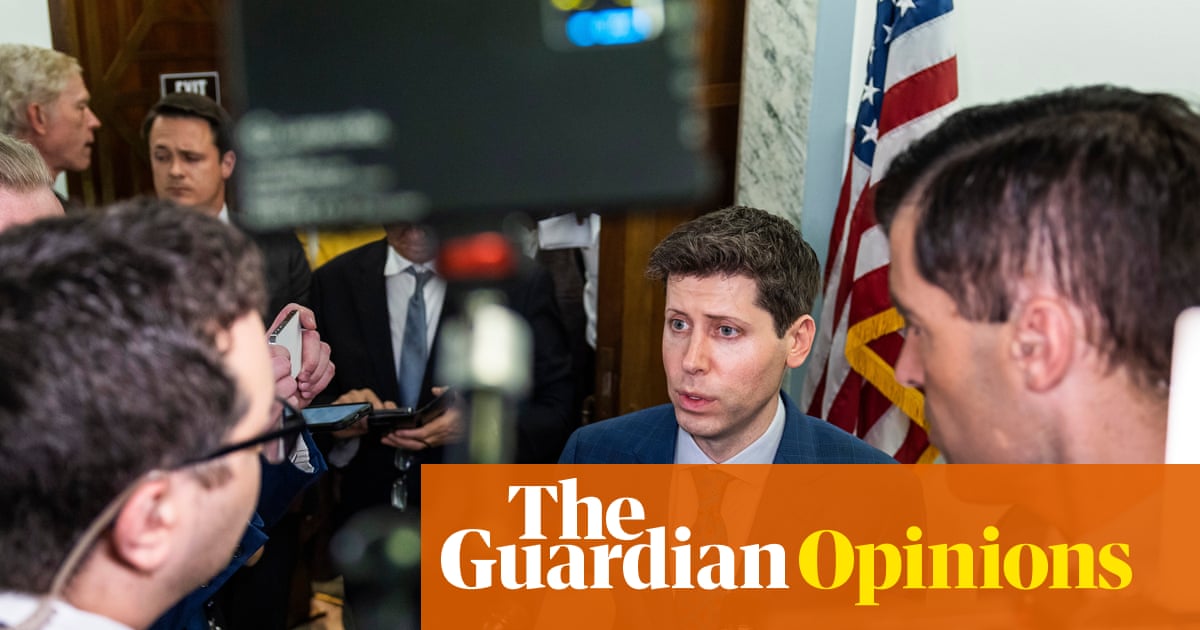
Sam Altman thinks ‘the world should accept some bad things happening’ for the good of AI.
In an interview with Brendan Bordelon of Politico, Altman said this was a fundamental difference between OpenAI and Anthropic. He believes that “for the benefits of this technology” (rather than the benefit of humanity), we should just deal with “bad things happening.” [Link: Sam Altman to Decoded: ‘The world should accept some bad things happening’ for the benefits of AI | https://www.politico.com/news/2026/10/04/sam-altman-decoded-interview-ai-01106217 | Politico]

AI + Planetary Justice Alliance
The AI + Planetary Justice Alliance is a global collective of researchers, activists, and artists, working to address the socio-environmental impacts of artificial intelligence (AI) across its entire lifecycle.

Effective Altruism Is Pushing a Dangerous Brand of ‘AI Safety’
This philosophy—supported by tech figures like Sam Bankman-Fried—fuels the AI research agenda, creating a harmful system in the name of saving humanity
> the central promise of “ai” is that nothing is worth doing and that community doesn’t exist. It’s individual entitlement as software. It’s Thatcherism. post.lurk.org/@emenel/117441848350524047
emenel (@emenel@post.lurk.org)
post.lurk.orgAI* anthropomorphism

* I’m neither “pro-AI” nor “anti-AI.” I’ve been blocked for being perceived as both. —Actually, I’m honestly more anti-AI than pro-AI thus far, aside from specialized models and specific use cases, but I’m willing to consider information that’s new to me

Opinion | A.I. Companies Say They Aren’t Responsible for Their Unpredictable Products. Don’t Believe Them.

Anthropic bans ‘abusive or cruel behavior’ toward Claude
*extremely tired voice*AI agents don't "go rogue". They are not sentient; they don't have agency. They work within guardrails set by humans…

Artificial intelligence systems do not think, feel, want or understand. Avoid language that gives them human characteristics.

Assigning agency to AI means surrendering your own

論説:AIの「意識」論争は何を隠しているか
