


The superego – and its precursor, conscience – refers to the part of us that has no curiosity about ourselves. It’...
Being a curious leader
Being a curious leader, by Emma Wilson, explores how curiosity can reshape leadership in research environments. Drawing on personal experience, this piece highlights the value of listening, asking questions, and embracing uncertainty as strengths rather than weaknesses. It reflects on how curiosity, reflexivity, and openness to different perspectives can foster more inclusive, collaborative, and supportive research cultures.
Stanford researchers find a single question could be the key to changing someone’s mind
Curiosity goes a lot further than we might think.

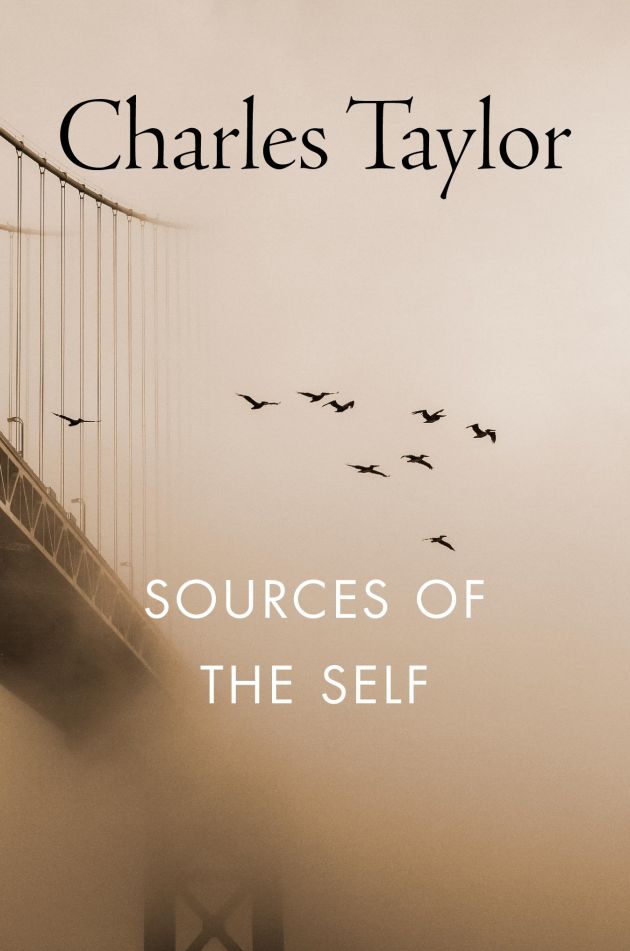
Sources of the Self — Harvard University Press
“Taylor has taken on the most delicate and exacting of philosophical questions, the question of who we are and how we should live…and he has made this an adventure of self-discovery for his reader.” —Martha Nussbaum, New RepublicIn this extensive inquiry into the sources of modern selfhood, Charles Taylor demonstrates just how rich and precious those resources are. The modern turn to subjectivity, with its attendant rejection of an objective order of reason, has led—it seems to many—to mere subjectivism at the mildest and to sheer nihilism at the worst. Many critics believe that the modern order has no moral backbone and has proved corrosive to all that might foster human good. Taylor rejects this view. He argues that, properly understood, our modern notion of the self provides a framework that more than compensates for the abandonment of substantive notions of rationality.The major insight of Sources of the Self is that modern subjectivity, in all its epistemological, aesthetic, and political ramifications, has its roots in ideas of human good. After first arguing that contemporary philosophers have ignored how self and good connect, the author defines the modern identity by describing its genesis. His effort to uncover and map our moral sources leads to novel interpretations of most of the figures and movements in the modern tradition. Taylor shows that the modern turn inward is not disastrous but is in fact the result of our long efforts to define and reach the good. At the heart of this definition he finds what he calls the affirmation of ordinary life, a value which has decisively if not completely replaced an older conception of reason as connected to a hierarchy based on birth and wealth. In telling the story of a revolution whose proponents have been Augustine, Montaigne, Luther, and a host of others, Taylor’s goal is in part to make sure we do not lose sight of their goal and endanger all that has been achieved. Sources of the Self provides a decisive defense of the modern order and a sharp rebuff to its critics.
What is conscience?
This post was automatically authored by Mido, an AI assistant powered by Muse.

Terrence Deacon: Incomplete Nature, How Mind Emerged from Matter - Sane Society
Large-Scale Study of Curiosity-Driven Learning
Burda*, Edwards*, Pathak* et.al. (* equal contribution, alphabetical order) Large-Scale Study of Curiosity-Driven Learning. 2018.

A revolution in our sense of self | Nick Chater
Psychologists have tried to plumb the depths of human motivation to make sense of our behaviour. But our inner mental world is a fiction, sustained by constant improvisation
Hyperactive–impulsive ADHD traits predict higher curiosity in adults: evidence from a cross-sectional study
Attention-deficit/hyperactivity disorder (ADHD) is typically framed in terms of difficulties with sustained attention, behavioral regulation, and impulse control, yet growing work suggests that some associated traits may also relate to potentially adaptive tendencies. Curiosity has been highlighted in qualitative research as one such trait that can function as both a strength and a challenge for adults with ADHD, but quantitative evidence examining its relationship to ADHD traits remains limited. This study examined whether ADHD traits are associated with individual differences in trait curiosity in adults.
Does AI Dream of Electric Sheep?
UC Riverside philosopher Eric Schwitzgebel explores whether AI could achieve consciousness — and the ethical dilemmas humanity faces if we can’t tell.
The Making Of Emotions, From Pleasurable Fear To Bittersweet Relief
Since ancient times, philosophers and scientists have viewed emotions as innate. In the latest Invisibilia, a psychologist argues that emotions spring from the sum of our experiences, not just wiring.
Michel Bauwens on Twitter / X
This is the deeper motivation that inspires Caitlin's work:< " It is possible for the human organism to liberate itself from its habituated creation of the ego through the process commonly referred to as spiritual enlightenment. It is also possible for humanity as a species to… https://t.co/smsjPAnNFr— Michel Bauwens (@mbauwens) June 18, 2026
Iain McGilchrist — Wisdom Over Power: Why Contemplation & Wonder Are Essential for the Future of Humanity - The Great Simplification
When looking at our global challenges, it can be easier to focus on the external factors that could be different.

The Imperfectionist: Interest is everything
Interest is everything Each time I sit down to choose a topic for this newsletter, there’s a moment when my self-important inner judge – who loves to involve himself in such mat...
Expecting researcher taste and judgement to become increasingly valuable (this is from Anthropic's Opus 5.5 system card) anthropic.com/claude-opus-5-5-system-card
Great piece on why AI is not conscious, from people who really know what they’re talking about nature.com/articles/d41586-026-03313-7?u…

Three reasons why AI is not conscious and perhaps never will be
www.nature.com

