


Read more about our statement of faith and what we believe.
Christ Present in Faith: Luther's View of Justification
Christ Present in Faith: Luther's View of Justification [Mannermaa, Tuomo, Stjerna, Kirsi I.] on Amazon.com. *FREE* shipping on qualifying offers. Christ Present in Faith: Luther's View of Justification

Believing what we do not believe: Acquiescence to superstitious beliefs and other powerful intuitions.
Luther’s Small Catechism by Dr. Martin Luther
Martin Luther addresses faithful and godly pastors and preachers in his Preface to the Small Catechism.
Tom Robbins Quotes
"I believe in nothing, everything is sacred. I believe in everything, nothing is sacred." - Tom Robbins

Footnotes by Jemar Tisby | Substack
Truth-telling at the intersection of faith, history, and justice Focus on white Christian nationalism + the Black Christian tradition. Click to read Footnotes by Jemar Tisby, by Jemar Tisby, PhD, a Substack publication with tens of thousands of subscribers.
The Word of Life A Theology of Johns Gospel (Craig R. Koester) (z-lib.org).pdf
Epistemic Courage and Open-Mindedness
Epistemic courage requires me to sometimes adopt a belief even in the face of doubts. Open-mindedness requires me to be able to reconsider my beliefs. It is generally assumed that we should have bo...

CFP: Religion, Politics, and Cognitive Warfare: Information, Interpretation, Conspiracy, and the Struggle for Reality
The Journal for Cultural and Religious Theory (JCRT) invites proposals for an online conference entitled Religion, Politics, and Cognitive Warfare: Information, Interpretation, Conspiracy, and the Struggle for Reality. The proceedings will be considered for publication in a special issue of the JCRT. This conference investigates how beliefs, paranoia, and conspiratorial modes of knowing shape a contemporary cognitive battlespace in which actors struggle to define truth, authority, and reality itself. Drawing on Michel Foucault's Lectures on the Will to Know and Julia Kristeva's This Incredible Need to Believe (2024), we focus on practices of selective fact use and "truth-selecting" that construct alternative epistemic orders while claiming privileged access to what is "really" going on. Rather than treating conspiracy thinking as merely political or psychological, the conference foregrounds its religious dimensions: faith in hidden powers, moral dualism, apocalyptic expectation, and hermeneutical struggle over revelatory access to the real. Conspiracy cultures routinely reproduce theological structures of knowing—visions of salvation and corruption, truth and deception, initiation and blindness. At the same time, new forms of "cognitive warfare" reframe these religious energies within state and platform attempts to govern perception, attention, and trust. Artificial intelligence, algorithmic media, and strategic information campaigns do not only deliver messages; they create digital ecologies in which suspicion becomes faith-like and revelation is continual. The conference organizers are seeking proposals of high academic quality that take a reflective and analytical approach to both general and specific topics with international appeal or focus. We encourage contributions from scholars of religious studies, philosophy, communication, sociology, security studies, psychology, media, and related fields. Submissions should engage religion as a dynamic force—conceptually, historically, or materially—within the cognitive battlespaces of our time. We encourage contributions from a spectrum of perspectives, approaches, and methodologies. We are not interested in papers that simply rehearse or promote particular conspiracies, or that use the conference as a platform for calling out disliked groups. We are not interested in polemics, jeremiad, or de facto advocacy pieces. Instead, we welcome theoretically informed and methodologically rigorous work that takes the religious and epistemic dimensions of cognitive conflict seriously as objects of critical inquiry.
056. Ephesians 3:1-12
Chapel Sermon by Joel Okamoto from Ephesians 3:1-12 on Wednesday, January 3, 2018.
Learn Your Philosophical Beliefs | ClearerThinking.org
Find your direction in life with our philosophical compass, a tool to explore your beliefs, values and purpose!

Beloved
At Beloved, we inspire, support, and nourish spiritual leaders who are creating new Jewish spaces of sacred belonging.

A quote by Umberto Eco
When men stop believing in God, it isn't that they then believe in nothing: they believe in everything.

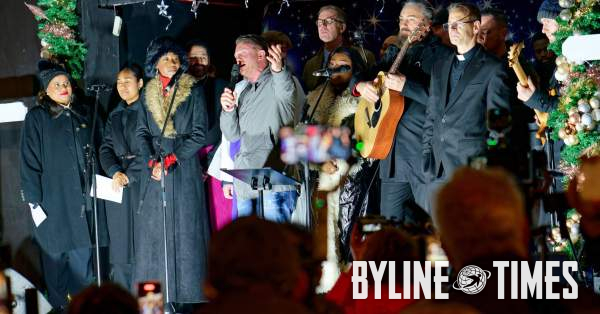
Tommy Robinson's Temple: The Christian Conference Uniting Preachers from the Far-Right Fringe
Organisers of the "Make Great Britain Christian Again" conference include preachers linked to far-right rallies, prompting warnings that faith is being used to provide moral cover for nationalist politics
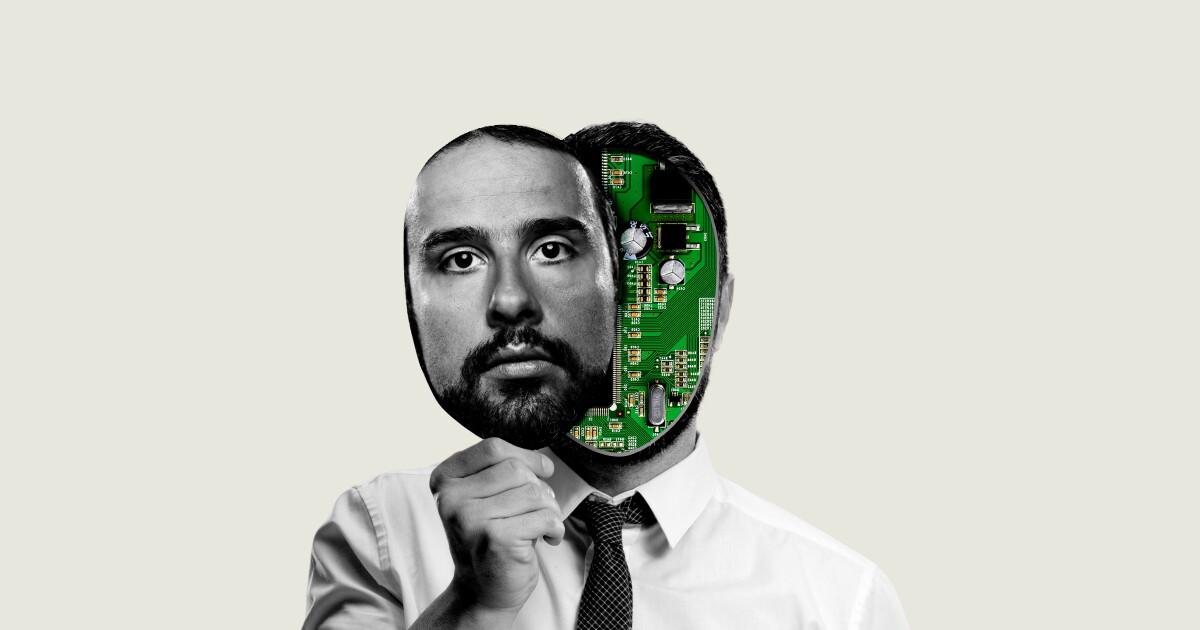
Opinion | The Semester That Shook My Faith as a Professor
AI has taken something fundamental from the business of teaching and learning.
Studying the Text of 1 Corinthians 10:23-11:1 - Without Authority
Working notes from preparing to preach on the epistle text for the third week of our Stewardship sermon series, November 23, 2025.
Pope Leo's first sermon and, uh, his using the phrase "be ever more fully a city set upon a hill" and cf'ing it to Rev 21:10 instead of any of the others before saying "many baptized Christians" are "living in a state of practical atheism" is. Well. Shots fired! npr.org/2025/05/09/g-s1-65311/read-po…

Read Pope Leo XIV's first homily as pope
www.npr.org