I'm going to be direct with this story. My 30-minute demo with Vision Pro last week was the most mind-blowing moment of my 14-year career covering Apple and technology. I left the demo speechless, and it took me a few days to articulate how it felt. How I felt. It's not just that I was
Vision Pro is an over-engineered “devkit” // Hardware bleeds genius & audacity but software story is disheartening // What we got wrong at Oculus that Apple got right // Why Meta could finally have its Android moment
by Hugo Barra (former Head of Oculus at Meta) Friends and colleagues have been asking me to share my perspective on the Apple Vision Pro as a product. Inspired by my dear friend Matt Mullenweg̵…

Apple Vision
Apple Vision is incredibly compelling, first as a product, and second as far as potential use cases. What it says about society, though, is a bit more pessimistic.

Apple Vision Pro review: Eyes on the future
It's been a very long time since Apple released a product as speculative and impractical as the Vision Pro, its $3499 first-generation "spatial computing" headset. Led by Apple, today's technology…

Apple Vision Pro
Featuring the new powerful M5 chip and comfortable Dual Knit Band, Apple Vision Pro seamlessly blends digital content with your physical space.
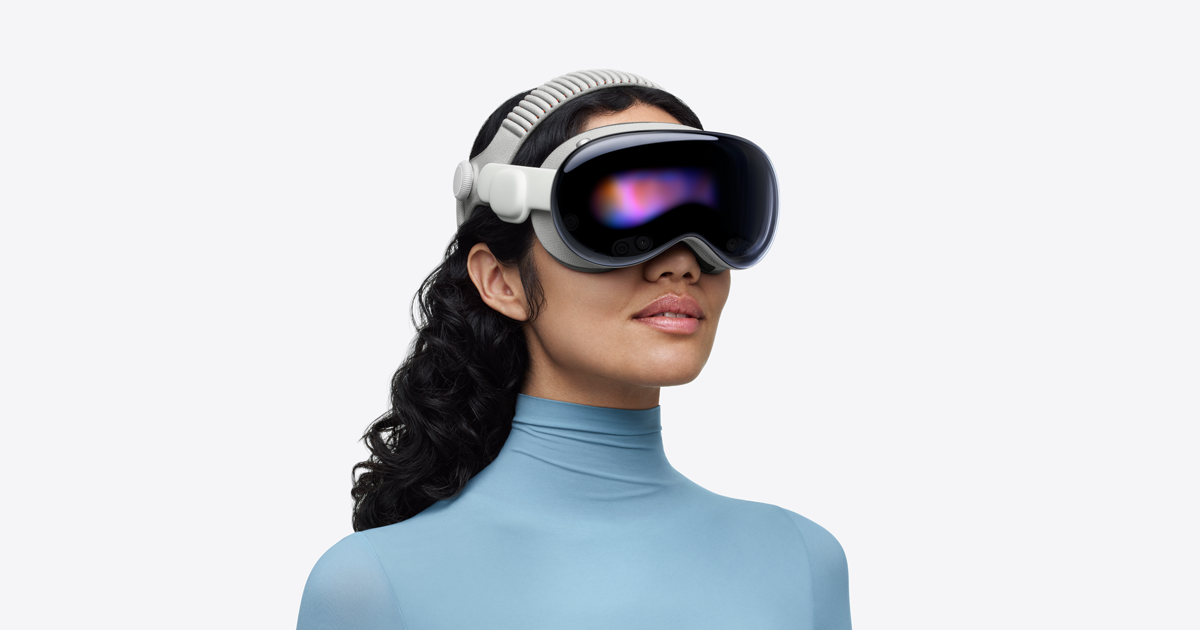
How Apple is unveiling a new "Vision" of the Future – TNL.net
The Apple Vision Pro unveiled this week is not a product for now. It's a vision of the future based on where the recent past has been.

» Apple, Carmen Sandiego, and the Rise of Edutainment The Digital Antiquarian
If there was any one application that was the favorite amongst early boosters of personal computing, it was education. Indeed, it could sometimes be difficult to find one of those digital utopianists who was willing to prioritize anything else — unsurprisingly, given that so much early PC culture grew out of places like The People’s Computer Company, who made “knowledge is power” their de facto mantra and talked of teaching people about computers and using computers to teach with equal countercultural fervor. Creative Computing, the first monthly magazine dedicated to personal computing, grew out of that idealistic milieu, founded by an educational consultant who filled a big chunk of its pages with plans, schemes, and dreams for computers as tools for democratizing, improving, and just making schooling more fun. A few years later, when Apple started selling the II, they pushed it hard as the learning computer, making deals with the influential likes of the Minnesota Educational Consortium (MECC) of Oregon Trail fame that gave the machine a luster none of its competitors could touch. For much of the adult public, who may have had their first exposure to a PC when they visited a child’s classroom, the Apple II became synonymous with the PC, which was in turn almost synonymous with education in the days before IBM turned it into a business machine. We can still see the effect today: when journalists and advertisers look for an easy story of innovation to which to compare some new gadget, it’s always the Apple II they choose, not the TRS-80 or Commodore PET. And the iconic image of an Apple II in the public’s imagination remains a group of children gathered around it in a classroom.

Introducing the Third Generation of Apple’s Foundation Models
Our next generation of Apple Intelligence is centered around our users, integrated deeply into our operating systems, and powered by a bold…
Keynote - WWDC26 - Videos - Apple Developer
Don't miss the exciting reveal of the latest Apple software and technologies.
Feeling of Computing — Conversations
» Doing Windows, Part 8: The Outsiders The Digital Antiquarian
Microsoft Windows 3.0’s conquest of the personal-computer marketplace was bad news for a huge swath of the industry. On the software side, companies like Lotus and WordPerfect, only recently so influential that it was difficult to imagine a world that didn’t include them, would never regain the clout they had enjoyed during the 1980s, and would gradually fade away entirely. On the hardware side, it was true that plenty of makers of commodity PC clones were happier to work with a Microsoft who believed a rising tide lifted all their boats than against an IBM that was continually trying to put them out of business. But what of Big Blue themselves, still the biggest hardware maker of all, who were accustomed to dictating the direction of the industry rather than being dictated to by any mere maker of software? And what, for that matter, of Apple? Both Apple and IBM found themselves in the unaccustomed position of being the outsiders in this new Windows era of computing. Each must come to terms with Microsoft’s newfound but overwhelming power, even as each remained determined not to give up the heritage of innovation that had gotten them this far.
Thoughts on the WWDC 2024 keynote on Apple Intelligence
Today’s WWDC keynote finally revealed Apple’s new set of AI features. The AI section (Apple are calling it Apple Intelligence) started over an hour into the keynote—this link jumps straight …
Apple Knowledge Navigator Video (1987)
Apple at 50: eight technology leaps that changed our world
From Apple II to the iPhone, time and again this extraordinary company has anticipated the value of opening up computing to everyone.