


Crafted specifically for creators, streamlining financial management with seamless payments and effortless expense tracking—all in one place.
Our Favorite Tools to Stay on Top of Your Financial Life (Published 2018)
Here are some of the best apps and services to help keep your money on track, whether you’ve never created a budget or you’re a seasoned investor.

Wave: Small Business Software - Wave Financial
Create beautiful invoices, accept online payments, and make accounting easy—all in one place—with Wave’s suite of money management tools.

Founders Hub | Transform Finance
The founder playbook for building a company that lasts and stays true to why you started it. Research, case studies, and practical tools for incorporation, fundraising terms, board structure, ownership, and culture.
Pocketstars: The creator site where payments don’t always happen
With the influx of creator sites such as Onlyfans, rivals have been popping up everywhere. However, all are not equal and it’s vital that…

Business account for solopreneurs and teams | Holvi Europe
Online business banking ✔︎ Invoicing ✔︎ Bookkeeping ✔︎ Debit, credit and virtual cards ✔︎ Receipt scanning ✔︎ Expense management. Simplify work life.

Visa Digital Issuer Solutions
Build cardholder primacy with standout digital experiences.

FinTech Adoption Across Generations: Financial Fitness in the Information Age
This paper analyzes how better access to financial information via new technology changes use of consumer credit and affects financial fitness. We exploit the introduction of a smartphone application for personal financial management as a source of exogenous variation. FinTech adoption reduces financial fee payments and penalties, but differs cross-sectionally in the population. After adopting the new technology, Millennials and members of Generation X incur fewer financial fees and penalties, whereas Baby Boomers do not benefit from the technological advance. Millennials and Gen Xers save fees by using their credit cards rather than overdrafts to manage short-term liabilities. Moreover, Millennials shift some of their spending to discretionary entertainment, whereas members of Generation X remain more austere. Finally, while men tend to adopt new technology and access information at a higher rate, the economic impact of access is larger for women.

Temporal Reframing and Participation in a Savings Program: A Field Experiment
This study explores whether framing savings in more or less granular formats can increase sign-ups for a recurring deposit program in a FinTech environment. , A growing number of American workers are now freelancers and thus, responsible for their own retirement savings, yet they face psychological hurdles that hamper them from saving enough money for the long term. Although prior theory-derived interventions have been successful in addressing some of these obstacles, encouraging participation in saving programs is a challenging endeavor for policy makers and consumers alike. In a field setting, we test whether framing savings in more or less granular formats (for example, saving daily versus monthly) can encourage continued saving behavior through increasing the take up of a recurring deposit program. Among thousands of new users of a financial technology app, we find that framing deposits in daily amounts as opposed to monthly amounts quadruples the number of consumers who enroll. Furthermore, framing deposits in more granular terms reduced the participation gap between lower- and higher-income consumers: three times as many consumers in the highest rather than lowest income bracket participated in the program when it was framed as a $150 monthly deposit, but this difference in participation was eliminated when deposits were framed as $5 per day.

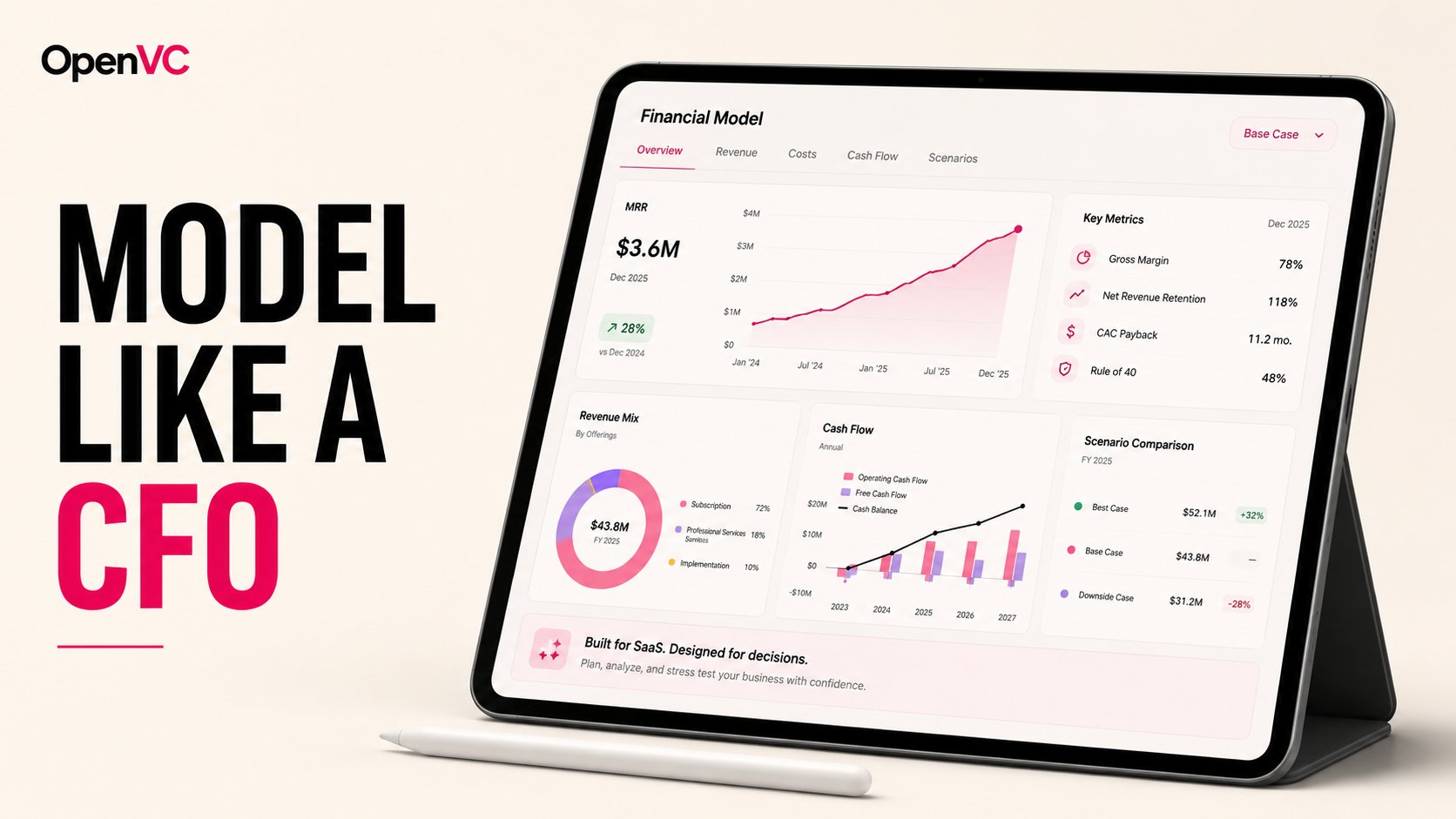
Financial Modeling for Startups: An Introduction | Fivecast Financial
Founders and executives of new companies, particularly those seeking to raise capital, will inevitably be confronted with the prospect of building a financial model. The goal of this guide is to give you an idea of what a financial model is, why you might want one, and how to go about building one.
The Future of Money: How the Digital Revolution Is Tran…
A cutting-edge look at how accelerating financial chang…

Purpose Ventures - Purpose
Conventional VC is often at odds with the ambitions of purpose-driven entrepreneurs and their founding values and missions. These founders are interested in more than growth for growth’s sake. They want to build lasting, impactful businesses and preserve their mission in the future.
Why do banks reward their customers to use their credit cards?
EconStor is a publication server for scholarly economic literature, provided as a non-commercial public service by the ZBW.
Stripe’s Acquisition of Bridge is a Stroke of Genius
controlled by banks, b2b payments account for $120 trillion yearly — compared to stripe’s $1 trillion

12 Best Startup Financial Model Templates [Free & Paid]
Need a financial model for your startup? Fear not. I have extensively compared the top 12 templates, free and paid, so you don't have to do it.
Pretty stoked to unveil something I’ve been working on for a few months: AtmoPay - a Payment Service Provider aiming at providing creators a monetization rail on the Open Web. atmopay.birdsongapps.com
Pretty stoked to unveil something I’ve been working on for a few months: AtmoPay - a Payment Service Provider aiming at providing creators a monetization rail on the Open Web. atmopay.birdsongapps.com
