

1. We refuse to operate under the assumption that risk and harm associated with data practices can be bounded to mean the same thing for everyone, everywhere, at every time. We commit to acknowledging how historical and systemic patterns of violence and exploitation produce differential vulnerabilities for communities.
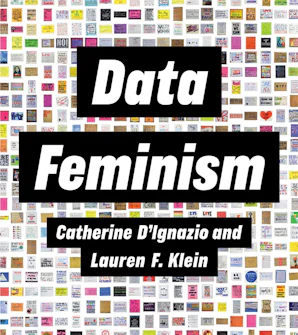
Data Feminism
A new way of thinking about data science and data ethics that is informed by the ideas of intersectional feminism.

Data Feminism
Today, data science is a form of power. It has been used to expose injustice, improve health outcomes, and topple governments. But it has also been used to d...
Data Refusal from Below: A Framework for Understanding, Evaluating, and Envisioning Refusal as Design
Amidst calls for public accountability over large data-driven systems, feminist and indigenous scholars have developed refusal as a practice that challenges the authority of data collectors. However, because data affect so many aspects of daily life, it can be hard to see seemingly different refusal strategies as part of the same repertoire. Furthermore, conversations about refusal often happen from the standpoint of designers and policymakers rather than the people and communities most affected by data collection. In this article, we introduce a framework for data refusal from below —writing from the standpoint of people who refuse, rather than the institutions that seek their compliance. Because refusers work to reshape socio-technical systems, we argue that refusal is an act of design and that design-based frameworks and methods can contribute to refusal. We characterize refusal strategies across four constituent facets common to all refusal, whatever strategies are used: autonomy , or how refusal accounts for individual and collective interests; time , or whether refusal reacts to past harm or proactively prevents future harm; power , or the extent to which refusal makes change possible; and cost , or whether or not refusal can reduce or redistribute penalties experienced by refusers. We illustrate each facet by drawing on cases of people and collectives that have refused data systems. Together, the four facets of our framework are designed to help scholars and activists describe, evaluate, and imagine new forms of refusal.

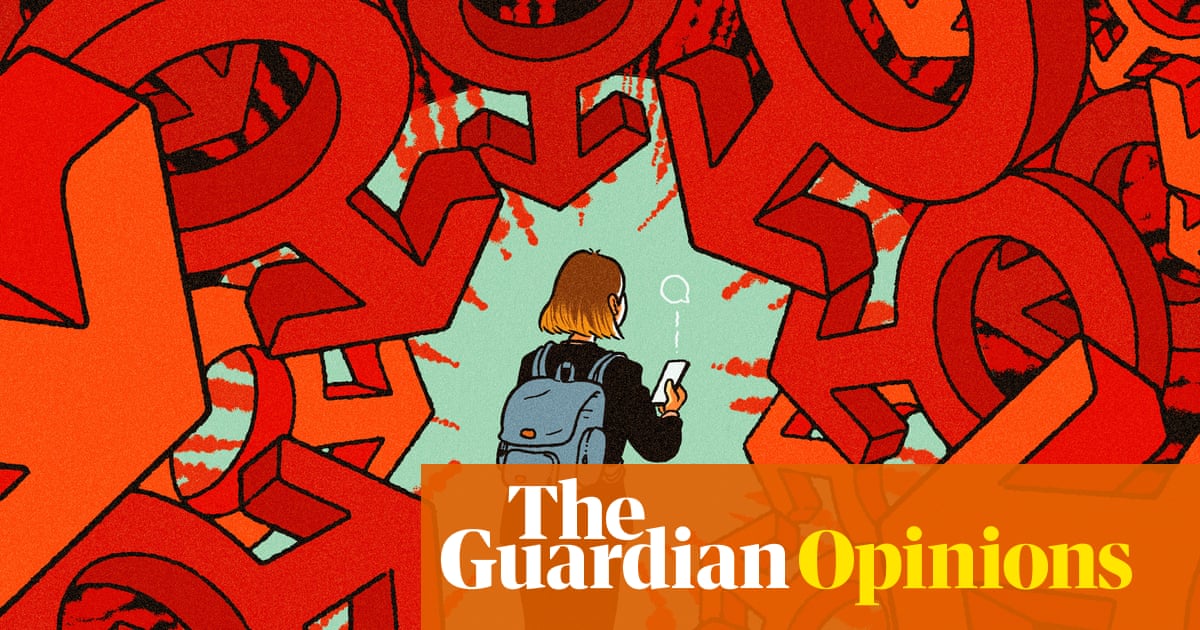
In the face of rampant AI, is ‘data poisoning’ a new form of civil disobedience?
Boycotts, sabotage and other types of civil disobedience have long served collective action against injustice.

In the face of rampant AI, is ‘data poisoning’ a new form of civil disobedience?
Boycotts, sabotage and other types of civil disobedience have long served collective action against injustice.
MyData
The human-centric approach to data is aimed at a fair, sustainable, and prosperous digital society. In such a society, people get value from their data and set the agenda on how it is used. And for organisations, the ethical use of data is always the most attractive option.

764: The Intersection of Terrorism, Violent Extremism, and Child Sexual Exploitation
Sign up for our monthly newsletter to stay updated about our work

Living in Data: A Citizen's Guide to a Better Information Future (Paperback)
Jer Thorp’s analysis of the word “data” in 10,325 New York Times stories written between 1984 and 2018 shows a distinct trend: among the words most closely associated with “data,” we find not only its classic companions “information” and “digital,” but also a variety of new neighbors—from “scandal” and “misinformation” to “ethics,” “friends,” and “play.”To live in data in the twenty-first century

AI-powered online abuse: How AI is amplifying violence against women and what can stop it | UN Women – Headquarters
AI is turning online spaces into new frontiers of abuse. Feminist and tech experts, Laura Bates and Paola Gálvez-Callirgos, explain how it happens and how we fight back.

Invisible Women: Exposing Data Bias in a World Designed for Men
Invisible Women: Exposing Data Bias in a World Designed for Men is a 2019 book by British feminist author Caroline Criado Perez. The book describes the adverse effects on women caused by gender bias in big data collection.

How AI is exacerbating technology-facilitated violence against women and girls
This paper examines how artificial intelligence is accelerating technology-facilitated violence against women and girls—from deepfakes and automated hate to sextortion, impersonation, and large-scale disinformation. It outlines emerging risks, legal and ethical challenges, and opportunities for prevention, while calling for urgent regulation, safety-by-design, and coordinated global action to ensure that AI technologies advance, rather than undermine, women’s rights and safety.

Can data collectives help strengthen vulnerable cultures in the face of AI?
"Data collectives and cooperatives, which let creators control the collection and distribution of their data, are emerging as preferred alternatives to big tech companies."

Remotely Coerced Violence: 764, The Com Network, and the Hybridization of Threats - Combating Terrorism Center at West Point
Abstract: This article examines 764 and the wider Com Network as a case study in remotely coerced violence and the hybridization of contemporary terrorist and violent extremist threats. It argues that nihilistic violent extremism is best understood as a victim-driven, youth-centered online ecosystem in which status, belonging, and identity are earned through the production, circulation, … Continued
Sharing Knowledge Openly: Author Gender, Race/Ethnicity, and Feminist Science
Open science is an increasingly important movement in contemporary social science. Many funders have begun to mandate open practices, newer journals like Socius are open access, and preprint servers have increased readership of paywalled articles. Feminist scholars have written about the values and pitfalls of open research. In this paper, we put those ideas in conversation with each other and empirical data on open-access publishing to develop a feminist framework for thinking about feminist knowledge, data, publishing, and audience. Using a survey of 19,462 social scientists, linked with their entire Web of Science publication history from 2000 to 2023 and all papers posted to SocArXiv, we replicate past work showing that articles by women are less likely to be some types of open access. We extend these findings to scholars of color and feminist scholarship, while also demonstrating a few surprising null results for all three groups.

I am a 15-year-old girl. Let me show you the vile misogyny that confronts me on social media every day | Anonymous
Objectification, hate, rape threats: the politicians debating online abuse mean well, but to truly understand, they need to see what I see
A Queer and Feminist Defense of Being Anonymous Online
From the earliest days of digital communities, online abuse has been connected to anonymity. While concerns around the impact of anonymity, particularly for women, people of color and LGBTQ folks, is legitimate, this paper argues that a flat rejection of digital anonymity is problematic, foreclosing certain forms of queer and feminist praxis. To make this case, I turn to the platform politics of Craigslist. Using Craigslist as a case study, I discuss the persistent stigma attached to online anonymity, before addressing specific tactics of online anonymity associated with queer and feminist values of privacy and mutual aid. Drawing on accounts of Craigslist users who saw anonymity as a protective form of control over their personal information, I outline ways in which anonymity is not solely an enabler for misogyny and homophobia, and can instead (or rather, also) be a subversive tool for self-expression and intimacy.