

The Many brains project
BrainMind
At this important juncture in neuroscience, the BrainMind ecosystem is combining the most talented of these groups in novel ways to collectively shepherd, support, and fund ideas that can be translated from labs into interventions that will benefit humanity.

The brain in the machine: How AI could help explain how we think | IBM
Scientists are using large AI models to predict patterns of brain activity at scale, a development that researchers say is pushing neuroscience toward a new kind of digital imaging.

nubrain - A foundation model for neural decoding
Building the world's largest dataset of human brain activity.

This Is Your Brain on Podcasts (Published 2016)
Different people’s brains absorb a compelling story in the roughly the same complicated pattern, using many parts of the brain, researchers found.

The Global Brain Argument: Nodes, Computroniums and the Ai Megasystem (Target Paper for Special Issue)
The Global Brain Argument contends that many of us are, or will be, part of a global brain network that includes both biological and artificial intelligences (AIs), such as generative AIs ...

Plastic Labs Releases Neuromancer XR
NEUROMANCER: The first collection of models dedicated to AI-native memory and social cognition.
#158: Build your AI Brain
How I built a second brain that gets smarter every day
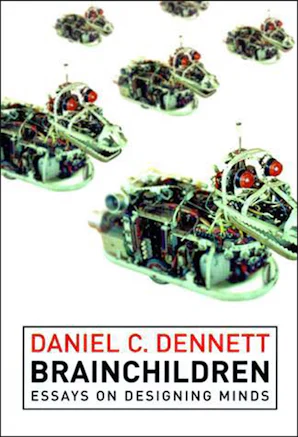
Brainchildren
Minds are complex artifacts, partly biological and partly social; only a unified, multidisciplinary approach will yield a realistic theory of how they came i...
What the Studies Say About How AI Affects Your Brain: A (Very Big) Compilation
The entire literature clearly points to a single surprising finding
AGIHound on Twitter / X
"Demis Hassabis says our brains are likely to be approximate Turing machines."Dear Lord. This Alan Turing worship never ends. It's a cult. 🤦♂️I research the visual system of the brain. I've come to understand that the most important principle of intelligence is the precise… https://t.co/isLnLqjFkw— AGIHound (@TrueAIHound) May 5, 2026
The brain's 7D sandcastles could be the key to consciousness | New Scientist
We’ve glimpsed mind-bending geometric structures that fleetingly encode our thoughts, memories and feelings – and could solve the greatest mystery of all

Why the Human Brain Project Went Wrong--and How to Fix It
Two years in, a $1-billion-plus effort to simulate the human brain is in disarray. Was it poor management, or is something fundamentally wrong with Big Science?
A foundation model of vision, audition, and language for in-silico neuroscience | Research - AI at Meta
Cognitive neuroscience is fragmented into specialized models, each tailored to specific experimental paradigms, hence preventing a unified model of...
Open-source software reveals complete 3D architecture of brain cells
The neurons in our brain that underlie thought connect to each other using tiny branch-like structures on their surfaces known as dendritic spines. Now scientists at Columbia's Zuckerman Institute and ...

#digitalbrainproject #neuroscience #artificialintelligence #openscience #callforprojects #research #ai #brain | Fondation Adolphe de Rothschild
The Rothschild Foundation Hospital is excited to launch the Digital Brain Project, a $5M collaborative research initiative to build an open source foundational model of the brain through open-access neural data. Apply by May 15th for up to $500k in funding. Help crack the neural code 👉digitalbrainproject.org Our objective is to develop a standardized, publicly available dataset of human brain recordings to accelerate fundamental research in cognitive neuroscience, AI system development, and clinical health. Our independent, multidisciplinary Scientific Committee oversees data collection, ethical review, privacy, and open science practices of our project — setting standards for large-scale brain research. The Digital Brain Project is conceived as an open collaborative infrastructure, at the intersection of neuroscience, artificial intelligence, and data science. It aims to accelerate data development, a key bottleneck to developing a foundational AI model of the human brain. Key Focus Areas: 1️⃣ Brain recording data related to visual processing, language functions and cognitive actions 2️⃣ Rigorous quality, privacy, and ethical control, along with procedures for standardizing data across sites 3️⃣ Support for teams selected by an international multidisciplinary Scientific Committee Call for applications: Research teams working in neuroscience, neuroimaging, or artificial intelligence are invited to submit their applications by May 15, 2026. Selected teams will receive up to $500k USD funding to support their work. We appreciate our Scientific Committee (Lune Bellec Anne-Marie Kermarrec Arthur Mensch Russell Poldrack Lucia Melloni Jose Alain Sahel) for their independent scientific leadership, and partners Université de Montréal and AI at Meta for collaborating on this exciting project. #DigitalBrainProject #Neuroscience #ArtificialIntelligence #OpenScience #Callforprojects #Research #AI #Brain -------------------------------------------------------------- Pierre Bourdillon Julie Boyle Elisa Cascardi Jean-Rémi King Guillaume Le Hénanff Amélie Yavchitz Julien Gottsmann Fabrice VERRIELE Charlotte Cardin-Taillia

NeuroAI
Neuroscience, cognitive science, and AI are all questing for principles that help generalization. Learn more through a live, synchronous program designed for focused, hands-on learning.