

[1] Written in Zurich in January-June 1916. Lenin began to take note of new developments in capitalism long before the outbreak of the First World War. In several of his writings from 1895 to 1913—”Draft and Explanation of a Programme for the Social-Democratic Party” (1895-96); “The War in China” (1900); “The Lessons of the Crisis” (1901), “Review of Home Affairs” (1901); “Concentration of Production in Russia” (1912); “The Growth of Capitalist Wealth” (1913) “Backward Europe and Advanced Asia” (1913); “The Historical Destiny of the Doctrine of Karl Marx” (1913); “Concerning Certain Speeches by Workers’ Deputies” (1912), and others—Lenin pointed out and analysed some characteristic aspects of the imperialist epoch— the concentration of production and the growth of monopoly; the export of capital; the struggle for new markets and spheres of influence; the internationalisation of economic relations; the parasitism and decay of capitalism; the growth of contradictions between labour and capital and the sharpening of the class struggle; and the creation of the material conditions for the transition to socialism. He devoted special attention to exposing predatory colonial policy, the fight for a division and redivision of the world, and the preparation of imperialist wars of aggrandisement. In his article, “Marxism and Revisionism”, written in 1908, he came out against the attempts to revise Marxism and undermine it from inside under the pretext of amending and correcting the theory in particular, Marx’s theory of crises. Lenin wrote: ‘The forms, the sequence, the picture of particular crises changed, but crises remained an inevitable component of the capitalist system. While uniting production, the cartels and trusts at the same time and in a way that was obvious to all, aggravated the anarchy of production, the insecurity of existence of the proletariat and the oppression of capital, thereby intensifying class antagonisms to an unprecedented degree. That capitalism is heading for a breakdown—in the sense both of individual political and economic crises and of the complete collapse of the entire capitalist system— has been made particularly clear, and on a particularly large scale, precisely by the new giant trusts” (see present edition, Vol. 15, pp. 35-36). Lenin kept abreast of all the latest writings on capitalism, as will be seen from his review of Hobson’s The Evolution of Modern Capitalism. In August 1904, Lenin began a translation of Hobson’s Imperialism, the manuscript of which has not yet been found. It was on the outbreak of the First World War that Lenin undertook a comprehensive study of the monopoly stage of capitalist development This was required by the working-class revolutionary struggle in Russia and other capitalist countries. In order to provide correct leadership for the revolutionary movement and combat the ideology of imperialist reaction and the reformist policy of conciliation with imperialists, it was necessary to see one’s way in the key economic question without a study of which there was no understanding of the assessment of modern war or modern politics, namely: the economic essence of imperialism”. Lenin must have started his close study of the writings on imperialism in mid-1915, when he was in Berne, for his first indexes of literature, plans, extracts, notes and summaries date to that period. The preparatory materials for Imperialism, the Highest Stage of Capitalism (Notebooks on Imperialism) make up about 800 printed pages. They contain extracts from 148 books (including 106 in German, 23 in French, 17 in English, and 2 translations into Russian), and 232 articles (of them 206 in German, 13 in French, and 3 in English) from 49 periodicals (34 German, 7 French and 8 English). In early January 1916, Lenin accepted an order for a book on imperialism from the legal Parus Publishers, founded in Petrograd in December 1915. Lenin wrote to Maxim Gorky on December 29, 1915 (January 11, 1916): “I am getting down to the writing of a pamphlet on imperialism” (see present edition, Vol. 35). In the early part of February 1916, he left Berne for Zurich, where he continued to collect and work on materials on imperialism. He worked at the Zurich Cantonal Library and ordered books from other towns. On June 19 (July 2), 1916 Lenin wrote to M. N. Pokrovsky, who was then living in France and editing for Parus a series of pamphlets about West-European countries during the First World War: “Today, I sent you a manuscript by registered mail” (see present edition, Vol. 35). The manuscript, which was mailed with the letter, did not reach Pokrovsky, and another copy had to be sent. Besides, the publishers suggested that the finished manuscript should be shortened from eighty to fifty pages, but Lenin objected because “it is absolutely impossible to cut it down once again and squeeze it into fifty pages” (ibid.). When the book reached the publishers, Menshevik elements among the management deleted from the book parts sharply criticising Kautsky and Martov, and made corrections in the text which not only distorted Lenin’s style but also his ideas. Thus, Lenin’s terms pererastaniye (capitalism growing into imperialism) was altered to prevrashcheniye (transformation); reaktstonny kharakter (reactionary nature of the theory of ultra-imperialism) to otstaly kharakter (backward character), etc. In mid-1917, the book was published under the title Imperialism, the Latest Stage of Capitalism(A Popular Outline) with a preface by Lenin, dated April 26, 1917.
Lenin und seine Imperialismus-Broschüre – Kommunistische Organisation
Paul Oswald setzt sich im folgenden Beitrag mit Teilen des Quellenmaterials von Lenins Imperialismus-Broschüre auseinander. Anhand eines vergleichenden Blicks zwischen Lenins Broschüre und vorangegangenen theoretischen Auseinandersetzungen innerhalb der Arbeiterbewegung sowie der bürgerlichen Wissenschaft wird das Alleinstellungsmerkmal von Lenins Untersuchung herausgearbeitet. Durch diesen Vergleich wird insbesondere Lenins Entwicklung des Begriffs des Imperialismus aufgezeigt und damit ein Zugang zur Imperialismus-Broschüre eröffnet wird, der in der Debatte unterrepräsentiert ist.
Why did capitalism begin in the West?
Culture, class, and the origins of capitalist development
Imperialism in the Twenty-First Century - Monthly Review
John Smith teaches international political economy at Kingston University in London. This paper has been abstracted from his book Imperialism in the Twenty-First Century, forthcoming from Monthly Review Press in... READ MORE

Capitalism
Capitalism is an economic system based on the private ownership of the means of production and its use for the purpose of obtaining profit. This socioeconomic system has developed historically in several stages, and is defined by a number of constituent elements: private property, profit motive, capital accumulation, competitive markets, commodification, wage labor, and an emphasis on innovation and economic growth. Capitalist economies may experience business cycles of economic expansion followed by recessions.
Ideology and Ideological State Apparatuses by Louis Althusser 1969-70
I must now expose more fully something which was briefly glimpsed in my analysis when I spoke of the necessity to renew the means of production if production is to be possible. That was a passing hint. Now I shall consider it for itself.
Mercantilisme et capitalisme de la finitude : aux origines de l’Empire Trump | Le Grand Continent
Les seigneurs de la Silicon Valley s'installent dans l'État américain : un nouveau pouvoir disrupte le libéralisme et la démocratie. Vivons-nous un moment inédit ? Il y a quatre cents ans, une start-up de la City – la Compagnie des Indes – se lançait déjà dans une entreprise de conquête mondiale similaire. Pour expliquer Trump et Musk, Arnaud Orain renoue avec les fils de cette histoire, en forgeant un concept : le capitalisme de la finitude.
The Triumph of Broken Promises — Harvard University Press
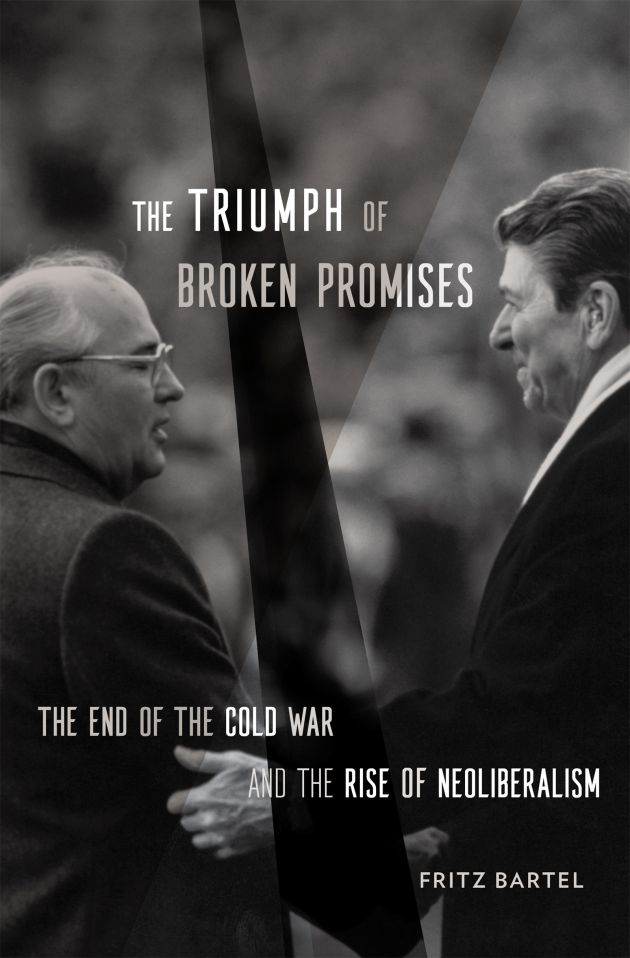
A powerful case that the economic shocks of the 1970s hastened both the end of the Cold War and the rise of neoliberalism by forcing governments to impose austerity on their own people.Why did the Cold War come to a peaceful end? And why did neoliberal economics sweep across the world in the late twentieth century? In this pathbreaking study, Fritz Bartel argues that the answer to these questions is one and the same. The Cold War began as a competition between capitalist and communist governments to expand their social contracts as they raced to deliver their people a better life. But the economic shocks of the 1970s made promises of better living untenable on both sides of the Iron Curtain. Energy and financial markets placed immense pressure on governments to discipline their social contracts. Rather than make promises, political leaders were forced to break them.In a sweeping narrative, The Triumph of Broken Promises tells the story of how the pressure to break promises spurred the end of the Cold War. In the West, neoliberalism provided Western leaders like Ronald Reagan and Margaret Thatcher with the political and ideological tools to shut down industries, impose austerity, and favor the interests of capital over labor. But in Eastern Europe, revolutionaries like Lech Walesa in Poland resisted any attempt at imposing market discipline. Mikhail Gorbachev tried in vain to reform the Soviet system, but the necessary changes ultimately presented too great a challenge.Faced with imposing economic discipline antithetical to communist ideals, Soviet-style governments found their legitimacy irreparably damaged. But in the West, politicians could promote austerity as an antidote to the excesses of ideological opponents, setting the stage for the rise of the neoliberal global economy.
US Labor & Imperialism Pt. 1: the War Against Communism w/ Jeff Schuhrke
Cyber-Marx
In this highly readable and thought-provoking work, Nick Dyer-Witheford assesses the relevance of Marxism in our time and demonstrates how the information age, far from transcending the historic conflict between capital and its laboring subjects, constitutes the latest battleground in their encounter. Dyer-Witheford maps the dynamics of modern capitalism, showing how capital depends for its operations not just on exploitation in the immediate workplace, but on the continuous integration of a whole series of social sites and activities, from public health and maternity to natural resource allocation and the geographical reorganization of labor power. He also shows how these sites and activities may become focal points of subversion and insurgency, as new means of communication vital for the smooth flow of capital also permit otherwise isolated and dispersed points of resistance to connect and combine with one another. Cutting through the smokescreen of high-tech propaganda, Dyer-Witheford predicts the advent of a reinvented, "autonomist" Marxism that will rediscover the possibility of a collective, communist transformation of society. Refuting the utopian promises of the information revolution, he discloses the real potentialities for a new social order in the form of a twenty-first-century communism based on the common sharing of wealth.
Capitalism and Its Critics: A History
A Financial Times Most Anticipated Book of 2025A sweeping, dramatic history of capitalism as seen through the eyes of its fiercest critics. At a time when artificial intelligence, climate change, and inequality are raising fundamental questions about the economic system, Capitalism and Its Critics provides a kaleidoscopic history of global capitalism, from the East India Company and Industrial Revolution to the di...
Super Imperialism: The Economic Strategy of American Empire | Michael Hudson
Super Imperialism. The Economic Strategy of Americ .... Hudson, Michael Buy Now (Wrapping 1972) “THE MOST IMPORTANT WORK ON IMPERIALISM SINCE LENIN” -TERENCE McCARTHY Michael Hudson Holt, Rinehart, Winston Backside: Super Imperialism "Never before has a bankrupt nation dared insist that its bankruptcy become the foundation of world economic policy; that, because of its bankruptcy,
Cognitive Capitalism - Public Seminar
There are broadly three ways of thinking historically about capitalism. One draws on Marx’s value theory and pretty much treats...Read More

The Communist Manifesto
Without question one of the most significant books in modern history, The Communist Manifesto is a brief, populist pamphlet that distils the core ideas of Communism into accessible prose. Published just months before violent uprisings threatened to destabilise much of the European establishment, it outlines a view of history as a constant battle between the classes that will inevitably result in revolution. An ang...
Imperialism | The Paper Pilot
The Paper Pilot's digital garden of thoughts on philosophy, politics, and sociology
Denizen
What are some of the fundamental flaws of capitalism? How might we instantiate a market-based economy that is growth agnostic?
if there's one conclusion that the study of both labor history and imperialism converge on, it is that the richest people in the world are happy to burn money on control, power, impunity. and the "everything is about profit" version of anti-capitalism does not survive serious contact with either

Leonard Pierce
Adding to this thread: it’s a common mistake (I’ve made it myself, many times) to think of the motivations of the capitalist elites as essentially mercantilist: that is, that they are largely still motivated *entirely* by profit and loss, selling product, etc. This has not been true for a while.
