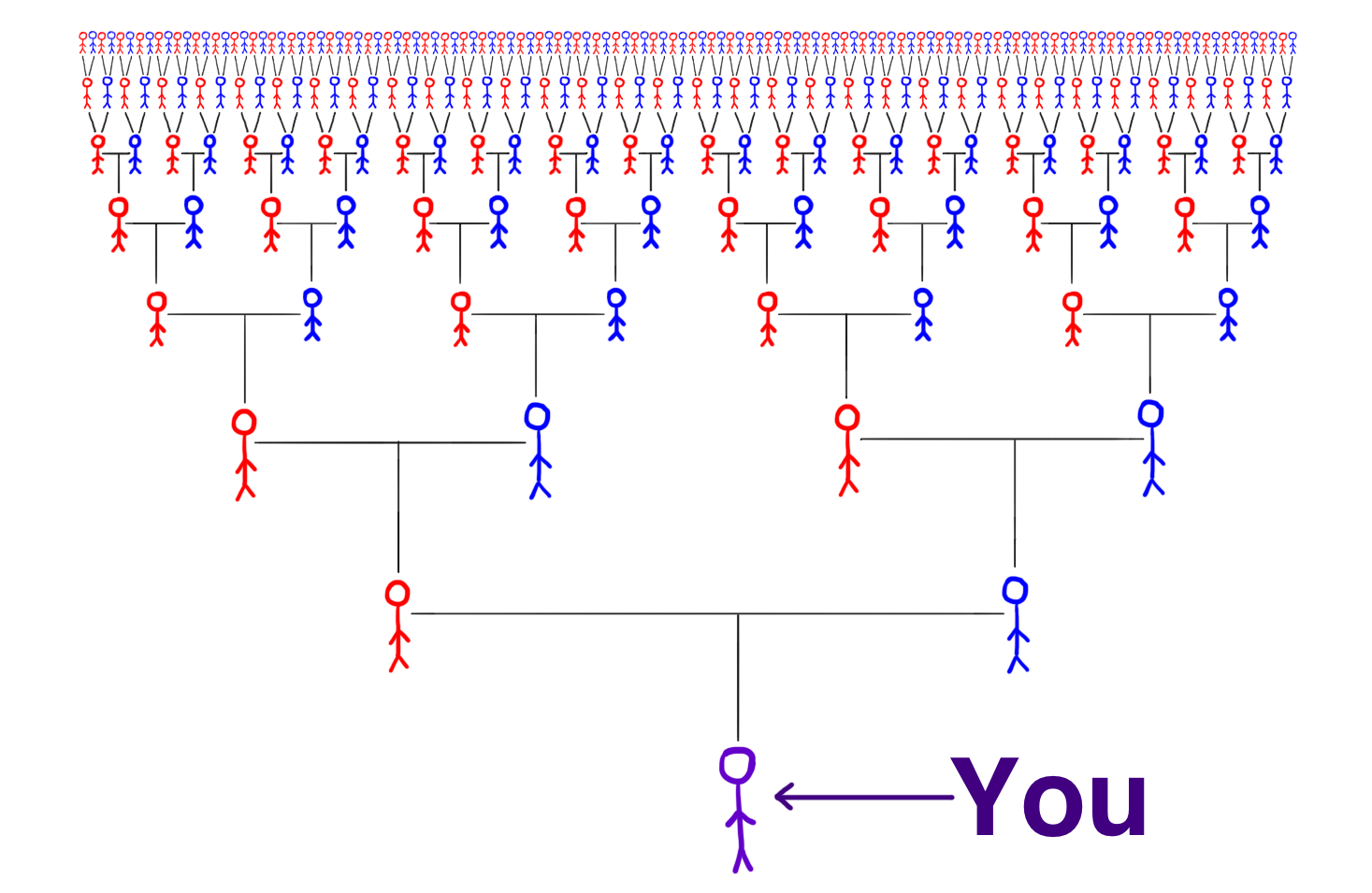
The Consanguine Family (The First Stage of the Family) The Punaluan Family The Pairing Family The Monogamous Family

Incest, in This Economy? — Parapraxis
The 21st-Century Family Romance BRIAN CONNOLLY


Home
Intergen.Family is where true stewardship is cultivated. Within our high-trust community, leaders can transform private wealth into a source of public trust, aligning their family legacy with planetary and human flourishing. This is the foundation upon which our offerings for individuals, organizations, and patrons are built.

A heartbreaking work of staggering genius
A book that redefines both family and narrative for the…

Fanny and Alexander (1982)
As children in the loving Ekdahl family, Fanny and Alexander enjoy a happy life with their parents, who run a theater company. After their father dies unexpectedly, however, the siblings end up in a…

Beyond Equality—Non-Monogamy and the Necropolitics of Marriage
‘Marriage equality’ has been a widely used slogan and mobilizing concept for LGBTQ+ rights’ movements across the globe striving for formal recognition for ‘same-sex’ or ‘same-gender’ marriages. In this article, we critically interrogate the terminology and political rationality that have given shape to ‘marriage equality’ campaigns. We demonstrate the structural erasure of non-monogamous relations and populations from the changes hoped for and envisioned in these mobilizations. The lack of any genuine and substantial concern with consensual non-monogamies (CNMs) from most of the literature in the field highlights the close entanglement of marriage with monogamy. As a result, ideas are scarce about how meaningful and adequate legal recognition and social policy provisions for a wide range of intimate, sexual, familial, and/or caring bonds or constellations on the CNM continuum could look like. We argue that the critique of the mononormativity inherent to marriage is fundamental to understanding the role of this in the 21st century. We identify the roots of the mononormativity of marriage in its governmental role as a necropolitical and biopolitical technology, evidenced by its ‘civilizing’ function in white settler colonial projects. Because of this, an expansion of the call for equality to include non-monogamous populations does not resolve but rather aggravates the problem. We conclude that any truly queer politics of CNM consequently needs to be anti-marriage.

Locating Family Values: A Field Trial of the Whereabouts Clock: (Nominated for the Best Paper Award)
History of Restaurant and Its Significance in Song Dynasty
What was so special about restaurants in Song Dynasty?


Remote Origins: Translation, Genealogy, and Alterity in Medieval Castile (1252-circa 1390)
This dissertation analyzes selected examples of thirteenth- and fourteenth-century written culture to show their engagement with the religious alterity of Islam as an integral part of the origins of the kingdom of Castile. Following an interdisciplinary methodology, it addresses how medieval ideas about astrology, geography, history, medicine, race, and religion participated in creating discourses about origins that recognized the intellectual and political authority of al-Andalus. It argues that early Castilian vernacular texts conceptualized the translation of Arabic sources as an instrument for creating, transforming, and superseding the alterity of Islam while recognizing the cultural and political authority of Andalusi traditions. The first chapter serves as an introduction explaining the historical and theoretical framework of the dissertation. To do so, it provides an overview of Castilian ideas about genealogy, historiography, authority, and translatio, and translation. Then, through close reading and ample historicization, chapters two, three, and four analyze the impact of Andalusi textual traditions, cultural practices, and human population in three interrelated fields of medieval science, literature, and history. Chapter 2 explores the political implications of King Alfonso X’s (r. 1252-1284) dedication to the translation of Arabic sciences by focusing on the translation of a treatise of astrology titled Libro de las cruzes (1259). The chapter traces the cultural and political context that accompanied the transmission of the book in al-Andalus alongside the content of its Arabic and Castilian prologues. In light of ideas about the transference of knowledge (translatio studii) shared by Christian and Muslim scholars, I conclude that deployment of a twofold origin in the Libro de las cruzes illustrates the strategies and motivations of Alfonso X’s broader engagement with Arabic sources. The third chapter turns to the early fourteenth-century romance Libro del caballero Zifar with a double focus on its forged origin as a translation from caldeo (Chaldean) and the prominence of cursed lineages. Regarding lineage, the chapter explores the representation of exemplary virtues by the protagonists of the romance as enacting ideas about the transformable character of lineage and the capabilities of the individual to unmake inherited negative traits. Likewise, the textual strategy of the forged translation enables the inclusion of Arabic and Asian referents at the origin of a profoundly Christian text. In chapter 4, literature meets historiography in the analysis of the Crónica de Flores y Blancaflor. Being the result of intertwining a Castilian chronicle—Alfonso X’s Estoria de Espanna—and a French romance, this text narrates the love story between an Andalusi Muslim prince and the daughter of a captive Christian noble. The chapter focuses on Berta, the captive woman, to show the implications of her decision to nurture Flores and Blancaflor with her milk. Considering Christian and Muslim ideas about milk and wet nursing along with the tenets of Castilian historiography, the chapter shows the limits of dominant ideas about dynastic origins among the Christian elites of Castile while evidencing the existence of an alternative discourse that—coming from within Castilian historiography—incorporates maternal and non-Christian kinship as an essential part of the origins and possibilities of the kingdom. A short final chapter serves as a conclusion, suggesting paths for expanding the results of this dissertation within and the thirteenth and fourteenth centuries covered by its contents.
The social story starts with a correction: there was no single “time of the Picatrix.” Ghāyat al-Ḥakīm was compiled in tenth-century Córdoba. The Castilian and Latin Picatrix emerged at Alfonso X’s court three centuries later. One textual lineage crossed two very different systems of power.

A conceptual model of ATProto and ActivityPub
ATProto ideas
Wesley Finck (@wesleyfinck.org)

Copyright and DMCA Best Practices for Fediverse Operators

The Shape of Apps to Come, Devin Ivy, ATmosphereConf Seattle 2025
FediForum Talk: Atproto: A Technical Introduction