


Public-health measures
US Domestic Policy Dashboard - Impact Counter | Impact Counter
Explore US domestic policies and their impact on public health across all branches of government.


Avoidable mortality, risk factors and policies for tackling noncommunicable diseases – leveraging data for impact: monitoring commitments in the WHO European Region ahead of the Fourth United Nations High-Level Meeting
The report notes that, in order to tackle NCDs and address the commercial, social, environmental and digital determinants of health, there is a need for accelerated multisectoral whole-of-government and whole-of-society action, integrated policies, enhanced preventive measures and strengthened health systems.

What Works for Health
Evidence matters. Our What Works for Health tool will help you find policies and programs that are a good fit for your community's priorities.

Review of <i>The Ethics of Public Health Paternalism</i>
Martin Wilkinson’s book The Ethics of Public Health Paternalism is a normative analysis of paternalistic governmental policies within liberal democracies that …

The Oregon Health Insurance Experiment: Evidence from the First Year*
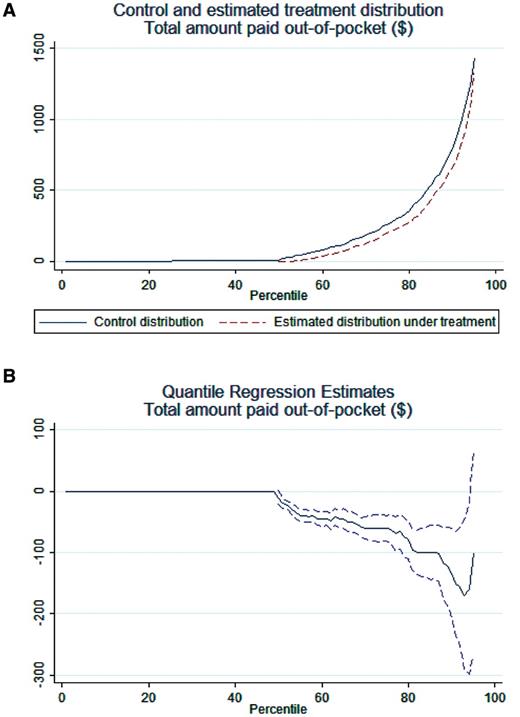
Abstract In 2008, a group of uninsured low-income adults in Oregon was selected by lottery to be given the chance to apply for Medicaid. This lottery provides an opportunity to gauge the effects of expanding access to public health insurance on the health care use, financial strain, and health of low-income adults using a randomized controlled design. In the year after random assignment, the treatment group selected by the lottery was about 25 percentage points more likely to have insurance than the control group that was not selected. We find that in this first year, the treatment group had substantively and statistically significantly higher health care utilization (including primary and preventive care as well as hospitalizations), lower out-of-pocket medical expenditures and medical debt (including fewer bills sent to collection), and better self-reported physical and mental health than the control group.
Why Do Americans Have Shorter Life Expectancy and Worse Health Than Do People in Other High-Income Countries?
Americans lead shorter and less healthy lives than do people in other high-income countries. We review the evidence and explanations for these variations in longevity and health. Our overview suggests that the US health disadvantage applies to multiple mortality and morbidity outcomes. The American health disadvantage begins at birth and extends across the life course, and it is particularly marked for American women and for regions in the US South and Midwest. Proposed explanations include differences in health care, individual behaviors, socioeconomic inequalities, and the built physical environment. Although these factors may contribute to poorer health in America, a focus on proximal causes fails to adequately account for the ubiquity of the US health disadvantage across the life course. We discuss the role of specific public policies and conclude that while multiple causes are implicated, crucial differences in social policy might underlie an important part of the US health disadvantage.


Environmental epidemiology in a crossfire
Two tendencies have emerged in environmental epidemiology that hamper the translation of research findings into prevention of environmental hazards. One is the increased focus on highlighting weaknesses of epidemiology research that is clearly meant to explain away the research conclusions and weaken their possible implications for interventions to control environmental hazards. Another is the voluminous amount of information sharing that involves a substantial amount of misinformation, as part of the ongoing infodemic. In this light, the appearance of the catalogue of doubt-raising strategies, indeed the worst practices of scientific inference, is good news. Collected under the auspices of the International Network for Epidemiology in Policy, it serves to illustrate the range of possible (and impossible) forms of critique that may be raised on behalf of vested interests or other groups who for some reason disagree with the epidemiological conclusions. We believe that this systematic list will be useful in our field and help to identify critiques of policy options that are hidden and sometimes suppressed in weighing the epidemiological evidence.
9/11 Health
For over two decades the Registry researchers have been tracking health trends, investigating emerging health conditions, and identifying gaps in care among people affected by 9/11.
Improving and Expanding Estimates of the Global Burden of Disease Due to Environmental Health Risk Factors
Abstract Background: The Global Burden of Disease (GBD) study, coordinated by the Institute for Health Metrics and Evaluation (IHME), produces influential, data-driven estimates of the burden of disease and premature death due to major risk factors. Expanded quantification of disease due to environmental health (EH) risk factors, including climate change, will enhance accuracy of GBD estimates, which will contribute to developing cost-effective policies that promote prevention and achieving Sustainable Development Goals. Objectives: We review key aspects of the GBD for the EH community and introduce the Global Burden of Disease–Pollution and Health Initiative (GBD-PHI), which aims to work with IHME and the GBD study to improve estimates of disease burden attributable to EH risk factors and to develop an innovative approach to estimating climate-related disease burden—both current and projected. Methods: We discuss strategies for improving GBD quantification of specific EH risk factors, including air pollution, lead, and climate change. We highlight key methodological challenges, including new EH risk factors, notably evidence rating and global exposure assessment. Discussion: A number of issues present challenges to the scope and accuracy of current GBD estimates for EH risk factors. For air pollution, minimal data exist on the exposure–risk relationships associated with high levels of pollution; epidemiological studies in high pollution regions should be a research priority. For lead, the GBD’s current methods do not fully account for lead’s impact on neurodevelopment; innovative methods to account for subclinical effects are needed. Decisions on inclusion of additional EH risk–outcome pairs need to be guided by findings of systematic reviews, the size of exposed populations, feasibility of global exposure estimates, and predicted trends in exposures and diseases. Neurotoxicants, endocrine-disrupting chemicals, and climate-related factors should be high priorities for incorporation into upcoming iterations of the GBD study. Enhancing the scope and methods will improve the GBD’s estimates and better guide prevention policy. https://doi.org/10.1289/EHP5496
Want More Policies Based on Evidence?
Medicine teaches us it will take time, effort, and investment.

Health-Informed Computing: Estimating and Addressing the Public Health Impact of Data Centers
The surging demand for artificial intelligence (AI) has led to a rapid expansion of energy-intensive data centers, contributing to criteria air pollutant emissions and raising public health concerns that have received comparatively limited attention in sustainability assessments. This paper introduces a principled methodology to model air pollutant emissions for data centers and estimate the public health impacts. Our findings reveal that the growing demand for AI and computing technologies is projected to push the total annual public health burden of U.S. data centers up to more than $20 billion in 2028. Although national-level impacts remain modest, data center health costs are unevenly distributed: in the most affected counties, the estimated per-household health burden can reach about seven times the national average. Next, we propose a health-informed computing framework that explicitly incorporates public health impacts into data center resource management across space and time, mitigating public health costs while supporting environmental sustainability. More broadly, we recommend extended energy reporting to include public health impact of data centers and paying attention to all impacted communities.

Health-Informed Computing: Estimating and Addressing the Public Health Impact of Data Centers
The surging demand for artificial intelligence (AI) has led to a rapid expansion of energy-intensive data centers, contributing to criteria air pollutant emissions and raising public health concerns that have received comparatively limited attention in sustainability assessments. This paper introduces a principled methodology to model air pollutant emissions for data centers and estimate the public health impacts. Our findings reveal that the growing demand for AI and computing technologies is projected to push the total annual public health burden of U.S. data centers up to more than $20 billion in 2028. Although national-level impacts remain modest, data center health costs are unevenly distributed: in the most affected counties, the estimated per-household health burden can reach about seven times the national average. Next, we propose a health-informed computing framework that explicitly incorporates public health impacts into data center resource management across space and time, mitigating public health costs while supporting environmental sustainability. More broadly, we recommend extended energy reporting to include public health impact of data centers and paying attention to all impacted communities.
🌡️🔥Climate change isn't a distant threat—it's a public health crisis now. Our study shows heat-related deaths in many cities could surpass annual COVID-19 deaths in just 5–10 years at 3°C warming. Urgent action is needed! 👉 rdcu.be/d5rnL @natureportfolio.bsky.social #scientificreports

Rapid climate action is needed: comparing heat vs. COVID-19-related mortality
rdcu.bePublic health

Mainly related to COVID-19

Airport air sampling captures COVID, influenza viruses

Retracted coronavirus (COVID-19) papers
NCBI - WWW Error Blocked Diagnostic
SAGE Search
COVID antihistamine protocol
outbreak.info SARS-CoV-2 data explorer
