


Termite ecology came of age in 1978 with the seminal review of Wood and Sands which by considering the quantitative contributions made by termites to the carbon cycle at the landscape level concluded that they were major players in tropical ecosystems. Subsequent field work in the succeeding two decades was summarised in 2000 by Bignell and Eggleton, the most recent review which attempted to cover the entire topic in detail, which included 188 listed references and has been extensively cited for almost 20 years. Subsequent summaries more narrowly defined or in some cases more superficial are listed in the bibliography. In this overview, the main and subsidiary headings in Bignell and Eggleton are revisited and reclassified in the light of 186 selected articles added to the relevant literature since 2000, and some earlier work. While the literature on termite ecology remains buoyant, it has declined relative to publications on other aspects of termite biology. Overall, the thesis that termites have a major impact on, and are major indicators of soil health and landscape integrity in the tropics and sub-tropics is maintained, but the drivers of local diversity, abundance and biomass remain complex, with many biographical, edaphic and optimum sampling issues not completely resolved. The large increase in diversity and abundance data from Neotropical biomes can also be noted.
Termite
Termites are a group of eusocial insects which consume a variety of decaying plant material, generally in the form of wood, leaf litter, and soil humus. They are distinguished by their beaded (moniliform) antennae and the soft-bodied, unpigmented worker caste for which they have been commonly termed "white ants"; however, they are not ants but highly derived cockroaches; they are genetically closer to some cockroach groups than these are to other cockroaches. About 2,997 extant species are currently described, 2,125 of which are members of the family Termitidae.

Mound-building termites
Mound-building termites are a group of termite species that live in mounds which are made of a combination of soil, termite saliva and dung. These termites live in Africa, Australia and South America. The mounds sometimes have a diameter of 30 metres (98 ft). Most of the mounds are in well-drained areas. Termite mounds usually outlive the colonies themselves. If the inner tunnels of the nest are exposed it is usually dead. Sometimes other colonies, of the same or different species, occupy a mound after the original builders' deaths.

Termitomyces
Termitomyces is a genus of basidiomycete fungi known as termite mushrooms in Lyophyllaceae family farmed by fungus-growing termites. The fungi and the termites interdepend to live, as the termites house and culture the fungi, and the fungi in turn provide foods for the termites. Often after a raining, the fungi grow mushrooms, which are edible and highly regarded for their flavor.

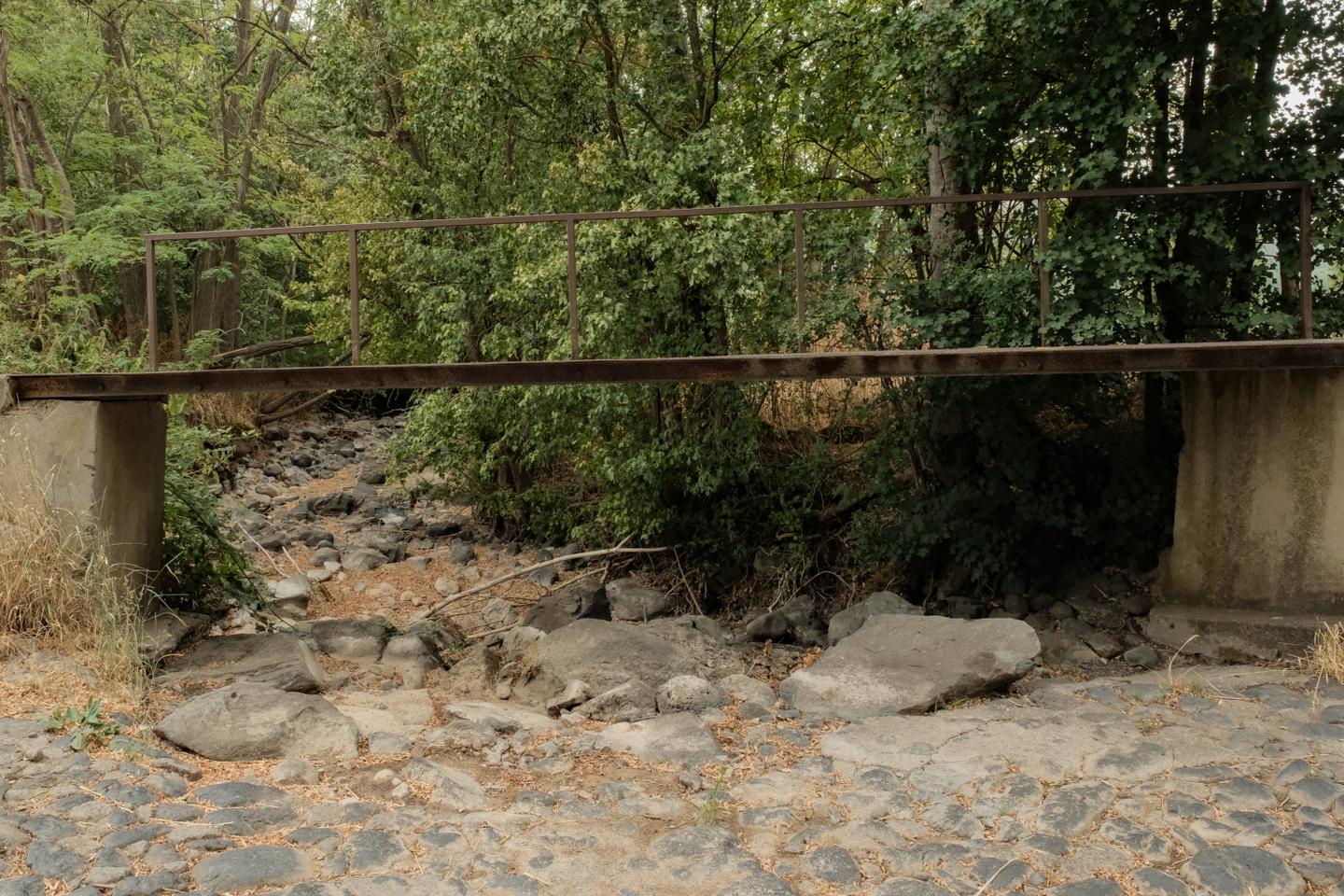
Thibault Datry, écohydrologue : « Des rivières qui, de mémoire d’homme, ne s’étaient jamais asséchées ne coulent plus »
Le spécialiste de l’eau à l’Institut national de recherche pour l’agriculture, l’alimentation et l’environnement explique, dans un entretien au « Monde », le rôle majeur des petits cours d’eau pour les écosystèmes et les activités humaines, et l’importance de les préserver.
La Nature au cœur du raisonnement économique : l’émergence d’une nouvelle macroéconomie. - Chroniques de l'Anthropocène
Quand le FMI révolutionne la macroéconomie en présentant un cadre conceptuel original dans lequel la Nature se trouve au cœur du système économique.
A varied ecosystem and terminology. - Nel Ramblings
Reciprocal nutritional benefits in a Mediterranean seagrass-sponge association
Sponges commonly form associations within seagrass meadows, but their potential impact on seagrass productivity and nutrient cycles remains poorly understood. This study investigates the association between the demosponge Chondrilla nucula and the Mediterranean seagrass Posidonia oceanica in two sampling occasions during the plant growth (spring) and senescence (autumn) seasons at a small inlet near Naples, Italy, where the sponge grows conspicuously within the seagrass bed. We found a non-linear relationship between the benthic cover of the sponge and the seagrass, with higher C. nucula cover linked to intermediate P. oceanica cover, suggesting spatial dependence. Posidonia oceanica showed higher net primary production (NPP) in spring, while C. nucula was net heterotrophic in spring but exhibited near zero metabolic balance in autumn. NPP remained stable when the two organisms were associated, regardless of the season. Chondrilla nucula consistently contributed inorganic nutrients to the association in the form of phosphate, ammonium, and substantial nitrate, recycling nutrients that potentially benefited P. oceanica in its growth season. In return, the seagrass released dissolved organic carbon in spring, which is consistent with supporting sponge heterotrophic nutrition. These findings suggest reciprocal benefits in the interaction between C. nucula and P. oceanica , with nutrient exchange facilitating a facultative mutualism that potentially supports and stabilizes the productivity of the seagrass ecosystem.
Beyond technofix: Thinking with Epimetheus in the anthropocene
The Prometheus myth has long now provided inspiration for those who envision solutions to environmental issues. Prometheus is the figure par excellence of human forethought and progress in the anthropocene. In this article, we introduce the concept of ambient Prometheanism to describe the way of thinking that foregrounds foresight and anticipation and advances technological solutions developed by capital and energy-intensive projects. We question this stance, arguing that ambient Prometheanism, with its emphasis on technofix, leads to the economisation and depoliticisation of planetary environmental issues. Following Bernard Stiegler, we recover from the myth the figure of Epimetheus, Prometheus’ brother, as well as his associated faculty, epimetheia to theorise what we call an ‘Epimethean politics’. Thinking the anthropocene from the perspective of ambient Prometheanism and Epimetheanism means to consider the role of technology in climate politics, and in particular to make the case for the importance of afterthought in face of unintended consequences and accumulated errors. To substantiate our argument, we outline the challenge posed by emerging solutions focussed on technological intensification (geoengineering) and socio-economic acceleration (green growth and accelerationism). An Epimethean politics of the climate requires to use reflexivity as a capacity to anticipate, but also to mobilise epimetheia to account for accidents and past mistakes. Such a politics builds from an alternative conception of technology, one that radically differs from ambient Prometheanism. Finally we read as actualisations of Epimethean politics contemporary eco-political struggles and their imperatives for multispecies living and convivial livelihoods.
L’anthropocène, un objet frontière qui signifie plus qu’une tranche de temps géologique
Même si le groupe de travail officiel a refusé la proposition de créer une nouvelle époque géologique nommée anthropocène, le débat n’est pas clos pour autant.

Faire bloc : la contre-mobilisation agricole face à la critique environnementale dans l’espace public numérique
Au cours des dernières années, l’agriculture est devenue un point de plus en plus « chaud » dans les controverses environnementales. Avec une visibilité nouvelle dans les médias traditionnels comme sur les réseaux sociaux, nombre de militants et organisations dénoncent les effets destructeurs de l’intensification des modes de production agricole sur la santé humaine, les conditions de vie des animaux d’élevage, la biodiversité et le climat. Dans cet article, nous étudions le déploiement, dans l’espace public numérique, d’une forme de contre-mobilisation en réponse à ces dénonciations. Cette contre-mobilisation repose sur l’activation de solidarités entre agriculteurs et professionnels para-agricoles, mus par une expérience partagée de la critique et le projet commun d’y répliquer. L’analyse de la transformation des mécanismes de représentation des mondes agricoles permet ainsi de relativiser l’opposition classique entre l’action stratégique et discrète de lobbying, coordonnée et orchestrée par les acteurs économiques dominants, et l’action décentralisée et spontanée des mouvements sociaux en ligne, qui évoluent de façon fluide, sans structure ni dirigeant.
Knowledge infrastructures for the Anthropocene
The technosphere metabolizes not only energy and materials, but information and knowledge as well. This article first examines the history of knowledge about large-scale, long-term, anthropogenic environmental change. In the 19th and 20th centuries, major systems were built for monitoring both the environment and human activity of all kinds, for modeling geophysical processes such as climate change, and for preserving and refining scientific memory, i.e. data about the planetary past. Despite many failures, these knowledge infrastructures also helped achieve notable successes such as the Limited Test Ban Treaty of 1963, the ozone depletion accords of the 1980s, and the Paris Agreement on climate change of 2015. The article’s second part proposes that knowledge infrastructures for the Anthropocene might not only monitor and model the technosphere’s metabolism of energy, materials and information, but also integrate those techniques with new accounting practices aimed at sustainability. Scientific examples include remarkable recent work on long-term socio-ecological research, and the assessment reports of the Intergovernmental Panel on Climate Change. In terms of practical knowledge, one key to effective accounting may be ‘recycling’ of the vast amounts of ‘waste’ data created by virtually all online systems today. Examples include dramatic environmental efficiency gains by Ikea and United Parcel Service, through improved logistics, self-provision of renewable energy, and feedback from close monitoring of delivery trucks. Blending social ‘data exhaust’ with physical and environmental information, an environmentally focused logistics might trim away excess energy and materials in production, find new ways to re-use or recycle waste, and generate new ideas for eliminating toxic byproducts, greenhouse gas emissions and other metabolites.

Knowledge infrastructures for the Anthropocene
The technosphere metabolizes not only energy and materials, but information and knowledge as well. This article first examines the history of knowledge about large-scale, long-term, anthropogenic environmental change. In the 19th and 20th centuries, major systems were built for monitoring both the environment and human activity of all kinds, for modeling geophysical processes such as climate change, and for preserving and refining scientific memory, i.e. data about the planetary past. Despite many failures, these knowledge infrastructures also helped achieve notable successes such as the Limited Test Ban Treaty of 1963, the ozone depletion accords of the 1980s, and the Paris Agreement on climate change of 2015. The article’s second part proposes that knowledge infrastructures for the Anthropocene might not only monitor and model the technosphere’s metabolism of energy, materials and information, but also integrate those techniques with new accounting practices aimed at sustainability. Scientific examples include remarkable recent work on long-term socio-ecological research, and the assessment reports of the Intergovernmental Panel on Climate Change. In terms of practical knowledge, one key to effective accounting may be ‘recycling’ of the vast amounts of ‘waste’ data created by virtually all online systems today. Examples include dramatic environmental efficiency gains by Ikea and United Parcel Service, through improved logistics, self-provision of renewable energy, and feedback from close monitoring of delivery trucks. Blending social ‘data exhaust’ with physical and environmental information, an environmentally focused logistics might trim away excess energy and materials in production, find new ways to re-use or recycle waste, and generate new ideas for eliminating toxic byproducts, greenhouse gas emissions and other metabolites.
Le capitalocène : un concept utile mais disparate
Parmi les concepts maintenant diffusés dans le débat public – au-delà donc simplement du milieu académique, voire militant – pour rendre compte de la crise écologique dans ses multiples aspects (notamment épuisement des ressources, érosion de la biodiversité, pollutions, acidification des océans, déforestation et changement du climat), celui de capitalocène commence à

Reciprocal nutritional benefits in a sponge-seagrass association
Sponges commonly form associations within seagrass meadows, but their potential impact on seagrass productivity and nutrient cycles remains poorly understood. This study investigates the association between the demosponge Chondrilla nucula and the Mediterranean seagrass Posidonia oceanica in two sampling occasions during the plant growth (spring) and senescence (autumn) seasons at a small inlet near Naples, Italy, where the sponge grows conspicuously within the seagrass bed. We found a non-linear relationship between the benthic cover of the sponge and the seagrass, with higher C. nucula cover linked to intermediate P. oceanica cover, suggesting spatial dependence. P. oceanica showed higher net primary production (NPP) in spring, while C. nucula was net heterotrophic in spring but exhibited slightly positive NPP in autumn. NPP remained stable when the two organisms were associated, regardless of the season. C. nucula consistently contributed inorganic nutrients to the association in the form of phosphate, ammonium, and substantial nitrate, recycling nutrients that potentially benefited P. oceanica in its growth season. In return, the seagrass consistently provided dissolved organic carbon, which aided sponge nutrition in spring. These findings suggest reciprocal benefits in the interaction between C. nucula and P. oceanica, with nutrient exchange facilitating a facultative mutualism that potentially supports and stabilizes the productivity of the seagrass ecosystem. SIGNIFICANCE STATEMENT This study provides a novel exploration of the reciprocal interactions between the demosponge Chondrilla nucula and the Mediterranean seagrass Posidonia oceanica, revealing a facultative mutualism mediated by nutrient exchange. Our findings show a non-linear spatial dependence between sponge and seagrass cover and demonstrate the sponge’s substantial contributions of inorganic nutrients (phosphate, ammonium and conspicuous nitrate) to the seagrass, particularly during its productive spring season. In return, P. oceanica supplies dissolved organic matter, aiding sponge nutrition. This study uniquely quantifies these reciprocal nutrient exchanges across the plant growth and senescence seasons, demonstrating how such interactions stabilize net primary production and support ecosystem functioning. These insights address a critical gap in understanding the role of sponge-seagrass associations in nutrient cycling, highlighting their significance for the resilience, productivity, and metabolic balance of coastal ecosystems under changing environmental conditions.

The “Anthropocene”
Human activities are exerting increasing impacts on the environment on all scales, in many ways outcompeting natural processes. This includes the manufacturing of hazardous chemical compounds which are not produced by nature, such as for instance the...

Anthropocene Epistemology: Political, Ecological, and Economic Entanglements
This essay critically explores the connection between epistemology, political ecology, economy, and technological developments in the Anthropocene, understood a
