

Explore Meta's vision of personal superintelligence, where AI empowers individuals to achieve their goals, create, connect, and lead fulfilling lives. Insights from Mark Zuckerberg on the future of AI and human empowerment.
Mark Zuckerberg's AI manifesto is exactly why people don't like AI | TechCrunch
On Monday, Mark Zuckerberg published a 6,500-word manifesto about personal AI, largely about the possibilities for the "personal superintelligence" systems Meta AI is building.

Michael I. Jordan on AI: “Superintelligence is science fiction”
Building Political Superintelligence
Amidst fears of dystopia, a blueprint for how we use AI to reinvent the way we govern ourselves
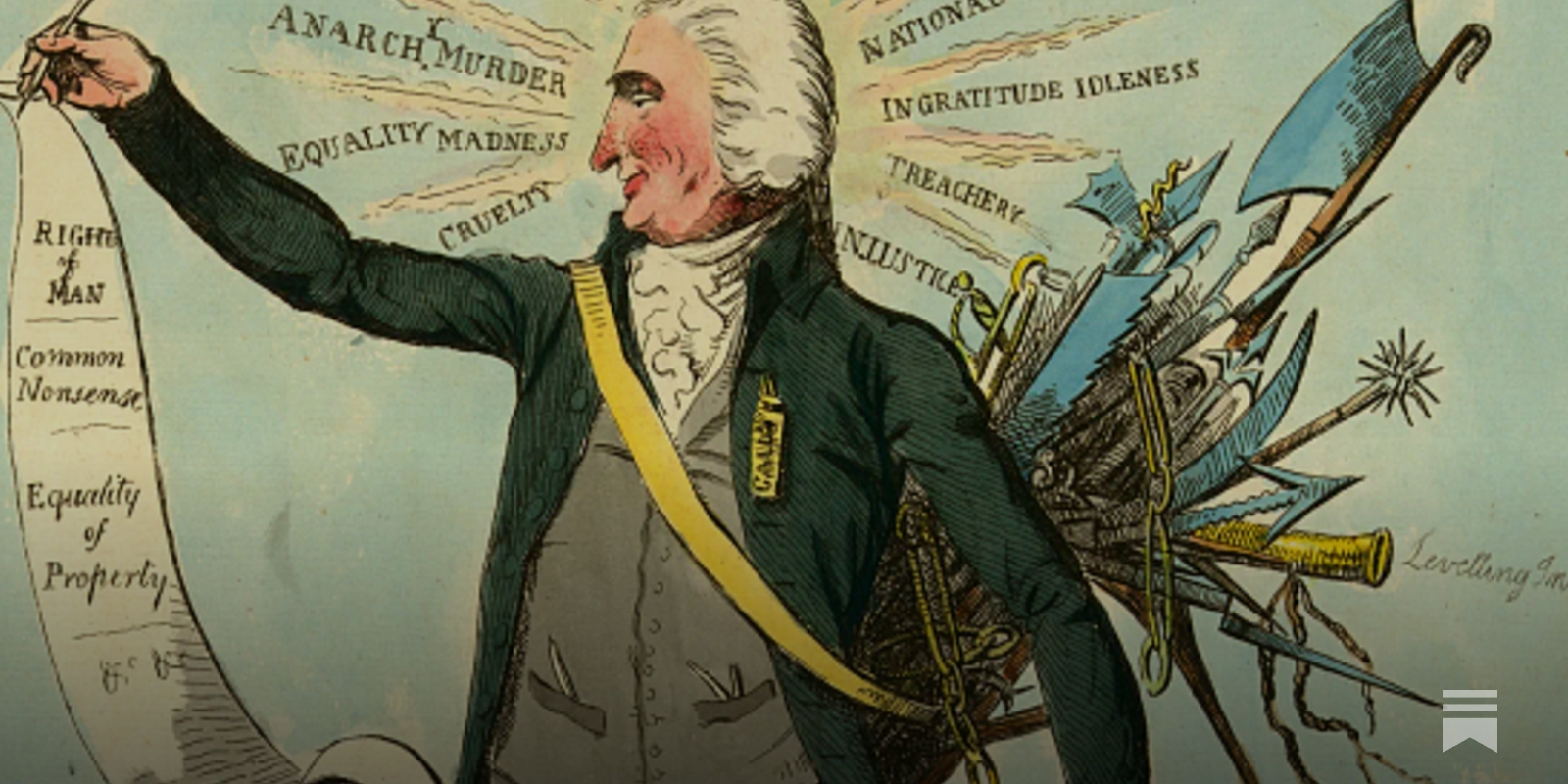
Superintelligence is a dragon
What Mark Zuckerberg misunderstands about powerful AI

Superintelligence: Paths, Dangers, Strategies
Superintelligence: Paths, Dangers, Strategies is a 2014 book by the philosopher Nick Bostrom. It explores how superintelligence could be created and what its features and motivations might be. It argues that superintelligence, if created, would be difficult to control, and that it could take over the world in order to accomplish its goals. The book also presents strategies to help make superintelligences whose goals benefit humanity. It was particularly influential for raising concerns about existential risk from artificial intelligence.

The Impact of Artificial Intelligence on Human Thought
This research paper examines, from a multidimensional perspective (cognitive, social, ethical, and philosophical), how AI is transforming human thought. It highlights a cognitive offloading effect: the externalization of mental functions to AI can reduce intellectual engagement and weaken critical thinking. On the social level, algorithmic personalization creates filter bubbles that limit the diversity of opinions and can lead to the homogenization of thought and polarization. This research also describes the mechanisms of algorithmic manipulation (exploitation of cognitive biases, automated disinformation, etc.) that amplify AI's power of influence. Finally, the question of potential artificial consciousness is discussed, along with its ethical implications. The report as a whole underscores the risks that AI poses to human intellectual autonomy and creativity, while proposing avenues (education, transparency, governance) to align AI development with the interests of humanity.

Superintelligence is a Fairy Tale. But Chasing It Can Still Cause Harm. - Cal Newport
Yesterday, multiple Anthropic employees casually announced online that they thought the types of AI they’re building could kill billions of people. Not in some distant ... Read more
Daron Acemoglu on Twitter / X
First question on AI.Is the problem superintelligence or distorted intelligence?This is a question I tried to address in this piece. I can add the following additional comment here.I believe the debate is being obfuscated by equating goal-driven, autonomous behavior with… https://t.co/pgoZ6tMaQ7— Daron Acemoglu (@DAcemogluMIT) September 29, 2026
Jacob Coxon Warns of Human Extinction and Triggers a Preference Cascade
CEOs of major AI labs, and employees of major AI labs, including OpenAI and Anthropic, often say they plan to build superintelligence soon, as in within a few years create AIs that are superior to humans at essentially all cognitive tasks.

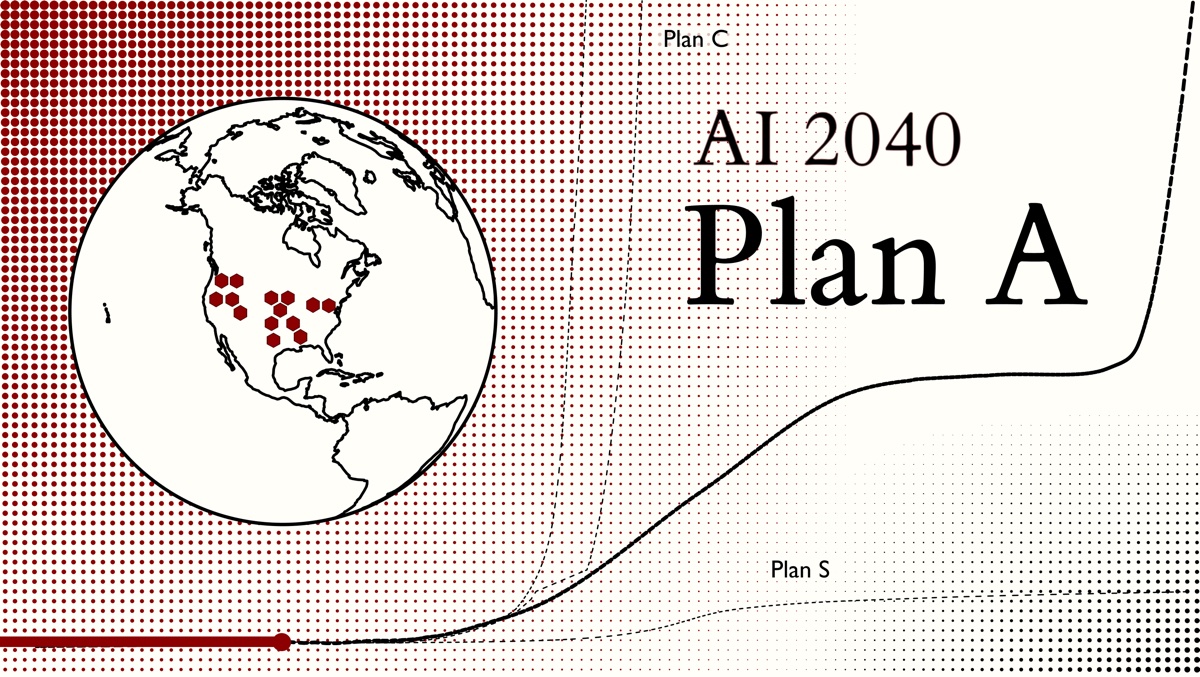
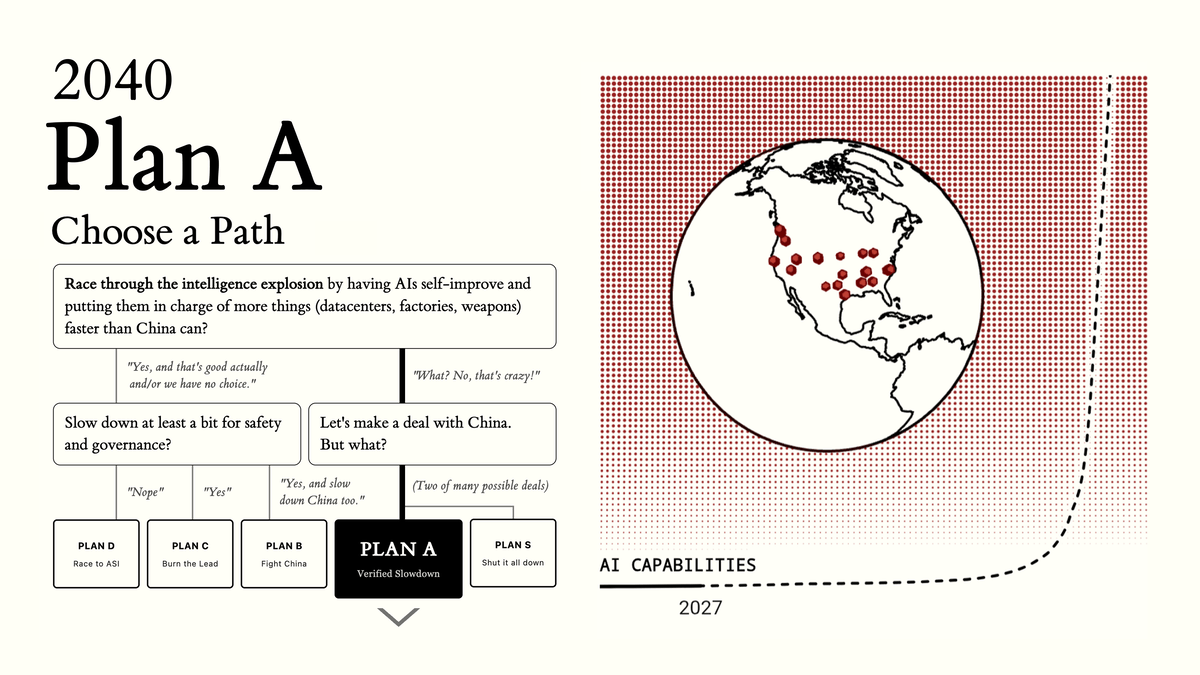
AI 2040: Plan A
A detailed forecast and recommendation for how the US, China and the rest of the world should navigate superintelligence.
AI 2040: Plan A
A detailed forecast and recommendation for how the US, China and the rest of the world should navigate superintelligence.
Augmented human intelligence goes beyond the AGI mirage
This paper argues that contemporary Artificial General Intelligence (AGI) approaches face significant challenges that make Augmented Human Intelligence (AHI) a more promising and practically beneficial alternative. Drawing on phenomenological insights from Peter-Paul Verbeek’s technological mediation theory and comprehensive empirical evidence from decades of AI development, we argue that current AGI projects encounter recurring difficulties that may stem from attempting to replace rather than enhance human intelligence. Through analysis of mediation theory’s core concepts, systematic examination of recent AI performance data, and comprehensive review of human–AI collaboration studies, we show why augmentation approaches consistently outperform replacement attempts across domains requiring creativity, judgment, and contextual understanding. Prioritizing sophisticated AHI development over AGI pursuit represents not a compromise but a fundamental reorientation toward more effective and ethically sound approaches to artificial intelligence that better serve human flourishing.
AI as the greatest source of empowerment for all
I’ve always considered myself a pragmatic technologist—someone who loves technology not for its own sake, but for the direct impact it can have on people’s lives. That’s what makes this job so exciting, since I believe AI will unlock more opportunities for more people than any other technology in history. If we get this right, AI can give everyone more power than ever.
Pioneering Scientific Superintelligence
Pioneering Scientific Superintelligence to solve humankind’s greatest challenges.
Guy Who Sucks At Being A Person Sees Huge Potential In AI
SAN MATEO, CA—After spending the past three decades of his life being totally unable and unwilling to engage in any meaningful way with the world around him, James Parker, a local guy who sucks at being a person, told reporters Thursday that he saw huge potential in AI. “While it’s still in its early phase, artificial intelligence will one day accomplish things that humans could have never even dreamed of doing,” said Parker, who, by all accounts, has never stretched himself to do something he found difficult; has never created anything truly original; and, deep down, has absolutely zero understanding of what makes things good, enjoyable, or rewarding. “Just yesterday, I asked an AI program to write an entire sci-fi novel for me, and [as someone who will die an empty shell of a man who wasted his life doing nothing for the world and, perhaps, should never have been born] I was super impressed. Soon, humans won’t need to do anything at all! Awesome.” At press time, Parker added that as someone whose contributions to society would almost certainly be measured cumulatively as a net loss, he also saw great potential in the future of the metaverse.

Mathematical methods and human thought in the age of AI
Artificial intelligence (AI) is the name popularly given to a broad spectrum of computer tools designed to perform increasingly complex cognitive tasks, including many that used to solely be the province of humans. As these tools become exponentially sophisticated and pervasive, the justifications for their rapid development and integration into society are frequently called into question, particularly as they consume finite resources and pose existential risks to the livelihoods of those skilled individuals they appear to replace. In this paper, we consider the rapidly evolving impact of AI to the traditional questions of philosophy with an emphasis on its application in mathematics and on the broader real-world outcomes of its more general use. We assert that artificial intelligence is a natural evolution of human tools developed throughout history to facilitate the creation, organization, and dissemination of ideas, and argue that it is paramount that the development and application of AI remain fundamentally human-centered. With an eye toward innovating solutions to meet human needs, enhancing the human quality of life and expanding the capacity for human thought and understanding, we propose a pathway to integrating AI into our most challenging and intellectually rigorous fields to the benefit of all humankind.