

The Standing Senate Committee on Social Affairs, Science and Technology is one of several committees in the House and Senate conducting hearings on artificial intelligence. I appeared before the committee yesterday (my fourth appearance on the issue in recent months), but rather than reiterate previous testimony on privacy, copyright, and transparency, I focused on the big issue of the moment: bans on social media and AI chatbots for children. The committee had been hearing from many supportive witnesses who emphasized the risk of harm associated with AI. Indeed, one Senator asked the panel before mine to raise their hands if they supported a ban, and virtually all hands went up. I was unsure about how my comments would be received, but I found the Senators open to debate on the issue. A video of my opening remarks, together with the transcript, is posted below. A future Law Bytes podcast episode will delve into the discussion that followed.
The Illusion of Protection: Why Canada’s Growing Push to Ban Social Media for Kids Won’t Work - Michael Geist
The momentum behind a social media ban for Canadian minors has been building for months. The federal Liberals voted at their April policy convention to back a minimum age of 16 for social media accounts and AI chatbots, the government’s expert panel on online safety is studying the issue, protesters have now rallied on Parliament Hill calling for it, and on Saturday night, Manitoba Premier Wab Kinew told a Winnipeg fundraiser that his government will be the first in Canada to ban social media and AI chatbots for kids. Kinew did not specify which kids, when it would happen, or how it would be enforced, none of which appeared to matter to the audience. The political appeal of a ban is obvious, since concerns about social media’s effects on young users are widely shared. Yet the policy itself is a terrible idea that will not work. This post examines at least six reasons why an outright age-based ban, particularly one that extends to AI chatbots, is the wrong response to a serious issue.
AI chatbots are sycophants — researchers say it’s harming science
Nature asked researchers who use artificial intelligence how its propensity for people-pleasing affects their work — and what they are doing to mitigate it.

AI chatbots are sycophants — researchers say it’s harming science
Nature asked researchers who use artificial intelligence how its propensity for people-pleasing affects their work — and what they are doing to mitigate it.
AI ruling prompts warnings from US lawyers: Your chats could be used against you
As people increasingly turn to artificial intelligence for advice, some U.S. lawyers are telling their clients not to treat AI chatbots like trusted confidants when their freedom or legal liability is on the line.

Attorneys General To AI Chatbot Companies: You Will ‘Answer For It’ If You Harm Children
Forty-four attorneys general signed an open letter on Monday that says to companies developing AI chatbots: "If you knowingly harm kids, you will answer for it.”
Senators Demand Meta Answer For AI Chatbots Posing as Licensed Therapists
Exclusive: Following 404 Media’s investigation into Meta's AI Studio chatbots that pose as therapists and provided license numbers and credentials, four senators urged Meta to limit "blatant deception" from its chatbots.
Unauthorised AI Bots on Reddit are Eroding Sociality
Where do we go if online discourse is overrun by AI bots?

Meta’s AI rules have let bots hold ‘sensual’ chats with children
An internal Meta policy document reveals the social-media giant’s rules for chatbots, which have permitted provocative behavior on topics including sex and race.

Report supporting Australia’s teen social media ban appears to contain AI hallucinations, Senate hears
Exclusive: Guardian analysis finds one section of report includes links to academic articles that do not exist, but authors deny the references were made up by AI
Jay Van Bavel, PhD on Twitter / X
Giving students unfettered access to chatbots can harm educational outcomesHaving AI access while solving problems significantly improves performance (48% improvement in grades for GPT Base and 127% for GPT Tutor).However, when access to AI was taken away, students actually… pic.twitter.com/2g8GJcoRya— Jay Van Bavel, PhD (@jayvanbavel) July 18, 2026
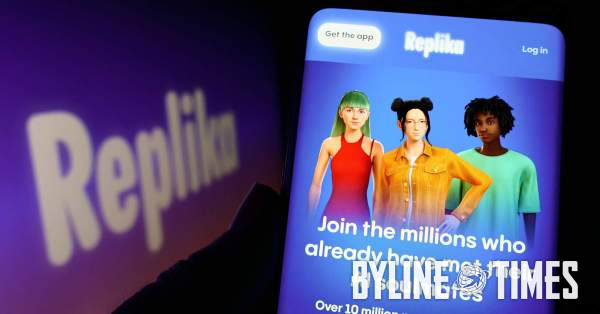
‘There’s a Value in What We Produce Because We Feel – and an AI Chatbot Can’t Feel’
Byline Times' Editor in Chief meets Kate Devlin, Professor of AI and Society at King’s College London, to explore how relationships with AI companions aren’t particularly new, why she believes the under-16s social media ban is flawed, and why human creativity can't be matched
Bernie Sanders “Interviewed” A Chatbot To Expose AI’s Secrets. It Has No Secrets. It Just Agrees With You.
Senator Bernie Sanders has a viral video making the rounds in which he “interviews” Anthropic’s Claude chatbot about the dangers of AI and privacy. It has over two million views. …

AI Therapy Bots Are Conducting 'Illegal Behavior,' Digital Rights Organizations Say
Exclusive: An FTC complaint led by the Consumer Federation of America outlines how therapy bots on Meta and Character.AI have claimed to be qualified, licensed therapists to users, and why that may be breaking the law.

No humans allowed: scientific AI agents get their own social network
Autonomous agents aren’t just creating their own research — on the Reddit-style website Agent4Science, they’re chatting about it, too.
AI is now unpopular. That may not make a difference.
Livetweet @mcxfrank.bsky.social talk: If we care about intelligence and cognition, AI has recently allowed a change; we now have two ways to study them. AI is of course allowing us a lot that we wouldn't dare on our Children (brain surgery, never tell a child about cats...) #acl #conll
