

Essentials of Compilation
Compilers are notoriously difficult programs to teach and understand. Most books about compilers dedicate one chapter to each progressive stage, a structure ...
The Story of C++: The World's Most Consequential Programming Language | The Official Story
A Coming Revolution in Metaprogramming | Will Crichton
A single programming language is no longer enough. I predict that soon, the best programmers will fluently move between languages and the best languages will interoperate well with others. This interoperability will likely stem from strong metaprogramming facilities. I examine how we might build a programmable compiler and look at recent work toward that end.
Learn C • Build Your Own Lisp
If you're looking to learn C, or you've ever wondered how to build your own programming language, this is the book for you.
What I Found Interesting in Claude Code's Source
A breakdown of the most interesting engineering patterns in Claude Code's leaked source code: composable system prompts, runtime instruction injection, context compression, forking, prompt caching architecture, and more.
The mythical matched modules | Proceedings of the 24th ACM SIGPLAN conference companion on Object oriented programming systems languages and applications
Certified compilers are complex software systems. Like other large systems, they demand modular, extensible designs. While there has been progress in extensible metatheory mechanization, scaling extensibility and reuse to meet the demands of full ...

Coeffects: Context-aware programming languages
Interactive essay that explains theory of coeffects and lets you type-check and run sample programs.

When compilers surprise you — Matt Godbolt’s blog
Sometimes compilers can surprise and delight even a jaded old engineer like me
Its Time for a New Programming Language
Today, when compared to any other point in programming history, we find ourselves spoiled for choice when it comes to programming…
Claude Is Not a Compiler - exe.dev blog
In early 2025, I wrote Is Claude a Compiler? At the time, my answer was: I don’t know.

Practical Foundations for Programming Languages
Coding After Coders: The End of Computer Programming as We Know It - …
archived 16 Mar 2026 15:14:04 UTC

Aaron Steven White
computational semanticist. into modular synths and tiki. https://aaronstevenwhite.io
"Concatenative programming and stack-based languages" by Douglas Creager

Compilers occupy a special place in computer science. They're a canonical course in computer science education. Building one is a rite of passage. It forces you to confront how software actually works, by examining languages, abstractions, hardware, and the boundary between human intent and machine execution.
The future of programming and computing

Trends and adjacent possibles for the future of how computers are used and programmed
LIMITS 2026 -- Workshop on Computing within Limits
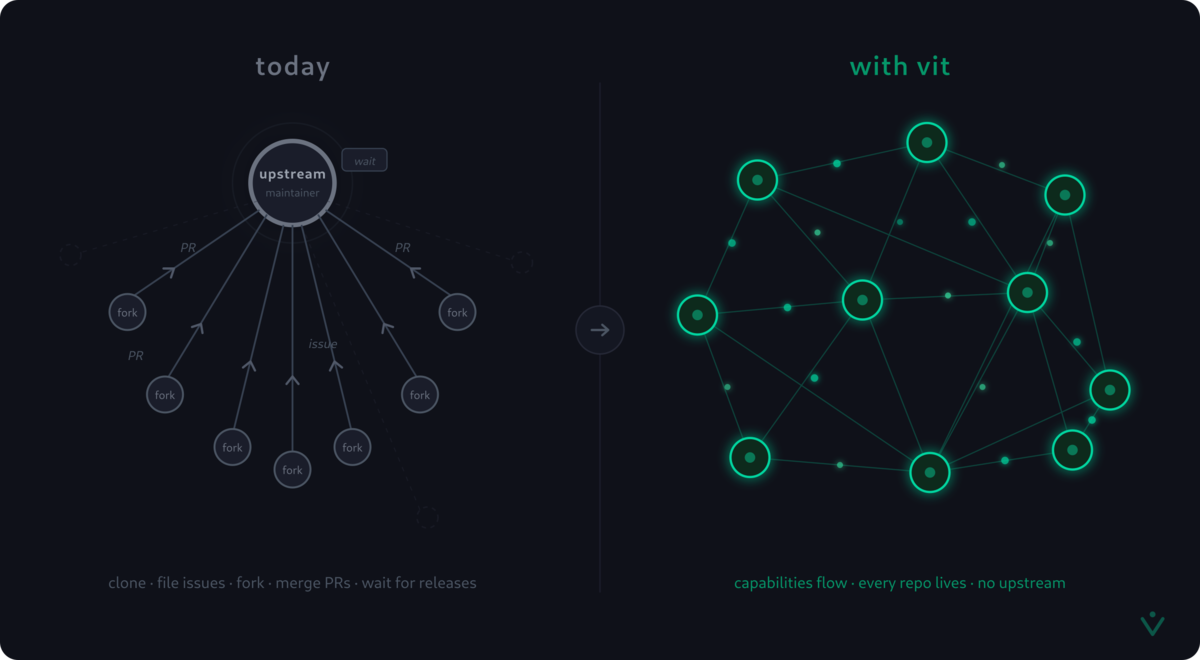
vit — open source is social

Humans approve intent, machines prove conformance
Introducing System One Models and Jev - TypeSafe AI Blog

Message from our CEO: After co-inventing ChatGPT, I kept asking myself: why have superhuman chat models not led to AGI? I’ve spent the last…

On-device intelligence for every product